 Save to Pinterest
 I'll never forget the first time I created this platter for an intimate dinner party—I was standing in my kitchen, caught between the deep crimson of wine-soaked cheese and the golden glow of roasted peppers, and suddenly realized how food could be art. The moment I arranged those contrasting blocks side by side, my guests gasped before anyone even tasted a thing. That's when I understood: sometimes the most memorable dishes are the ones that stop people mid-conversation, purely through their beauty.
I served this at a gallery opening once, and a woman told me it was the first cheese board that made her feel like she was eating something precious. That's exactly what this arrangement does—it transforms everyday ingredients into something that feels celebratory, a moment worth savoring.
Ingredients
- Fresh sweet cherries: Start with the ripest, most fragrant ones you can find—they're the jewels of your crimson side. Pitting them by hand takes five minutes but makes them taste somehow better, I swear it's true
- Wine-soaked cheese: Drunken Goat or Merlot BellaVitano are magic here—look for them at better cheese shops. They bridge the gap between the fruit and the visual drama perfectly
- Dried cranberries: Tart and chewy, they're the backbone of your red block. Get unsweetened if you can find them
- Red grapes: Halving them shows off their gorgeous interiors and makes them easier to eat
- Pomegranate seeds: These burst with brightness and add that unexpected textural pop. Use them right before serving so they stay plump
- Yellow bell peppers, roasted: This is where the magic happens—roasting brings out their sweetness and gives them a silky texture. Don't skip the charring
- Aged cheddar or gouda: Choose blocks with good color and depth. Cubing them makes them approachable for guests
- Gold leaf-topped crackers: You can find these ready-made, or add edible gold yourself for drama. Even plain water crackers work beautifully
- Golden raisins: Sweeter than regular raisins, they're your golden punctuation marks
- Yellow cherry tomatoes: Halved to show their sunny interiors, they add freshness and prevent the platter from feeling too heavy
- Edible gold leaf: Optional but worth it—it catches the light and makes people feel like royalty
- Fresh basil or microgreens: These are your finishing brushstrokes, adding life and a hint of freshness between all that richness
- Olive oil: Quality matters here since you'll taste it on the peppers. Something peppery and bright works best
Tired of Takeout? 🥡
Get 10 meals you can make faster than delivery arrives. Seriously.
One email. No spam. Unsubscribe anytime.
Instructions
- Roast the peppers until they blister:
- Turn your oven to 220°C (425°F) and place whole yellow peppers on a baking sheet. Let them roast for 10–12 minutes, turning them occasionally so all sides char evenly. You want the skins to look almost angry—charred and blistered all over. This is when they release their sweetness
- Steam and peel with patience:
- Transfer the hot peppers to a bowl and cover it tightly—let them sit for five minutes while the steam loosens the skin. Then, working over the bowl so you don't lose any precious juices, gently peel off the blackened skin. Remove the seeds and slice into strips. Drizzle with olive oil while they're still warm, crack some black pepper over them, and let them cool completely. They'll taste even better as they sit
- Apply gold leaf if you're feeling fancy:
- If you're using edible gold, follow the package instructions carefully. Use a clean brush or your fingertip, and work gently. The gold is delicate, but once it adheres, it's locked in place
- Build your crimson block:
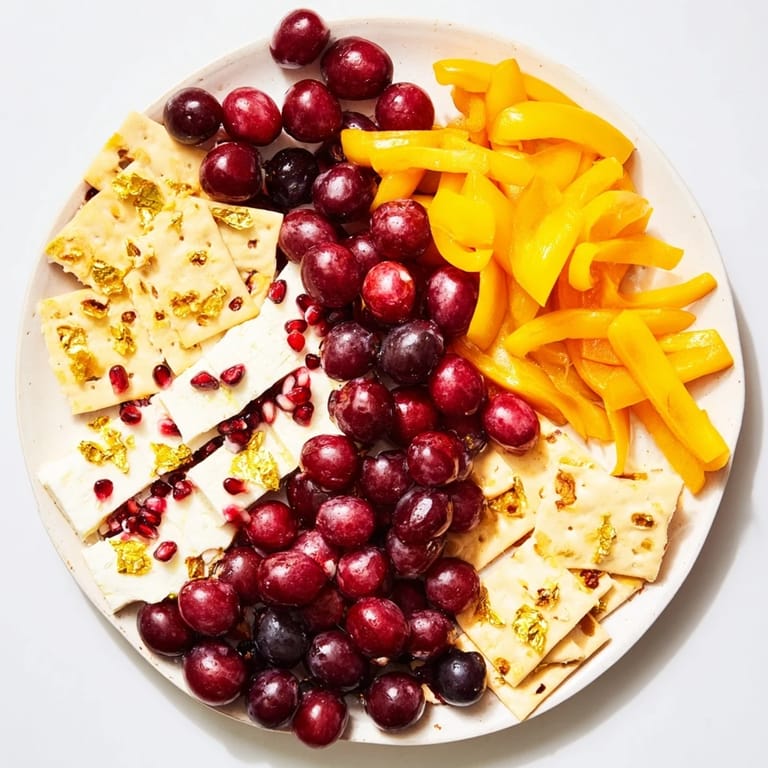
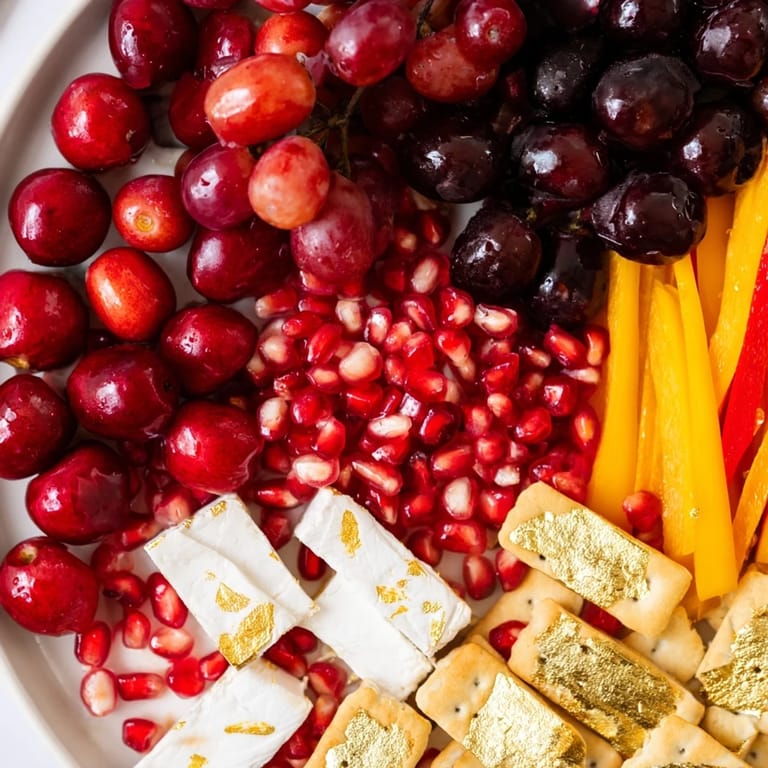
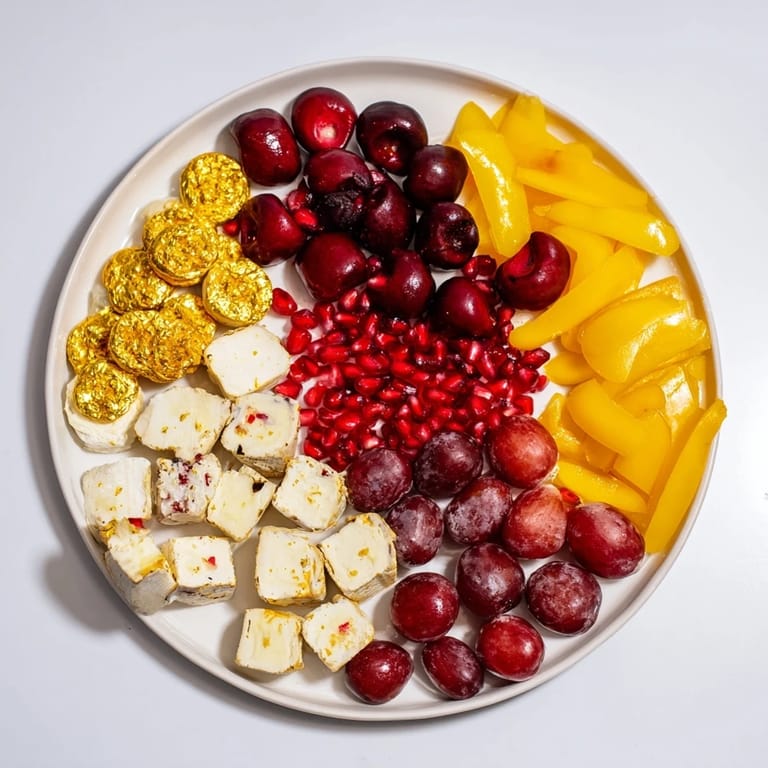
- On one half of a large platter or board, arrange all your deep reds in a tight, cohesive block. Pitted cherries, sliced wine-soaked cheese, dried cranberries, halved grapes, and pomegranate seeds. Nestle them close together so the colors blend into a rich, unified mass
- Create the golden contrast:
- On the opposite side, arrange your bright golds in equally tight formation. Roasted pepper strips, cheese cubes, those gorgeous crackers, golden raisins, and halved yellow tomatoes. The point is visual drama—opposing blocks that create a striking pattern
- Garnish with green and serve:
- Scatter fresh basil or microgreens across both sections for a pop of color and a whisper of freshness. Serve immediately while everything is at its best, and encourage your guests to mix colors and flavors as they graze
 Save to Pinterest
 I remember my eight-year-old nephew staring at this platter for a full minute before eating anything. He said it looked like a sunset you could eat. That's the moment I realized I'd created something that speaks a language beyond taste—it's visual poetry that happens to nourish you.
The Art of Color Blocking on a Platter
There's real technique in what looks effortless here. The tight, opposing blocks create visual tension in the best way—your eye doesn't know where to land, which keeps it moving, keeps people engaged. It's the same principle that makes fashion designers pair jewel tones with gold accents. The key is not to scatter your ingredients randomly. Group them deliberately. Let the reds be unapologetically red, the golds be brazenly gold. That contrast is what makes people pause.
Flavor Pairings That Make Sense
Wine-soaked cheese with fresh cherries isn't accident—it's a conversation that's been happening in wine bars for decades. The tannins in the cheese find friends in the tartness of cranberries. The roasted sweetness of the peppers plays beautifully against the sharpness of aged cheddar. Every pairing here has a reason. When your guests mix a piece of gouda with a roasted pepper strip and a golden raisin, they're tasting three different love languages on a single cracker. That's intentional.
Making It Memorable for Your Guests
A cheese board is an invitation to slow down. Set this out on a table where people naturally gather, where they can stand and talk and taste without the pressure of sitting down for a formal meal. Serve with small plates and plenty of napkins. Consider putting out a good white wine alongside—something mineral and bright that echoes the gold side and balances the richness of the cheese.
- If gold leaf feels too fancy, a tiny drizzle of honey over the golden section adds luxury without extra fuss
- This platter is naturally vegetarian, but it can easily accommodate vegan cheeses and crackers if needed
- Prepare the peppers ahead if you want—they actually taste better the next day, but assemble the final platter right before service
 Save to Pinterest
 Every time I make this platter, I'm reminded that hospitality doesn't have to be complicated to be meaningful. Sometimes it's just about paying attention to beauty and creating a moment where people feel celebrated. Serve this with joy.
Recipe Questions & Answers
- → How should the yellow bell peppers be prepared?
Roast whole yellow bell peppers at 220°C (425°F) until skins are charred, then steam and peel them before slicing.
- → Can I use alternatives to gold leaf on the crackers?
Yes, turmeric or saffron threads can be used to add a golden color if gold leaf is unavailable.
- → What cheeses are best for this platter?
Wine-soaked cheeses like Drunken Goat or Merlot BellaVitano pair well with aged cheddar or gouda for the gold section.
- → Is there a vegan option for this dish?
Substitute plant-based cheeses and crackers to create a vegan-friendly version without losing flavor contrasts.
- → How should the platter be served?
Arrange crimson and gold components in opposing blocks on a large platter and garnish with fresh basil or microgreens immediately before serving.