 Save to Pinterest
 I discovered this platter on a late evening when friends arrived unexpectedly, and I had nothing but a cheese board half-assembled in my fridge. The black-ashed goat cheese caught the light in such a striking way that I suddenly imagined it paired with the darkest fruits I could find. Something about the visual drama of deep purples and blacks against that silvery ash felt like it belonged on a proper table. That improvised spread turned into something we kept talking about for months.
I made this for a dinner party where I was nervous about impressing my partner's more refined food friends. As I arranged the first platter, I realized the colors were almost jewel-like under the warm kitchen light. By the time everyone gathered around, there was this moment of actual silence before someone said it looked too beautiful to eat. We all laughed, and then someone reached for the first piece anyway, and suddenly the whole thing became this casual, joyful experience instead of something precious and untouchable.
Ingredients
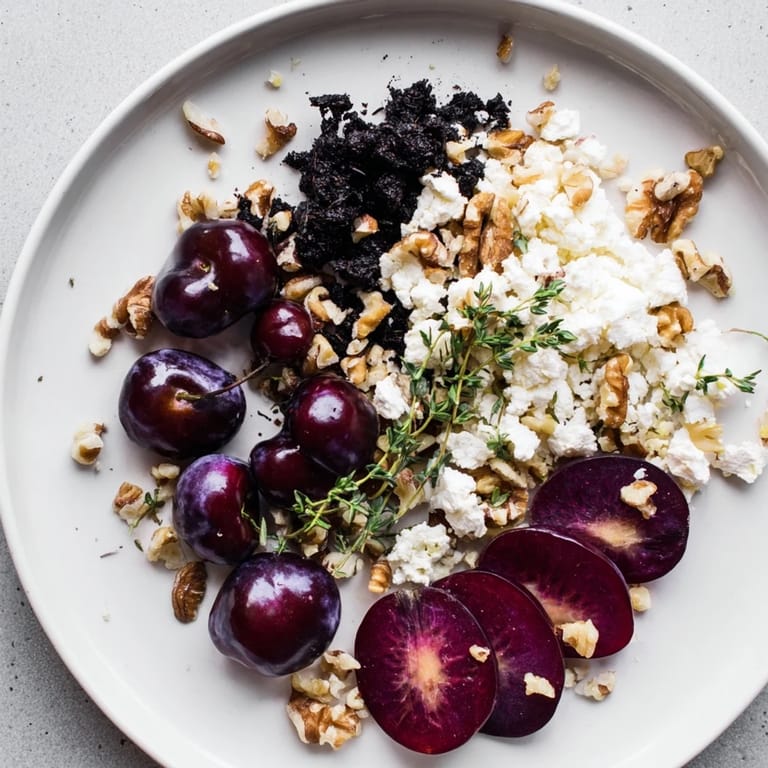
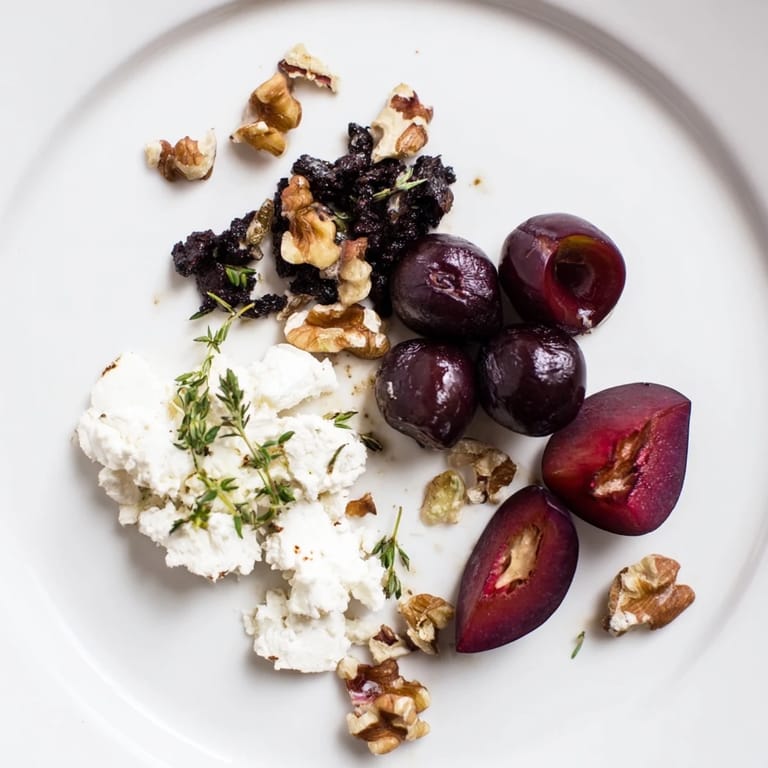
- Dark cherries, pitted and halved (1 cup): Choose ones that feel firm and smell slightly floral; they're the anchor flavor here, tart enough to balance the richness of cheese.
- Ripe plums, sliced into wedges (2 medium): Look for plums that give slightly to pressure but aren't soft; they should be juicy enough to release a little liquid on the board.
- Purple grapes, halved (1 cup): Halving them makes them easier to pair with cheese bites and releases a little juice that pools beautifully on the platter.
- Black-ashed goat cheese (200 g): The ash is purely visual here, but it creates that elegant contrast; let it sit at room temperature for thirty minutes before serving so it's creamy enough to spread if guests prefer.
- Toasted walnuts (2 tbsp, optional): Toast them yourself in a dry pan for two minutes if you can; store-bought toasted ones work, but fresh-toasted have a deeper, warmer flavor.
- Honey (1 tbsp, optional): A drizzle catches the light and adds a subtle sweetness that doesn't overwhelm.
- Fresh thyme sprigs: Use them for garnish and a whisper of earthiness; they're the small detail that signals care.
Tired of Takeout? 🥡
Get 10 meals you can make faster than delivery arrives. Seriously.
One email. No spam. Unsubscribe anytime.
Instructions
- Prepare the fruit:
- Pit and halve your cherries first, then slice the plums into thin wedges and halve your grapes. You want everything bite-sized and ready; working on this just before serving keeps the fruit from browning.
- Arrange with intention:
- Use a large platter and group each fruit together in small clusters, creating little islands of color. Step back and look at it; the arrangement matters as much as the flavors do.
- Position the cheese:
- Place your goat cheese slices or crumbles in pockets between the fruit groups. If it's too cold to slice cleanly, use two spoons to create quenelles, little oval shapes that look intentional.
- Add the garnishes:
- Scatter toasted walnuts if using, then drizzle honey in thin threads across the platter. The walnuts add a textural surprise, and the honey catches light like small jewels.
- Finish with thyme:
- Tuck fresh thyme sprigs into spaces around the platter and let a few leaves scatter across the cheese. This final step signals that everything was considered.
 Save to Pinterest
 This platter became my answer to the question of how food can be more than nourishment. We all stood around it with wine in our hands, and somehow the conversation became easier, longer, more honest. Something about a shared board like this removes the formality and invites people to linger.
Why This Works as an Appetizer
Platters work because they invite interaction instead of demanding it. No one feels rushed to finish a course when they're building their own bites, pairing cheese with the fruit they're drawn to. The sophistication comes from restraint; everything here is seasonal, real, and unapologetic about being simple. It's the kind of food that makes people feel like they're being taken seriously without requiring you to stress in the kitchen.
Pairing and Serving
I've served this with everything from a crisp sparkling wine to a light Pinot Noir, and both felt right. The key is choosing something dry; sweetness on top of fruit sweetness becomes too much. At room temperature, all the flavors open up more honestly, so resist the urge to chill the platter unless it's genuinely hot where you are.
Variations and Occasions
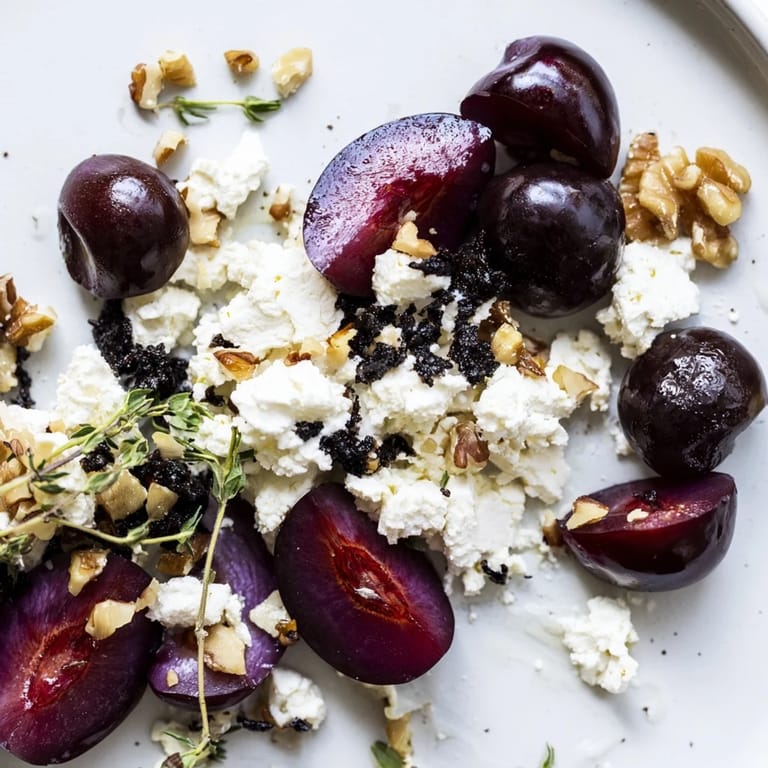
This platter adapts to whatever you have on hand. In summer, I've added figs and raspberries; in autumn, I've switched to pears and apples. The formula stays the same: dark fruits, creamy cheese, one textural element, and one element that catches light. It works as a dessert course, a late-night snack spread, or the first thing on the table when friends arrive.
- Try a plant-based ash-coated cheese for a vegan version that looks equally striking.
- Add thin slices of toasted baguette or crackers on the side if someone wants more substance.
- A small dish of fleur de sel nearby lets guests season to taste if they want to bring out the fruit's tanginess even more.
 Save to Pinterest
 This is the kind of dish that reminds you that eating well doesn't always mean cooking hard. Sometimes it just means choosing beautiful things and arranging them with a little care.
Recipe Questions & Answers
- → What fruits are included in the Midnight Orchard platter?
The platter features dark cherries, ripe plums sliced into wedges, and halved purple grapes.
- → What type of cheese is used in this dish?
The dish uses creamy black-ashed goat cheese, either sliced or crumbled for texture.
- → Are there any optional garnishes to enhance the flavor?
Toasted walnuts and a light drizzle of honey provide subtle sweetness and crunch, complemented by fresh thyme sprigs for aroma.
- → How long does it take to prepare this fruit and cheese platter?
The entire arrangement can be completed in approximately 15 minutes with no cooking required.
- → Can this platter accommodate dietary preferences?
Yes, it’s naturally gluten-free and vegetarian. For vegan options, a plant-based ash-coated cheese can be used.
- → What serving suggestions complement this platter?
Serve alongside dry sparkling wine, light-bodied red wine, or with toasted baguette slices or gluten-free crackers.