 Save to Pinterest
 The aroma of buttery rice meeting sharp Parmesan and fresh mint floated through my kitchen—a scent that somehow always feels like a reward for braving that moment when you wonder if risotto will ever get creamy. The first time I made Spring Pea Risotto, I forgot to keep the broth warm and couldn’t figure out why the rice took so long. There’s a quiet, gentle patience to this dish that I’ve come to appreciate: the kind you notice between stirring, when the peas’ sweetness and lemon zest brighten the air. I remember chopping mint while the pan hissed, sunlight making the green shimmer vibrant on the board. Even now, I know making this risotto means winter is behind us, and something fresh is finally on the table.
One late spring evening I made this for friends squeezed around a rickety table, everyone chipping in to zest lemons or pour another ladle of stock. We ended up laughing, wine glasses clinking in harmony with our stirring, and by the time the peas turned just tender, it felt more like a celebration than a meal. Sometimes, the best dishes create their own little parties.
Ingredients
- Fresh or frozen spring peas (1 1/2 cups): Go with fresh if you can, but I’ve made it with frozen many times and the color and sweetness still shine.
- Shallot (1 medium, finely chopped): Shallot melts into the rice, offering a soft, aromatic background—just don’t rush sauteing or you’ll burn it.
- Garlic (2 cloves, minced): Essential for mellow savory flavor, a quick saute ensures it doesn’t turn bitter.
- Fresh mint leaves (2 tablespoons, finely chopped): Mint wakes up every bite—chop just before adding so it stays bright.
- Lemon zest (from 1 lemon): This lifts the whole dish and balances richness; avoid the white pith for best flavor.
- Arborio rice (1 1/2 cups): Its starch is what makes risotto creamy—don’t rinse it.
- Low-sodium vegetable broth (4 cups): Keep this warm for even cooking and better rice texture.
- Dry white wine (1 cup): Use what you like to drink; it deepens flavor without overpowering the peas.
- Olive oil (2 tablespoons): A good olive oil helps the shallot and garlic sing.
- Unsalted butter (3 tablespoons): Folded in at the end, butter is what brings the luscious finish.
- Aged Parmesan cheese (3/4 cup, finely grated): Nutsy, salty, and essential for real risotto magic—grate it fresh if you can.
- Kosher salt (1/2 teaspoon, plus to taste): Layered seasoning makes a difference; always taste before serving.
- Freshly ground black pepper (1/4 teaspoon): Brings just a hint of warmth that balances the sweetness and creaminess.
Tired of Takeout? 🥡
Get 10 meals you can make faster than delivery arrives. Seriously.
One email. No spam. Unsubscribe anytime.
Instructions
- Warm the broth:
- Pour the vegetable broth into a saucepan and set it over low heat until steamy, so each ladle blends smoothly with the rice.
- Start the risotto:
- In a heavy skillet or Dutch oven, heat olive oil over medium and listen for the gentle sizzle as you add chopped shallot and garlic—saute until soft and the kitchen smells inviting, about 2 to 3 minutes.
- Toast the rice:
- Stir in Arborio rice, coating each grain until they look slightly translucent with a pearly center, about 2 minutes—this gives your risotto its signature creaminess later.
- Add wine:
- Pour in the white wine and stir, watching the rice soak it up; as the bubbling slows, the sharp scent gives way to something mellow and rounded.
- Gently add broth:
- Add a ladleful of hot broth at a time, stirring slowly and letting each addition absorb before you pour the next—this steady rhythm builds creaminess, so don’t rush.
- Stir in the peas:
- After about 15 minutes, when the rice is just starting to plump, stir in the peas and continue adding broth until everything’s just creamy, about 20–25 minutes total.
- Finish with flavor:
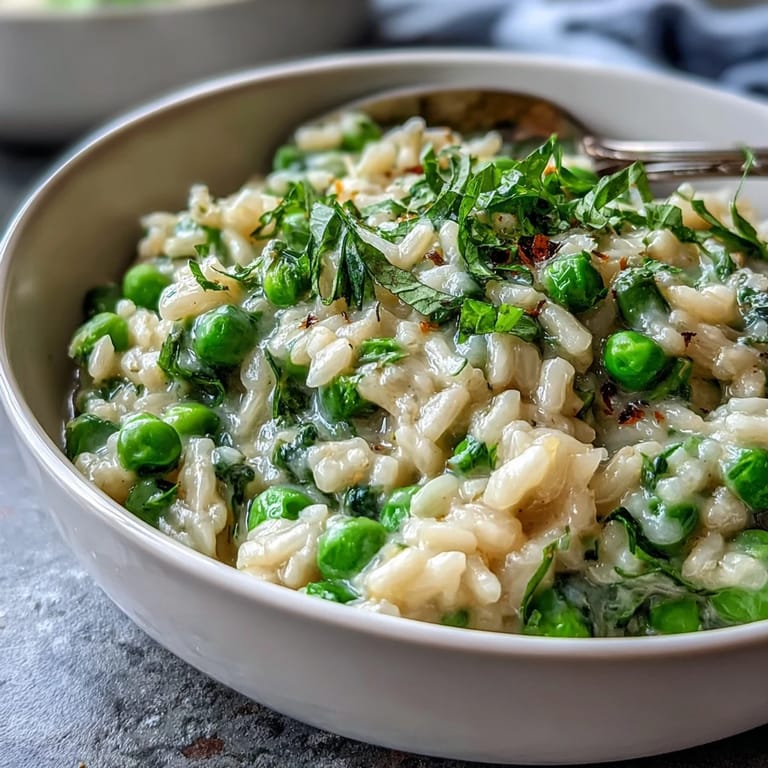
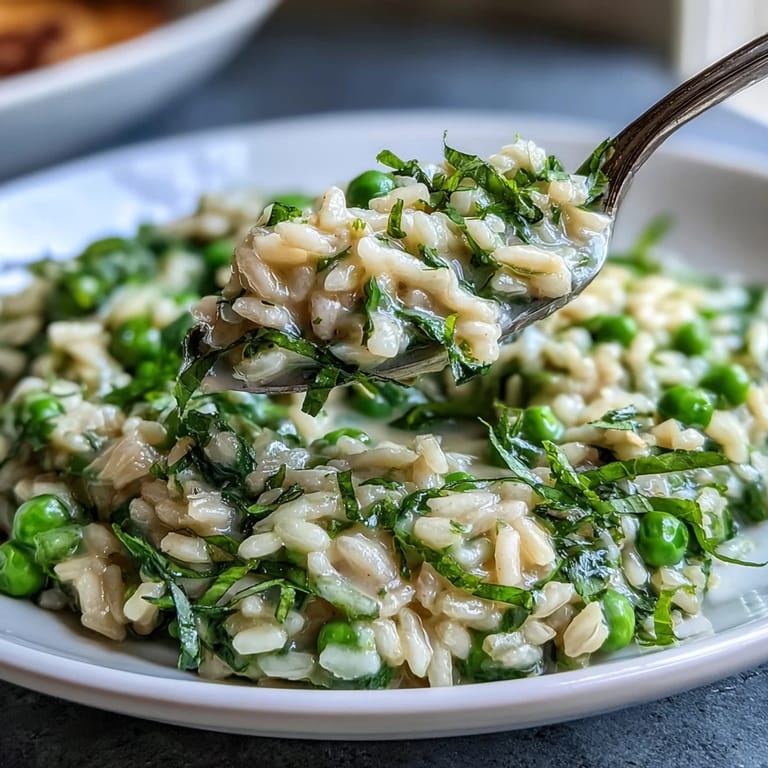
- Remove from heat and quickly stir in butter, Parmesan, chopped mint, and lemon zest until glossy and green-flecked; taste and add salt and pepper as needed.
- Serve right away:
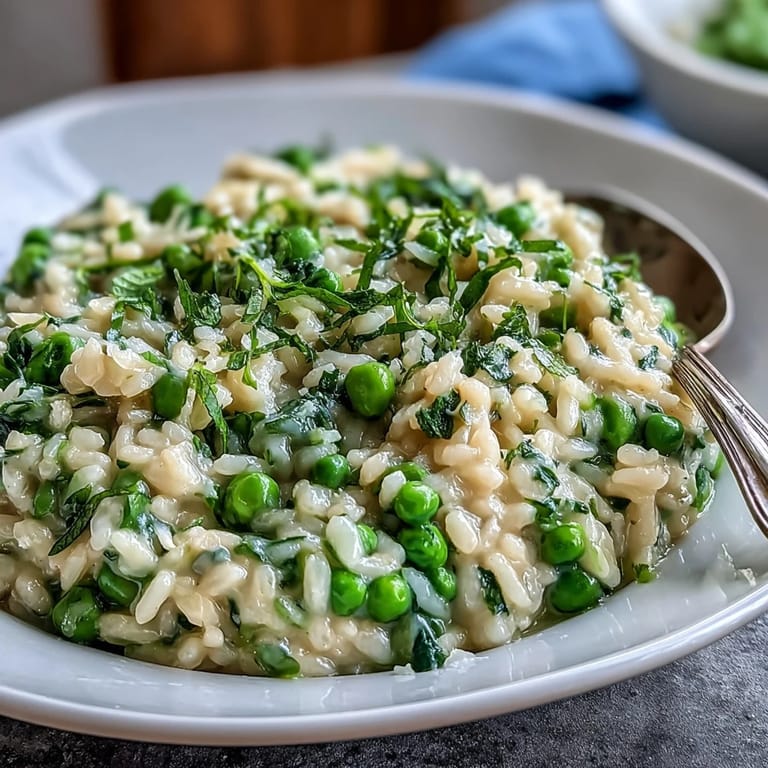
- Spoon the risotto into shallow bowls, then top with extra Parmesan and mint for a final gesture of spring.
 Save to Pinterest
 During one quiet Sunday, I made this risotto almost absentmindedly, but as soon as I tasted the first bite, it pulled me back to the moment—creamy, lemony, and bright with every forkful. Suddenly, the meal felt special, and the leftovers didn’t last twenty-four hours.
Choosing and Preparing Your Peas
If you find truly fresh spring peas, your risotto will sing with sweetness and color, but high-quality frozen peas work beautifully in a pinch—just add them straight from the freezer, no need to thaw. I like to toss a few raw into the finished risotto for a pop of texture.
Finding the Balance of Creaminess
What I’ve learned: risotto should be a little loose and flow gently on the plate, never stodgy. If it looks dry before serving, just add a splash or two of hot broth and stir—every time it comes out perfect, I remember to trust my eyes and not just the recipe.
Cheese and Final Flourishes
Grating Parmesan fresh really does make all the difference—it melts right in, so you get pockets of salty, savory goodness in every bite. I sometimes add a swirl of cream if I’m feeling extra indulgent.
- If you like a sharper finish, swap in some Pecorino—just reduce added salt.
- Warm your bowls to keep risotto at its best.
- Don’t skip the lemon zest—it brightens everything.
 Save to Pinterest
 Spring Pea Risotto has become my gentle nudge into a new season—fresh, hopeful, and truly delicious every time. May your kitchen fill with the same light, vibrant energy when you try it.
Recipe Questions & Answers
- → How do I keep the texture creamy without overcooking?
Use warm broth and add it a ladleful at a time, stirring frequently to release the rice's starch. Keep the heat at a gentle simmer and taste often; stop when the grains are tender but still have a slight bite. Finish with butter and Parmesan to enrich and smooth the texture.
- → When should I add the peas so they stay bright and tender?
Stir the peas in during the final 5–7 minutes of cooking so they heat through without losing color or becoming mushy. Frozen peas can go in straight from the bag; fresh peas benefit from the short cook time to preserve sweetness and pop.
- → Can I skip the wine or substitute it?
Yes—replace the wine with an equal amount of warm broth plus a squeeze of lemon or a splash of white wine vinegar to retain acidity and balance. Add the acid gradually and adjust to taste.
- → How do I know when the Arborio is al dente?
Start tasting the rice after about 15 minutes of adding broth. Al dente rice is tender on the outside with a slight firmness in the center. Cooking times vary, so rely on texture rather than a strict timer.
- → What are good dairy-free or vegetarian swaps?
For a dairy-free finish, use extra olive oil or a knob of plant-based butter and stir in nutritional yeast or a dairy-free grated alternative for savory depth. Use vegetable broth and omit Parmesan if avoiding dairy entirely.
- → How should I store and reheat leftovers?
Cool to room temperature and store airtight in the refrigerator for up to 2 days. Reheat gently over low heat with a splash of warm broth, stirring to restore creaminess; avoid high heat to prevent drying out.