 Save to Pinterest
 There's something about late summer that makes you crave color on a plate. I was at a farmer's market one morning, wandering between stalls with no real plan, when I spotted these perfect golden peaches and the brightest yellow mangoes I'd ever seen. The vendor was arranging them in pyramids, and I thought: what if I built a salad around that brightness? What if yellow could be the whole story? That's how this came together—not from a cookbook, but from standing in the sun holding too much fruit and wondering what to do with it all.
I made this for a friend who'd been going through a rough patch, someone who needed feeding more than commiserating. She walked into my kitchen as I was arranging the greens into that forest ring, and before I'd even finished, she said, 'It's too beautiful to eat.' But she did eat it, right there at the counter, and asked for the recipe before she'd finished chewing. That's when I knew it was worth repeating.
Ingredients
- Ripe mango (1 cup, diced): The heart of this salad—choose one that yields gently to pressure, not rock-hard or mushy, because the juice matters.
- Pineapple (1 cup, diced): Look for one that smells sweet at the base, which tells you it's actually ripe inside instead of just looking yellow.
- Golden apple (1, diced): Yellow varieties like Golden Delicious or Gala hold their shape better than red apples and taste brighter.
- Yellow peach (1, sliced): This one's seasonal and fleeting, so grab it when you see it—it brings a softness the other fruits can't quite match.
- Kale (4 cups, finely shredded): Removing the stems is non-negotiable; they're fibrous and bitter, and the leaves are what you're after.
- Baby spinach (1 cup): It wilts slightly under the dressing weight, which is exactly what you want for texture.
- Fresh parsley (½ cup, chopped): Use flat-leaf parsley if you can find it—it has more flavor than the curly kind and tastes cleaner.
- Fresh mint (¼ cup, torn): Tear it with your hands rather than cutting it, which bruises the leaves and turns them dark.
- Fresh basil (¼ cup, torn): Same rule as the mint—handle it gently and it stays bright.
- Extra-virgin olive oil (3 tablespoons): This is where quality actually makes a difference, so don't use the cheapest bottle you can find.
- Fresh lemon juice (2 tablespoons): Real lemon, not the bottled kind, which tastes stale and one-dimensional.
- Maple syrup (1 tablespoon): Just enough to balance the acid without making it a dessert salad.
- Dijon mustard (1 teaspoon): An emulsifier and a whisper of sophistication that makes everything taste more intentional.
- Sea salt and freshly ground pepper: Taste as you go because you can always add more but you can't take it back.
- Toasted pumpkin seeds and lemon zest (optional but recommended): The seeds add crunch and earthiness, the zest adds brightness that echoes the lemon in the dressing.
Tired of Takeout? 🥡
Get 10 meals you can make faster than delivery arrives. Seriously.
One email. No spam. Unsubscribe anytime.
Instructions
- Make the dressing first:
- Whisk oil, lemon juice, maple syrup, mustard, salt, and pepper in a small bowl until it comes together into something creamy and cohesive. Taste it alone before it meets the greens—it should make your mouth wake up a little.
- Massage the kale into softness:
- Pour half the dressing over the shredded kale in your largest bowl and work it between your hands for a minute or two until the leaves darken and become tender. This is the step that transforms kale from something you tolerate into something you actually enjoy.
- Combine the greens gently:
- Add spinach, parsley, mint, and basil to the kale and toss everything together until the herbs are distributed but not bruised. You want it to feel like a tossed salad, not mangled.
- Build the visual landscape:
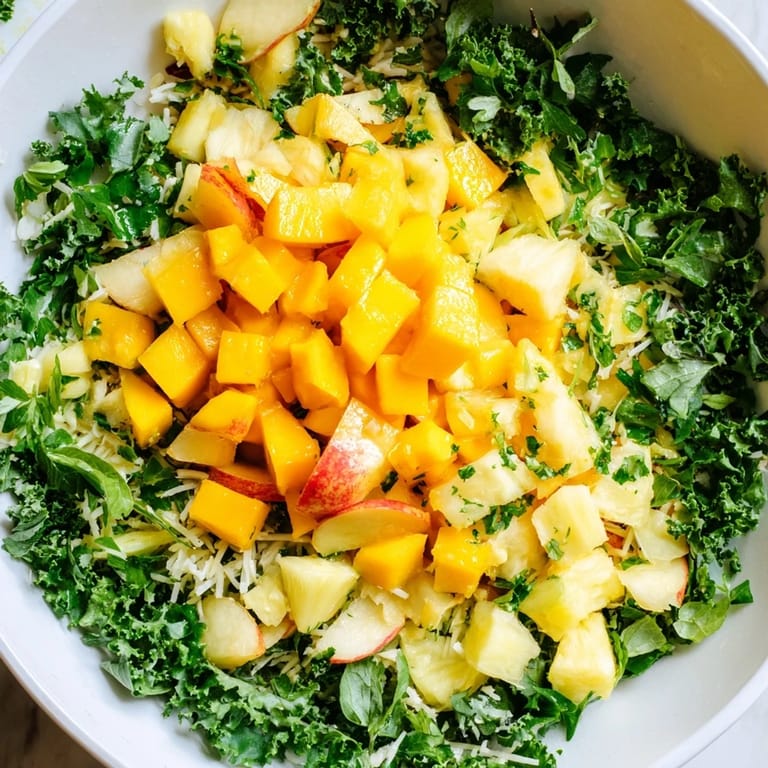
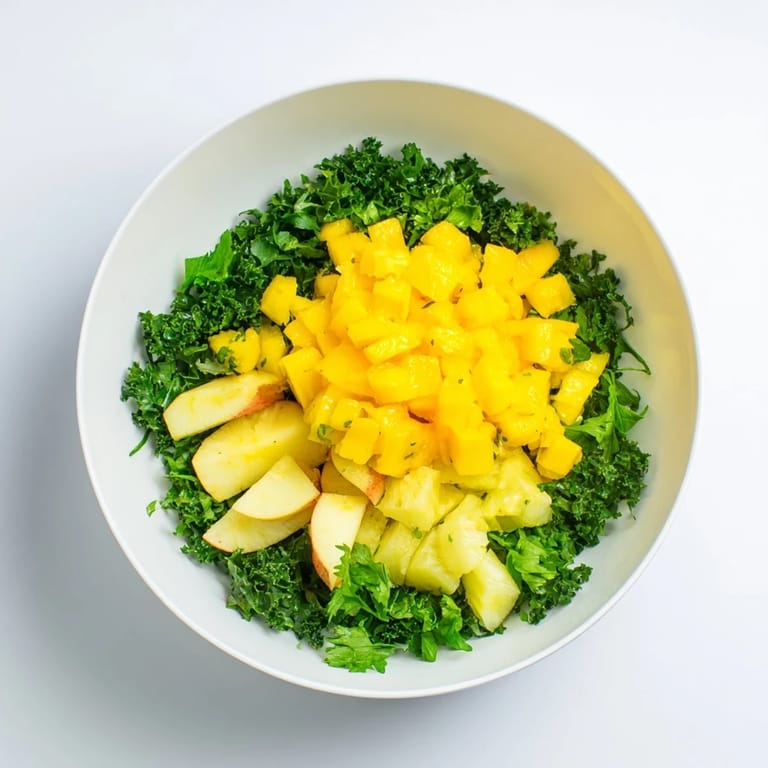
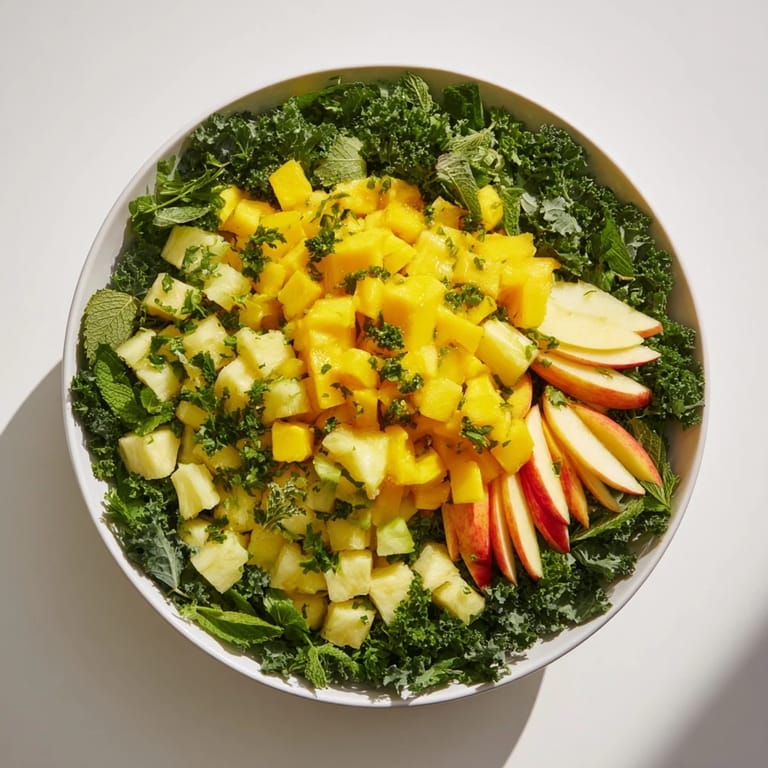
- Spread the dressed greens around the outer edges of your serving bowl, pushing them toward the rim to create a ring. The empty center becomes your canvas.
- Arrange the fruit at the center:
- Mound the diced mango, pineapple, apple, and sliced peach in that center space, keeping the colors separate or mixing them slightly—whichever makes you happier. The warm yellows against the dark green should catch the light.
- Finish with the remaining dressing:
- Drizzle what's left of the dressing over the fruit and greens, then scatter the pumpkin seeds and lemon zest across the top if you're using them.
- Serve immediately:
- Don't wait around—the dressing will soften the fruits and the greens, and you want to catch it while there's still some textural contrast and visual impact.
 Save to Pinterest
 There's a moment when a plate of food stops being just sustenance and becomes a reason to linger at the table. This salad does that. It makes people slow down, not because they're forced to, but because something about the colors and the way the flavors balance makes them want to pay attention. That's the kind of recipe worth keeping close.
Why the Colors Matter
This salad is built on contrast, and that's not just pretty—it's intentional. The bright yellows wake up your eyes before you even taste anything, and that visual excitement travels straight to your appetite. The greens aren't there just to be virtuous; they're there to ground the sweetness of the fruit and provide something substantial to chew. When you eat with your eyes first, the actual eating is already halfway to being satisfying.
Seasonal Swaps and Substitutions
Yellow fruits are seasonal fleeting things, and that's part of what makes them special. When peaches aren't in season, swap in yellow kiwi or papaya without guilt. I've made this with golden raspberries in late summer when they were cheaper than regular ones, and with bottled mango when life was too busy for farmers' markets. The bones of the recipe are strong enough to handle improvisation. If you want something creamier, thinly sliced avocado slipped in around the edges works beautifully without muddying the color story.
Timing and Make-Ahead Strategy
The beauty of this salad is that you can prepare almost everything ahead without compromise. Wash and shred your kale hours earlier, store it in paper towels in the fridge to keep it crisp. Make the dressing the morning of and refrigerate it. Dice your fruit up to four hours ahead, but keep it separate from the greens. Assemble everything just before people arrive, or better yet, do it at the table so they watch it come together. There's something theatrical about arranging it in front of your guests that makes them feel included in the creation.
- Keep fruit and greens completely separate until the final moment to prevent sogginess and preserve brightness.
- If you're short on time, the salad still works perfectly even if you just toss everything together instead of creating the landscape arrangement.
- Leftover dressing is delicious on roasted vegetables or as a dip for raw ones, so don't feel like it has to all go on the salad.
 Save to Pinterest
 Sometimes the best recipes aren't the ones that require the most skill or time—they're the ones that make you feel something, whether it's pleasure or pride or just the simple satisfaction of eating something beautiful. This salad does that every time.
Recipe Questions & Answers
- → What fruits are used in the Sunlit Glade?
This dish highlights ripe mango, pineapple, golden apple, and yellow peach for a bright, sunny flavor.
- → Which greens and herbs are included?
Shredded kale, baby spinach, fresh parsley, mint, and basil create a refreshing forest of flavors around the fruit center.
- → How is the dressing prepared?
Whisk together extra-virgin olive oil, lemon juice, maple syrup, Dijon mustard, sea salt, and black pepper until emulsified.
- → Can this dish be made ahead?
Yes, keep the fruits and greens separate until ready to serve to maintain freshness and texture.
- → Are there any allergen considerations?
This includes Dijon mustard and optional pumpkin seeds; checking ingredient labels for allergens is advised.
- → What optional garnishes enhance the dish?
Toasted pumpkin seeds and lemon zest add texture and a burst of citrus aroma.