 Save to Pinterest
 Last summer, I was tasked with bringing something to a rooftop gathering where the heat made everyone crave anything cold and bright. I stood in the produce section, overwhelmed by the sheer color of tropical fruits stacked in pyramids, and realized I didn't need to cook anything—I just needed to arrange them like they were a work of art. That afternoon, I discovered that sometimes the most impressive dishes are the ones that require zero heat and maximum confidence in fresh ingredients.
My neighbor knocked on my door mid-preparation, drawn by the smell of fresh pineapple and lime. She stayed for twenty minutes, eating dragon fruit straight from the platter while we talked about her upcoming move. That's when I understood—these fruit displays aren't just food, they're permission to slow down and linger.
Ingredients
- Ripe mangoes (2): Choose ones that yield slightly to pressure and smell floral at the stem; they're the sweetness anchor for everything else.
- Large pineapple (1): A good pineapple smells sweet at the base and feels heavy for its size, meaning it's juice-packed and perfect for spears.
- Kiwis (2): Their bright green is a visual lifeline when arranging—use them to break up warm tones.
- Papaya (1): This gives you creamy texture and peachy color that no other fruit quite delivers.
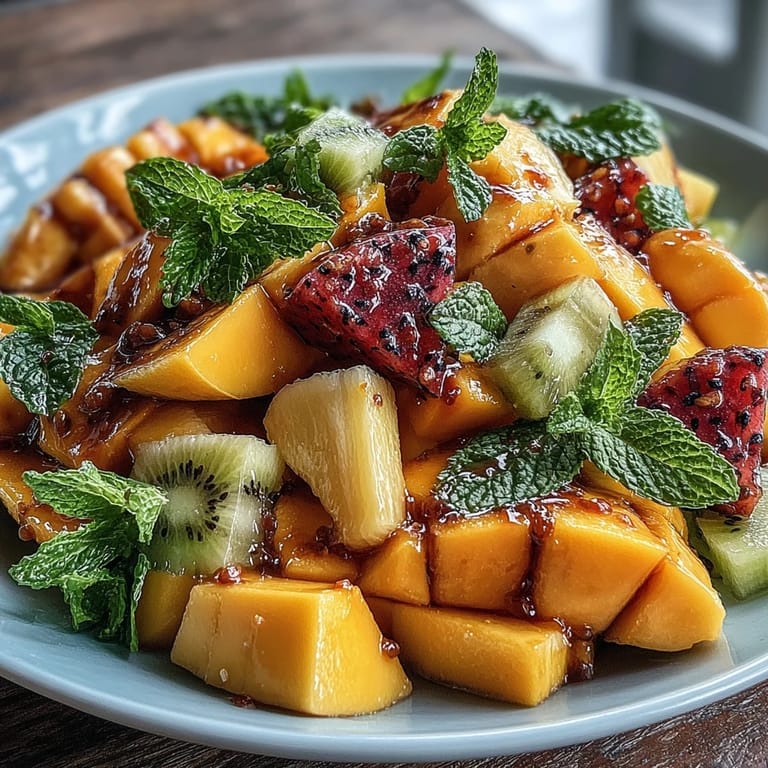
- Dragon fruit (1): It's more about showstopping pink and black speckles than flavor, but that matters for a display.
- Seedless red grapes (1 cup): These cluster nicely and fill gaps where larger fruits leave spaces.
- Fresh strawberries (1 cup): Halving them reveals their inner geometry and lets you nestle them between bigger fruits.
- Blueberries (1 cup): They're your detail work, the finishing touch that makes everything feel intentional.
- Fresh mint leaves (1/4 cup): Tear them gently just before serving so they release their oils and perfume the whole display.
- Lime (1): Cut into wedges for both visual pop and a way for guests to brighten flavors if they want.
- Vanilla Greek yogurt (1 cup) or coconut yogurt: This becomes your optional dipping sauce base—tangy and cool against the tropical sweetness.
- Honey or agave syrup (1 tablespoon): Just enough to balance the tartness without overpowering the fruit.
- Lime zest: This tiny addition to the sauce ties the whole table together.
Tired of Takeout? 🥡
Get 10 meals you can make faster than delivery arrives. Seriously.
One email. No spam. Unsubscribe anytime.
Instructions
- Prep everything with intention:
- Wash all fruits thoroughly, then work through each one methodically—mangoes first, then pineapple, then everything else. As you slice, notice which pieces are most visually striking and set those aside for the most prominent spots on your platter.
- Build your base:
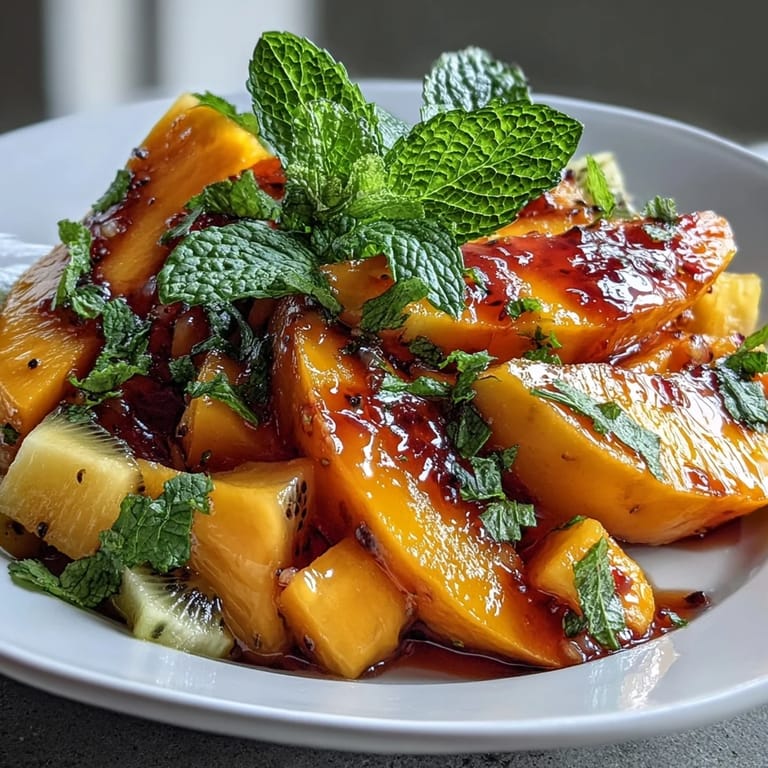
- Start with mango and pineapple in the center or along the base of your platter, fanning the slices so they overlap slightly and create natural leading lines. This foundation gives your eye somewhere to land and anchors the whole arrangement.
- Layer with abandon:
- Arrange papaya, dragon fruit, and kiwis in rings or sections around your main fruits, thinking about color contrast as you go. Let some fruits sit at angles rather than perfectly aligned—it feels more alive that way.
- Fill and scatter:
- Tuck grapes, strawberries, and blueberries into the remaining spaces, using them to cover any awkward gaps or white platter showing through. These smaller fruits become your polka dots of color.
- Finish with fresh garnish:
- Toss mint leaves across the display moments before serving, scatter lime wedges around the edges, and step back to admire what you've made. It should look like a garden decided to become lunch.
- Make the optional sauce:
- Whisk yogurt, honey, and lime zest together in a small bowl until smooth and pourable. Taste it and adjust sweetness or tartness to your preference before setting it alongside the display.
- Keep it cold:
- Refrigerate everything until guests arrive, which keeps the fruit crisp and the whole presentation looking dewy and fresh.
 Save to Pinterest
 At the rooftop gathering, I watched people circulate back to the fruit platter three times while the actual entrée sat untouched. There's something magnetic about permission to eat with your hands, to pick exactly what you want, to make fruit the main event instead of a boring side dish.
The Art of Arrangement
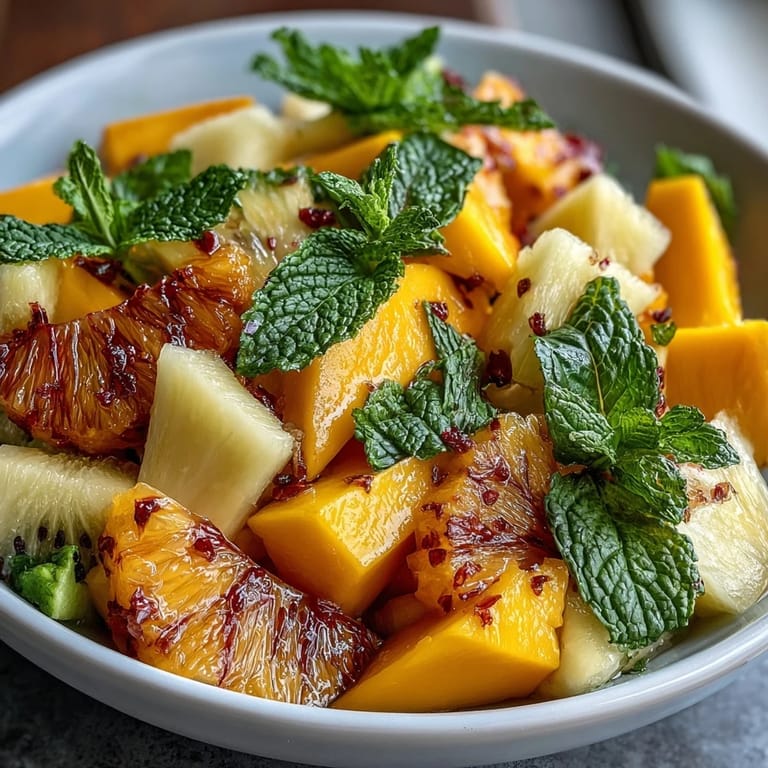
Color theory matters more than you'd think when you're working with a blank canvas of fruit. The warm yellows and oranges of mango and papaya need cool counterpoints—those kiwi greens and blueberries are your secret weapons for visual drama. I learned by trial and error that alternating warm and cool tones, then scattering the tiny berries like punctuation marks, makes the whole thing feel composed rather than random.
Choosing Peak Fruit
Ripeness is a language you learn by touching and smelling, not by looking at a calendar. A mango ready for slicing smells sweet and slightly floral, and it yields to gentle thumb pressure without feeling mushy. The pineapple should feel dense and heavy, smell fragrant at its base, and have leaves that pull free with a light tug—that's your signal it's genuinely ripe, not just colored that way by the grocery store.
Making It Feel Special
The dipping sauce transforms this from a simple fruit platter to something that feels intentional and generous. The lime zest adds a brightness that echoes the wedges you've scattered, creating a visual and flavor callback that makes guests feel like you thought of every detail. Keep the sauce in a small bowl at the center or off to one side, letting people dip or drizzle as they prefer.
- If you want extra drama, toast some coconut flakes in a dry pan for two minutes and scatter them across the top for textural contrast.
- Fresh edible flowers like pansies or nasturtiums add genuine elegance without tasting like much—they're pure visual magic.
- Chill your platter or serving board in the freezer for ten minutes before arranging so the fruit stays colder longer.
 Save to Pinterest
 This platter teaches you that sometimes the most elegant dishes require nothing but attention and fresh ingredients. Serve it with confidence, knowing you've created something that tastes as good as it looks.
Recipe Questions & Answers
- → How do I keep the tropical fruits fresh longer?
Chill the fruits and serve the display shortly after preparation. Applying lime juice to cut fruits like mango and papaya can help prevent browning.
- → Can I substitute any fruits in the display?
Yes, seasonal fruits such as passion fruit, star fruit, or melon can be used to maintain variety and freshness.
- → What is the best way to arrange the fruits for visual appeal?
Place mango and pineapple centrally or at the base in fanned slices, then layer other fruits like papaya, dragon fruit, and berries around them, alternating colors and shapes.
- → Is there a recommended garnish for enhancing aroma and color?
Fresh mint leaves and lime wedges add bright color and a refreshing scent to the display.
- → What dipping sauce pairs well with this fruit arrangement?
A vanilla Greek or coconut yogurt mixed with honey or agave syrup and lime zest provides a creamy and tangy complement.
- → How can this display accommodate dietary preferences?
Use coconut yogurt instead of dairy-based yogurt for a vegan and dairy-free option; the fruit selection is naturally gluten-free and vegan friendly.