 Save to Pinterest
 I discovered the power of negative space in food while standing in my kitchen one quiet Sunday morning, staring at a cluttered charcuterie board I'd spent an hour assembling. My eye kept landing on the empty spots between piles, and suddenly it hit me—what if the emptiness itself was the point? The Zen Balance was born that day, a dish that taught me that sometimes the most elegant presentations are the ones that know when to stop, where two perfect mirror images separated by breathing room say more than abundance ever could.
I made this for my sister's book club, and what stuck with me wasn't the compliments about presentation—it was watching everyone pause before eating, truly looking at what was in front of them. One woman said it felt meditative, and I realized this dish had somehow given permission to slow down, to notice colors and textures before diving in. That's when I knew this wasn't just an appetizer; it was an invitation.
Ingredients
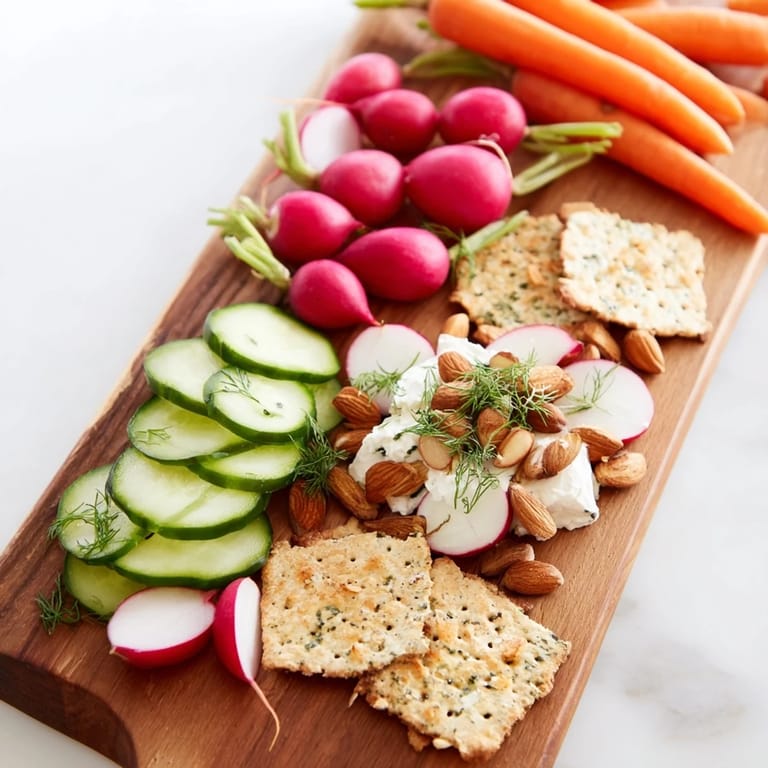
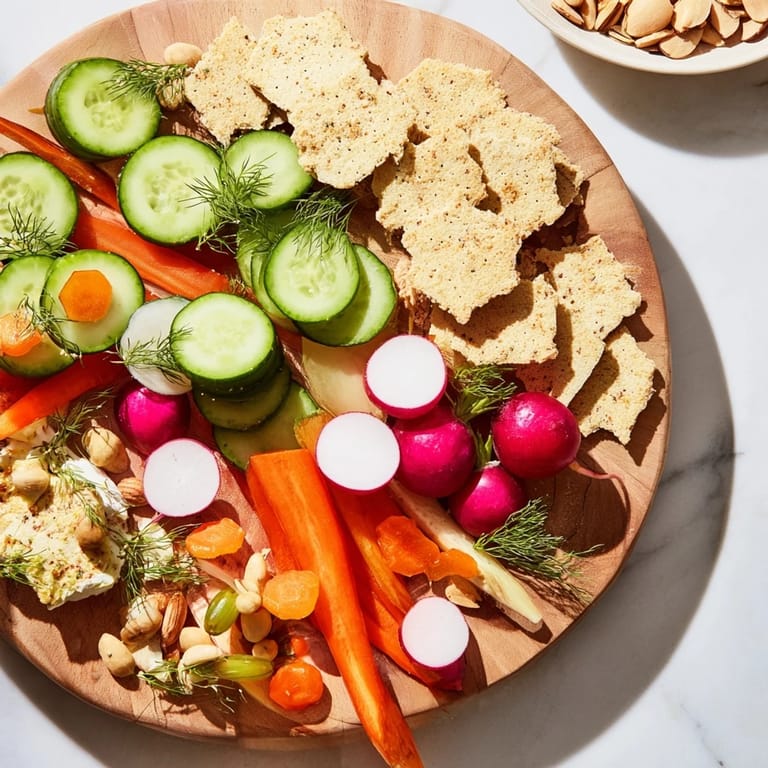
- Cucumber slices: Eight per side—their cool crispness and neutral canvas make them the perfect anchor for the arrangement, plus they stay fresh if you pat them dry first.
- Baby carrots: Eight total—the natural sweetness and bright orange become structural elements that guide the eye.
- Radishes, halved: Eight total—these little jewels bring peppery bite and their rosy hue acts like punctuation marks in your composition.
- Goat cheese rounds: Sixty grams shaped into small balls—the creamy texture contrasts beautifully with everything crisp, and their pale color anchors each side.
- Gluten-free crackers: Eight crackers—look for sturdy ones that won't shatter, and position them as your structural base.
- Roasted almonds: Thirty grams—scatter them as finishing touches; their crunch becomes part of the eating experience.
- Seedless red grapes: Eight total—these small orbs of sweetness bridge the flavors and add gentle visual rhythm.
- Fresh herbs: Chives or dill—a whisper of green transforms the whole board from ingredient study into living artwork.
Tired of Takeout? 🥡
Get 10 meals you can make faster than delivery arrives. Seriously.
One email. No spam. Unsubscribe anytime.
Instructions
- Choose your stage:
- Select a long wooden or slate board at least 60 centimeters (about 24 inches)—the length matters because it's what creates that breathing room between the two sides. Clean it well and let it be your canvas.
- Build one side with intention:
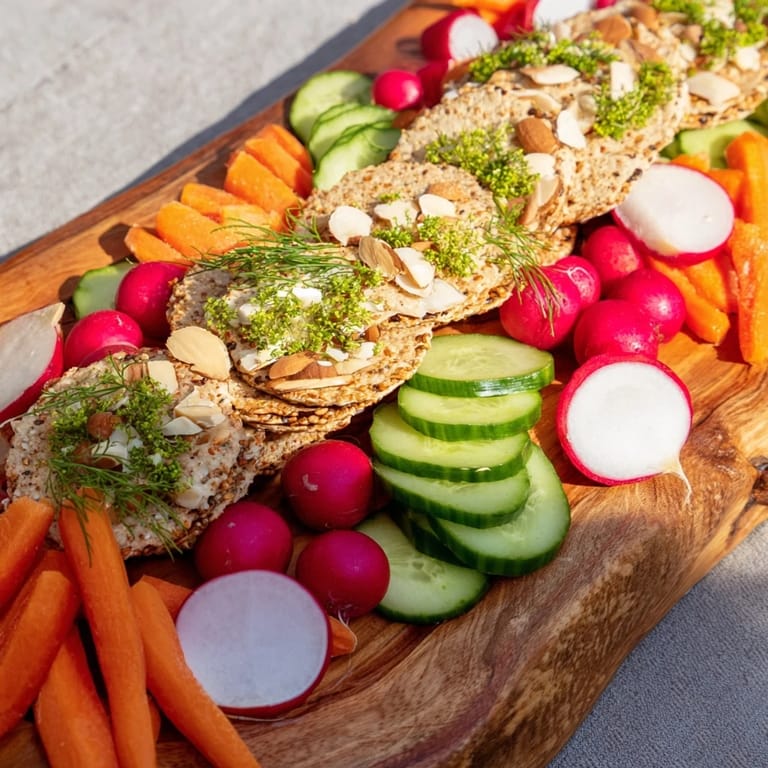
- At one end, start layering: arrange cucumber slices in a slight overlap as your foundation, lean crackers against them, cluster the carrots and radish halves nearby, nestle the goat cheese rounds where they catch light, scatter almonds for texture, and tuck the grapes into small gaps. Think of it like you're composing a small still life.
- Mirror with precision:
- Flip your perspective and recreate the exact same arrangement on the opposite end using your remaining ingredients—same order, same spacing, same intentionality. This is where the magic lives, in the symmetry.
- Honor the empty space:
- Leave the middle section completely bare; resist the urge to fill it. That void is doing the work, creating visual tension and making both sides feel more deliberate.
- Add the final whisper:
- Tuck sprigs of fresh herbs into or near each pile—just enough to add aroma and color without cluttering the composition.
- Present before consuming:
- Bring the board to the table and pause—let people absorb what you've created before anyone reaches for food. This moment of appreciation is part of the recipe.
 Save to Pinterest
 There's a moment when you step back and see the two halves reflected across that emptiness, and something clicks. It's not about being fancy or impressive; it's about respecting both the food and the person eating it enough to slow down. That's the real recipe here.
The Art of Symmetry
Symmetry isn't about perfection—it's about intention. When I arrange each element on the second side, I'm not stressed about matching the first one molecule-for-molecule; I'm thinking about balance and rhythm. The slight imperfections in positioning actually make it feel more human, more like someone thoughtfully created this rather than a machine did. Your eye will know when something feels right even if the measurements aren't exact.
Why This Matters
In a world of abundance and overstuffed plates, there's something rebellious about serving a dish that celebrates restraint. Diners often comment that this platter feels different because it demands attention—there's nowhere to hide or rush. Every element has room to be itself, and that visibility somehow makes flavors taste clearer. When goat cheese meets a radish, it's not competing with a dozen other textures; it's its own small moment.
Making It Your Own
The framework is flexible once you understand the principle. Summer calls for heirloom tomato slices and basil; autumn invites roasted beets and walnuts; spring could feature fresh peas and tarragon. The beauty is that you're not locked into specific ingredients—you're locked into the philosophy of balance and breathing room. Test different cheese varieties, experiment with seasonal vegetables, or swap nuts for seeds depending on what speaks to you that season.
- Try a vegan version using cashew cheese rounds instead of goat cheese for an equally creamy experience.
- Pair with sparkling water infused with lemon or a crisp white wine to cleanse the palate between flavors.
- Remember that negative space is your secret weapon—resist filling every corner, even when doubt creeps in.
 Save to Pinterest
 This dish reminds me that beauty and restraint can live in the same breath. When you serve it with presence and let the silence between the two sides do the talking, you've created something guests won't forget.
Recipe Questions & Answers
- → What board type is ideal for this presentation?
A long wooden or slate board of at least 60 cm length works best to showcase the balanced arrangement.
- → Can I substitute goat cheese for a different option?
Yes, a plant-based cheese works well for a vegan variation without compromising texture.
- → How should the ingredients be arranged?
Place half the ingredients at one end and mirror the exact arrangement on the opposite end, leaving the center clear to highlight symmetry.
- → What garnishes enhance the presentation?
Fresh herbs like chives or dill add both aromatic and visual appeal to each pile.
- → Is this dish suitable for gluten-sensitive guests?
Yes, using certified gluten-free crackers ensures the dish remains gluten-free.
- → What beverage pairs well with this platter?
A crisp white wine such as Sauvignon Blanc complements the fresh and light ingredients beautifully.