 Save to Pinterest
 There's something about the smell of ham sizzling in a pot that makes everything feel intentional, like you're building something worth waiting for. My neighbor once mentioned her grandmother's bean soup in passing, and I became oddly obsessed with recreating that casual comfort she described—not fancy, just honest. The first time I made this, I added the ham too early and it got lost in the broth, so I learned to let it sing on its own before the beans arrived. Now it's one of those recipes I reach for without thinking, the kind that fills the kitchen with warmth before anyone's even tasted it.
I made this for a small dinner party on a rainy November evening, and people went quiet mid-conversation when they took their first spoonful—not because it was fancy, but because it was exactly what they didn't know they needed. Someone asked for the recipe right there at the table, which felt better than any compliment about technique. That's when I realized this soup belonged in the rotation permanently.
Ingredients
- Smoked ham, diced (250 g): The smoky depth here is non-negotiable—it's what transforms beans and broth into something with real character, so don't skimp on quality.
- Cooked white beans (400 g): Cannellini or navy beans work beautifully because they're tender enough to dissolve slightly into the broth without falling apart completely.
- Potatoes, peeled and diced (3 medium): They absorb the ham's flavor and thicken the soup naturally as they break down a little.
- Carrots, diced (2 medium): The sweetness balances the smokiness, and they soften into almost creamy pieces by the end.
- Celery stalks, diced (2): This is the quiet backbone that rounds out the vegetable trio without announcing itself.
- Onion, finely chopped (1 large): Cook it long enough and it becomes the base that holds everything together.
- Garlic, minced (2 cloves): Just enough to whisper through the soup without overpowering the ham.
- Chicken or vegetable broth (1.5 liters): Low-sodium lets the smoked ham shine instead of fighting against saltiness.
- Bay leaves (2): Remove them before serving—they're the silent flavor-builders that you don't taste directly but would definitely miss.
- Dried thyme (1 tsp): It ties the European feeling together and complements ham in a way that feels almost instinctive.
- Black pepper, freshly ground (½ tsp): Fresh is worth the extra thirty seconds because pre-ground loses its bite.
- Salt, to taste: Always adjust at the end since the ham and broth already bring saltiness to the table.
- Olive oil (2 tbsp): It's the stage for your aromatics and keeps them from sticking.
- Fresh parsley, chopped (2 tbsp, optional): A sprinkle at the end wakes everything up with a hint of brightness you didn't know you wanted.
Tired of Takeout? 🥡
Get 10 meals you can make faster than delivery arrives. Seriously.
One email. No spam. Unsubscribe anytime.
Instructions
- Start with the aromatics:
- Heat olive oil in a large pot over medium heat, then add onion, carrots, and celery. Let them soften for about five minutes, stirring now and then so they don't stick to the bottom—you'll notice the kitchen starting to smell like something good is happening.
- Bloom the garlic:
- Once the vegetables have lost their rawness, add the minced garlic and cook for just a minute until it becomes fragrant. This single minute makes all the difference between garlic disappearing into the background and actually tasting alive.
- Toast the ham:
- Stir in the diced smoked ham and let it cook for three to four minutes. You'll watch the ham's edges brown slightly and release its smoke into the pot—this is when the whole soup starts claiming its character.
- Build the soup:
- Add the diced potatoes, drained beans, bay leaves, thyme, black pepper, and broth all at once. Stir everything together until the beans are distributed evenly and nothing's sticking to the bottom.
- Simmer gently:
- Bring the soup to a boil, then turn the heat down to low and cover it. Let it simmer for about an hour, or until the potatoes are so tender they break apart if you press them with a spoon. The longer it sits, the more the flavors settle into each other.
- Finish and taste:
- Fish out the bay leaves carefully, then taste the soup. Add salt slowly because you might be surprised how much is already there—remember that ham broth often carries its own saltiness.
- Serve with warmth:
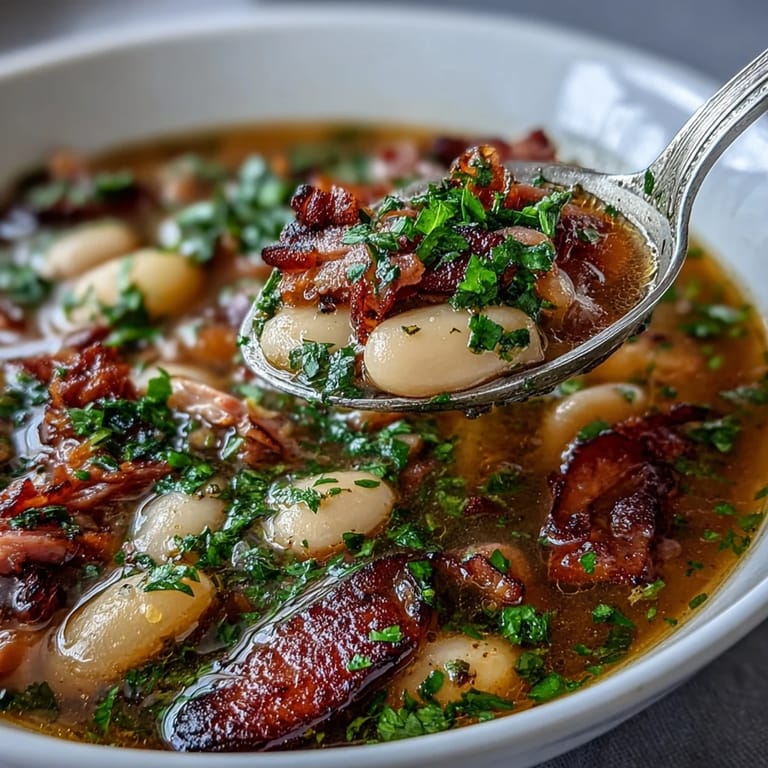
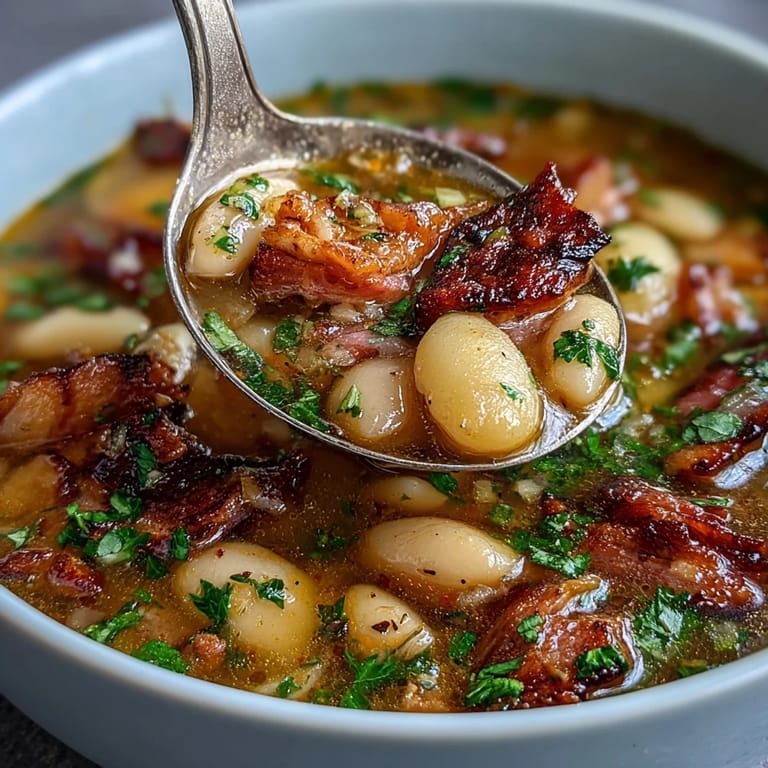
- Ladle into bowls and top with fresh parsley if you have it on hand. Serve while it's steaming so you get the full comfort of it.
 Save to Pinterest
 What I love most about this soup is that it gets better the next day, when all the flavors have had time to get to know each other properly. There's something grounding about knowing you can make it Sunday and eat it Wednesday without worrying about it going south.
Why This Soup Belongs in Winter
Bean soups have a way of making you feel like you're taking care of yourself without requiring you to think too hard about it. The combination of beans and ham gives you protein without feeling lean, and the potatoes add enough substance that you don't finish the bowl wondering if you should have made something more. It's filling without being heavy, which means you can eat two bowls and still feel okay about it.
When You Want to Make It Your Own
Once you've made this a few times, you'll start seeing variations everywhere. Some people swear by adding a ham bone and letting the whole thing become richer over time, while others use smoked turkey or a good sausage instead of ham and find the soup becomes something slightly different but equally welcome. The beauty of this soup is that it's confident enough to accept small changes without losing its identity.
Storing and Reheating Like a Pro
Leftovers keep in the refrigerator for three days, and honestly, that's when the soup tastes best because the flavors have had time to settle into each other completely. When you reheat it, do it gently on the stovetop rather than the microwave—it wakes up better that way and tastes like you just made it fresh.
- Cool the soup completely before refrigerating so condensation doesn't dilute the flavor.
- If the soup thickens too much after sitting, thin it with a splash of broth when reheating.
- Freeze it in portions if you want to keep it longer than three days, and it'll still taste honest after a month.
 Save to Pinterest
 This is the kind of soup that proves you don't need complicated techniques or exotic ingredients to create something that feels like home. Make it once and you'll understand why it sticks around.
Recipe Questions & Answers
- → What type of beans work best in this dish?
White beans like cannellini or navy beans provide the best texture and mild flavor, blending seamlessly with the other ingredients.
- → Can smoked ham be substituted?
Yes, smoked turkey or sausage can be used to introduce a similar smoky depth while varying the flavor profile.
- → How do the herbs affect the flavor?
Bay leaves and thyme add subtle earthy and herbal notes that enhance the savory richness without overpowering the main ingredients.
- → What is the best cooking method to combine flavors?
Simmering the soup gently allows the smoky ham, beans, potatoes, and aromatics to meld, creating a cohesive and hearty flavor.
- → How can leftovers be stored safely?
Store leftovers in an airtight container in the refrigerator and consume within three days for optimal freshness.