 Save to Pinterest
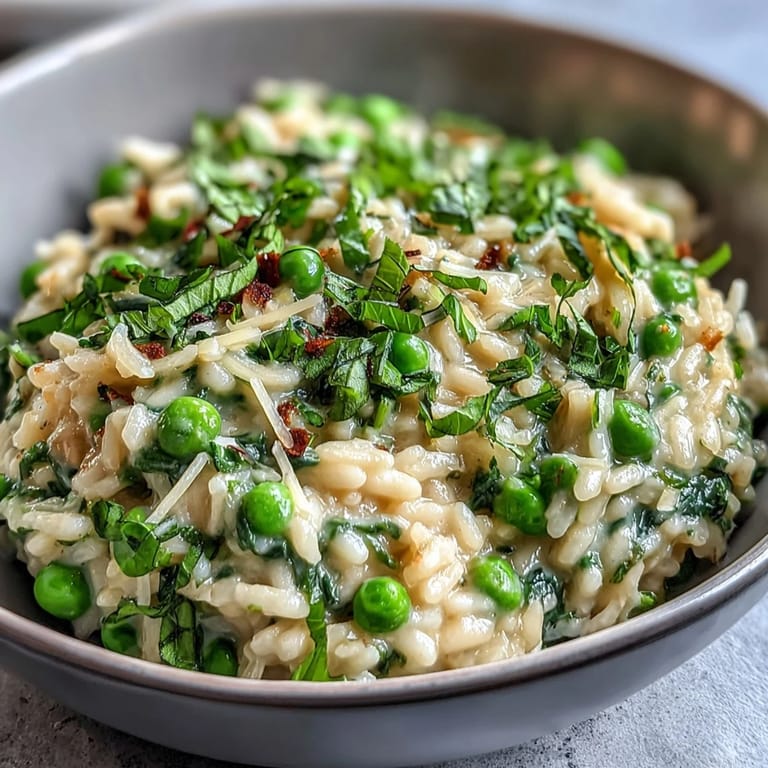
 Last spring, I stood in my kitchen watching the first farmers market haul of the season tumble across my countertop—bright green peas still in their pods, mint so fragrant it filled the whole room. My neighbor had just mentioned craving something light but elegant for dinner, and I found myself reaching for the Arborio rice without much of a plan, just a feeling that these spring vegetables belonged together in something creamy and luxurious. That evening, stirring this risotto while the butter melted into the warm broth, I realized I'd stumbled onto a dish that somehow tasted like the season itself.
I made this for my sister when she visited on an unusually warm April afternoon, and she kept circling back to the stove asking what smelled so good. Watching her face light up when she took that first spoonful—that moment when you taste something and it just clicks—reminded me why cooking risotto, for all its stirring and patience, never really feels like a chore.
Ingredients
- Fresh or frozen spring peas (1 cup): Fresh peas are magic if you can find them, but frozen ones work beautifully and often taste fresher than those that have been sitting around; add them late in cooking so they stay bright and tender.
- Arborio rice (1 1/2 cups): This short-grain rice is essential because its starch creates that creamy texture you're after without needing cream; don't substitute long-grain rice or the whole dish falls apart.
- Vegetable broth (4 cups): Keep it simmering the entire time so each addition coats the rice evenly and helps it cook through properly.
- Unsalted butter (3 tablespoons divided): The butter builds flavor throughout, not just at the end; split between the beginning and finish for depth.
- Dry white wine (1/2 cup): This adds acidity and complexity that balances the richness; skip the cheap stuff, as it matters.
- Grated Parmesan cheese (1/2 cup): Freshly grated makes an enormous difference in both texture and flavor; pre-grated cheese has anti-caking agents that can make the risotto feel grainy.
- Fresh mint (2 tablespoons chopped): Add this right at the end so it stays bright and doesn't lose its personality to heat.
- Small onion (1, finely chopped): This builds a sweet, aromatic base that lets the peas and mint shine rather than overpower them.
- Garlic (2 cloves minced): Just enough to add depth without making this a garlicky dish.
- Extra-virgin olive oil (2 tablespoons): Good oil matters here since it's part of the flavor story from the start.
- Lemon zest (1, optional but recommended): This tiny addition brightens everything and wakes up the whole bowl.
- Heavy cream (1/4 cup optional): Skip this if you're confident in your risotto technique; the rice starch alone creates plenty of creaminess.
- Salt and freshly ground black pepper: Taste as you go and adjust at the very end when you can see the final texture.
Tired of Takeout? 🥡
Get 10 meals you can make faster than delivery arrives. Seriously.
One email. No spam. Unsubscribe anytime.
Instructions
- Get your broth warming and stay organized:
- Pour your vegetable broth into a saucepan and let it come to a gentle simmer over low heat. This warm broth is like the secret weapon of risotto—cold broth shocks the rice and disrupts the whole cooking process, so keep tasting it as you go to make sure it stays hot.
- Build your flavor base with onion and butter:
- Heat your olive oil and 2 tablespoons of butter in a large, heavy-bottomed skillet over medium heat, then add your finely chopped onion. Cook this gently for about 4 minutes until it turns soft and translucent—you want it sweet and mellow, not browned or caramelized, so adjust your heat if needed.
- Toast the garlic just long enough:
- Add your minced garlic and let it cook for exactly 1 minute until the kitchen smells absolutely incredible. This brief moment toasts the garlic just enough to mellow it without letting it burn, which would make everything taste bitter.
- Coat the rice in the butter mixture:
- Pour in your Arborio rice and stir constantly for about 2 minutes, making sure every grain gets coated in that buttery, garlicky base. You'll notice the grains start to look slightly translucent around the edges—this is exactly what you want and signals the rice is ready for liquid.
- Add the wine and let it absorb:
- Pour in your white wine and keep stirring until it's mostly absorbed and the rice smells wonderfully savory. This adds acidity and prevents the risotto from tasting one-dimensional and heavy.
- Add broth slowly and stir with intention:
- Here's where patience becomes your friend: add the warm broth one ladleful at a time, stirring frequently and letting each addition absorb before adding more. This takes about 18 to 20 minutes total, and yes, you do need to stir fairly often—it's not just about cooking the rice, it's about coaxing out its starch to create that signature creaminess.
- Slip the peas in near the finish:
- When you have about 5 minutes of cooking left, stir in your peas (frozen ones need only these final minutes, while fresh ones can handle a bit longer). Taste a grain of rice and it should be tender but still have a tiny bit of bite, never mushy.
- Finish with butter, cheese, and green brightness:
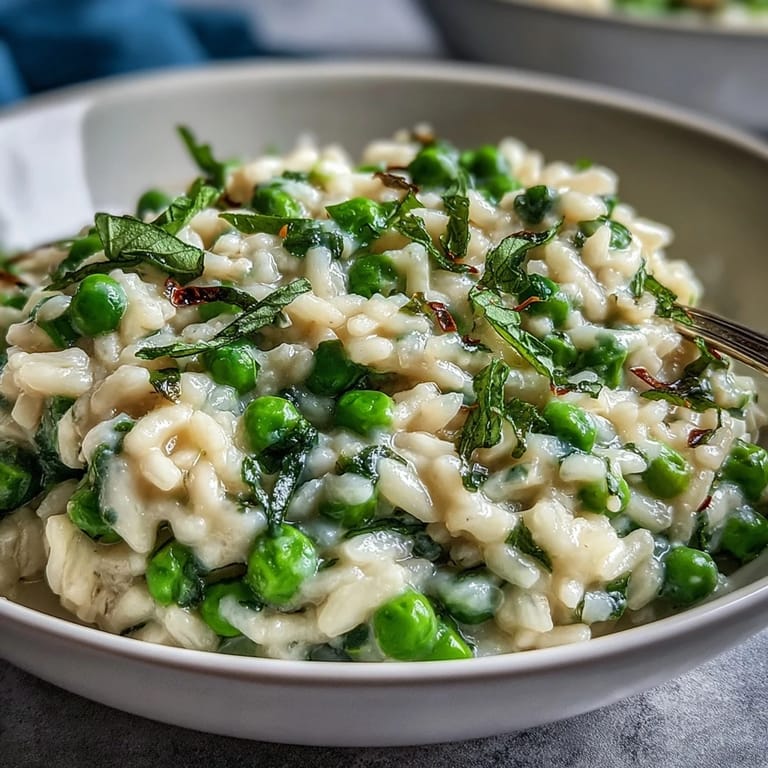
- Remove from heat and stir in your remaining tablespoon of butter, the grated Parmesan, fresh mint, lemon zest if using it, and that optional splash of heavy cream. The risotto should flow slightly on the plate like lava, not sit in a stiff mound—if it seems thick, stir in a splash of warm broth to loosen it.
- Let it rest and serve immediately:
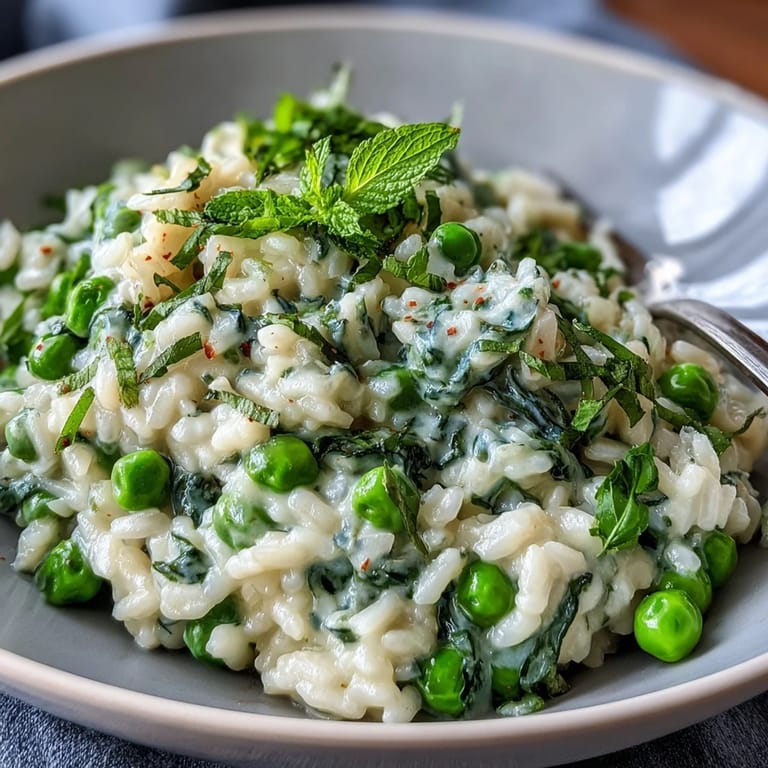
- Give it 2 minutes off the heat for the flavors to settle, then serve right away in warm bowls with extra mint and Parmesan scattered on top.
 Save to Pinterest
 There's something almost meditative about the rhythm of making risotto, the repetitive motion of stirring while the rice slowly transforms from hard little pellets into something silky and alive. I've made this dish now when I needed to think through a decision, when I wanted to slow down after a hectic week, when I was cooking for someone who really mattered—and every single time, the patience it asks for feels worth it the moment someone takes that first bite.
Why Spring Deserves This Risotto
This dish captures that exact moment when winter heaviness lifts and you suddenly crave something that tastes like green and growing things. The peas bring their gentle sweetness, the mint adds this almost shocking brightness, and the Parmesan provides the richness that keeps it from feeling too light. It's the kind of food that makes sense only in spring—heavier during other seasons, it would feel off-note, but right now it's exactly what the season is asking for.
The Secret to Creamy Without Heavy
Here's something I learned after making this a dozen times: the creaminess comes entirely from the Arborio rice itself, not from any cream at all. The constant stirring releases the starch, and that starch is what makes risotto luxurious and spoonable, so if you skip the cream (which I almost always do), you're not losing anything. In fact, you gain clarity—the peas and mint shine brighter without the heaviness that cream brings, and the dish feels like spring instead of like comfort food.
Playing Around Once You Know the Basics
Once you've made this once or twice, it becomes a template you can play with confidently. Some days I add baby spinach right before the mint for extra green, other times I'll top the whole thing with toasted pine nuts for crunch, or a handful of pea shoots if I can find them. A few shaved asparagus pieces stirred in at the pea stage add elegance, or you could stir through some wild mushrooms that you've sautéed separately if you want more depth. The base technique stays the same—everything else is just you making the dish your own.
- If you have fresh peas still in their pods, shell them 10 minutes before you start cooking and use them for an even brighter flavor.
- Make sure you're using a heavy-bottomed pan so the rice cooks evenly and doesn't scorch on the bottom while stirring.
- Save your best Parmesan for sprinkling on top—it matters more than the amount mixed into the risotto itself.
 Save to Pinterest
 This risotto has become my go-to dish for those moments when I want to impress without stress, when I want to cook something that feels both comforting and sophisticated. Make it once and you'll understand why spring pea risotto never really gets old.
Recipe Questions & Answers
- → Can frozen peas be used instead of fresh?
Yes, frozen peas work well and can be added directly to the dish during the final cooking minutes.
- → What type of rice is ideal for this dish?
Arborio rice is preferred as it releases starch slowly, creating the creamy texture desired in this dish.
- → Is white wine necessary in the cooking process?
White wine adds acidity and depth, but it can be substituted with extra broth if preferred.
- → How do you prevent the rice from becoming mushy?
Stir gently and add hot broth gradually, allowing the rice to absorb liquids slowly for perfect al dente texture.
- → Can this dish be made vegan?
Yes, by using plant-based butter and cheese alternatives and omitting cream, the dish suits vegan preferences.