 Save to Pinterest
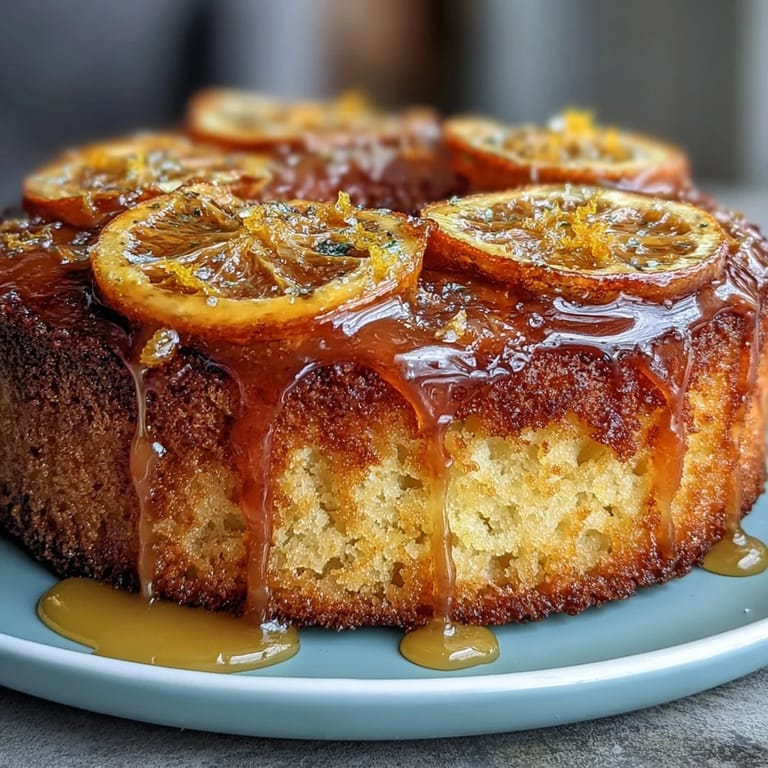
 There's something about the smell of oranges simmering in sugar that makes you pause whatever you're doing. I discovered this cake quite by accident, watching the candied slices turn translucent in their syrup and thinking they deserved a home better than a jam jar. The olive oil came to mind first, and everything else followed naturally, like the cake had been waiting for those bright, bitter-sweet circles all along.
I made this for my neighbor one gray afternoon when she'd been poorly, and she ate two slices with the sort of slow attention that meant it mattered. She asked me back three days later just to sit with the leftovers, and we talked about nothing important while the cake sat between us, getting better somehow as it aged. That's when I knew it was a keeper.
Ingredients
- Oranges for candying: Medium ones work better than large, as they cook through evenly without the centers staying tough or the edges turning bitter.
- Granulated sugar: You'll need 1 cup for the candying syrup and 1 cup for the cake itself, so measure carefully and keep them separate.
- Water: Use 1 cup for the candying process to create a gentle, protective syrup.
- All-purpose flour: 2 cups gives you structure without the cake becoming dense or crumbly.
- Baking powder and baking soda: Together they create a tender rise, but measure them precisely or you'll taste the metallic edge of too much.
- Salt: Just 1/2 teaspoon, but it's crucial for deepening the citrus notes.
- Orange zest: From one whole orange, and this is where you coax every bit of fragrant oil you can without hitting the bitter white pith.
- Eggs: Room temperature makes them incorporate smoothly into the oil, creating that pale, thick mixture that promises good structure.
- Extra virgin olive oil: Use one you actually like drinking, as its personality will show in the cake, grassy or fruity or peppery as your oil tends.
- Whole milk: Room temperature, just like the eggs, so the batter doesn't seize.
- Vanilla extract: A small measure, but it whispers rather than shouts, complementing the citrus.
- Powdered sugar: For the glaze, and sifting removes lumps that would make it grainy.
- Lemon juice: Adds sharpness that makes the orange taste more like itself.
Tired of Takeout? 🥡
Get 10 meals you can make faster than delivery arrives. Seriously.
One email. No spam. Unsubscribe anytime.
Instructions
- Candy the oranges first:
- Combine the sugar and water in a large skillet and bring to a gentle simmer, stirring just until the sugar dissolves completely. Add your orange slices in a single layer and let them cook low and slow for 20 to 25 minutes, turning them occasionally so they caramelize evenly on both sides. You'll know they're done when they turn translucent and the rind becomes tender enough to bend without snapping, at which point transfer them to parchment paper to cool.
- Ready your oven and pan:
- Preheat to 350°F and grease your 9-inch round cake pan, then line the bottom with parchment paper so the cake releases without sticking. This small step saves heartbreak later.
- Combine dry ingredients:
- In a separate bowl, whisk together the flour, baking powder, baking soda, and salt, making sure everything is evenly distributed. Set it aside and keep your hands off it until you need it.
- Make the wet base:
- In a large mixing bowl, combine the sugar and orange zest and rub them together between your fingers until the sugar feels damp and smells like sunshine. Whisk in your room-temperature eggs one at a time, whisking well after each addition, until the mixture becomes pale and thick enough to hold a ribbon trail when you lift the whisk. Slowly drizzle in the olive oil while whisking constantly to emulsify everything into a smooth, glossy batter.
- Layer and fold:
- Add half the dry ingredients to the wet mixture and fold gently until almost combined, then add half the milk and the vanilla, folding until it just comes together. Repeat with the remaining dry ingredients and milk, stopping as soon as you don't see flour streaks anymore, because overmixing makes the cake tough.
- Assemble in the pan:
- Arrange the cooled candied orange slices in a single layer on the bottom of your prepared pan, then pour the batter over them and smooth the top gently. Some slices will float up during baking and that's fine, even lovely.
- Bake until done:
- Slide it into the oven for 45 to 50 minutes, checking at the 45-minute mark with a toothpick in the center. When it comes out clean or with just a crumb or two, you're finished.
- Cool with patience:
- Let the cake rest in the pan for 15 minutes while it firms up enough to handle, then invert it onto a wire rack and let it cool completely before you touch it with the glaze. This matters more than you'd think.
- Make the glaze:
- Sift the powdered sugar into a bowl and whisk in the orange juice and lemon juice, adding the citrus slowly until you reach a consistency that drizzles but doesn't run. Drizzle it over the cooled cake and top with a few reserved candied oranges if you have them left.
 Save to Pinterest
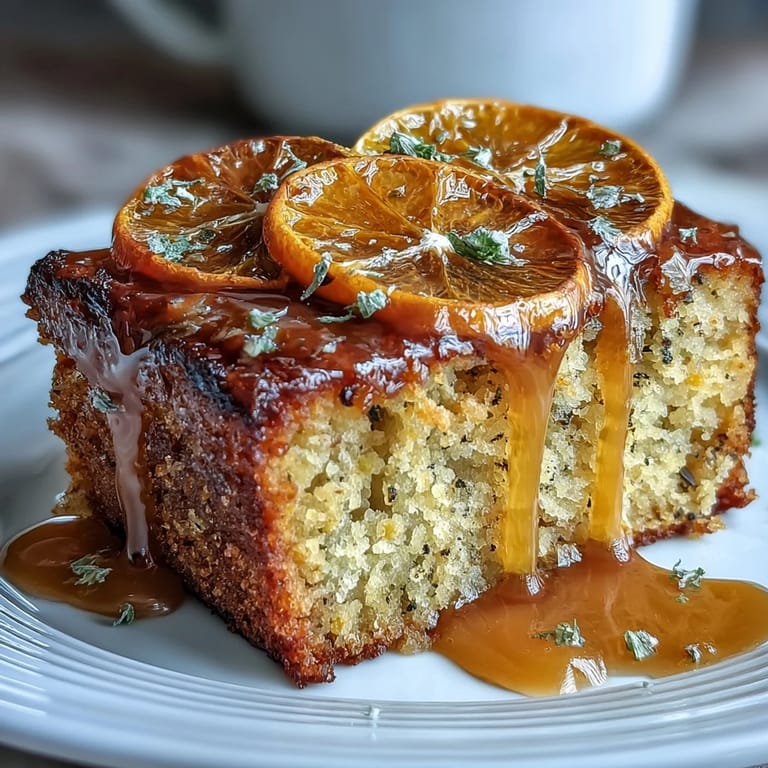
 My daughter once asked why this cake was so popular at school bake sales, and I realized it was because people recognized something in it, something honest and not trying too hard to be fancy. There's generosity in a cake that feeds ten people and tastes better each time you cut into it.
Why Candied Oranges Matter
The candying step isn't fussy or unnecessary, though it might look like it from the outside. When you cook oranges gently in sugar and water, the acid softens and the bitterness mellows, transforming them from something tart into something that tastes almost like marmalade but keeps its structure. They become edible jewelry in the cake, holding their shape and their shine, and they're what people remember asking for the recipe over.
The Olive Oil Advantage
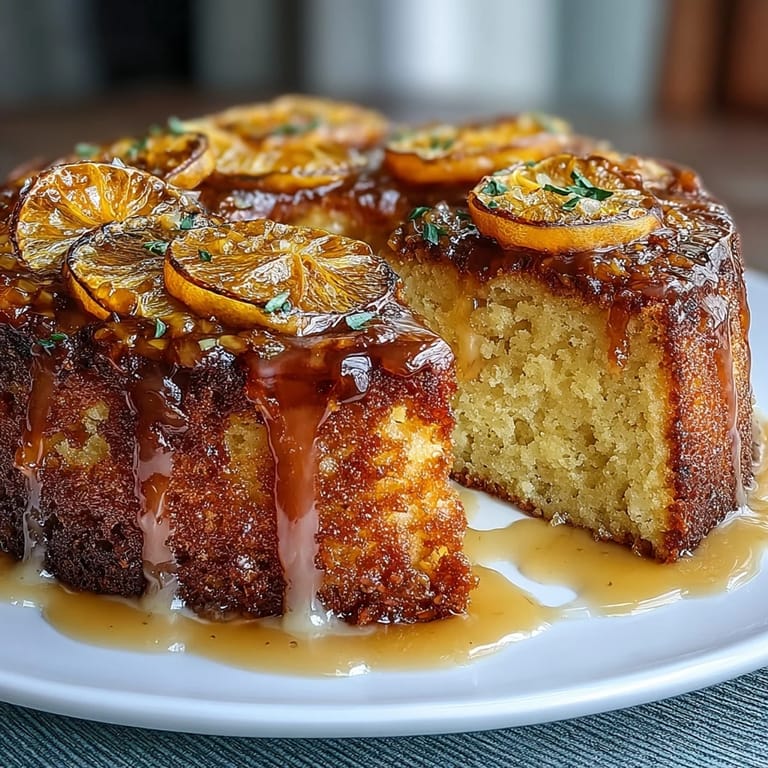
Olive oil cakes have a reputation for being moister and keeping longer than butter cakes, and it's entirely deserved, but only if you whisk it in slowly so it emulsifies rather than separating. The fat coats the flour particles differently than butter, creating a tender crumb that stays soft for days. You also taste the oil itself, so use something you'd drizzle on good bread.
Storage and Serving Suggestions
This cake keeps beautifully in an airtight container for three days, and it actually improves as the flavors settle and mellow slightly, making it perfect for baking ahead. Serve it at room temperature with Earl Grey tea, or pair it with a glass of Moscato d'Asti if you're feeling celebratory.
- Slice it with a serrated knife dipped in hot water between each cut for clean, beautiful pieces.
- You can make the candied oranges days ahead and store them in their syrup in a jar, making assembly day much easier.
- Leftover candied oranges are gold for stirring into yogurt, topping ice cream, or snacking on when nobody's watching.
 Save to Pinterest
 This cake is the sort of thing that reminds you why you started cooking in the first place, simple enough to manage but special enough to matter. Make it for someone you want to impress, or just for yourself and a quiet afternoon.
Recipe Questions & Answers
- → How do you make the candied oranges?
Simmer thinly sliced oranges in sugar and water until translucent and tender, about 20-25 minutes, then cool on parchment.
- → Can I use blood oranges instead of regular oranges?
Yes, blood oranges provide a richer color and a slightly deeper flavor, enhancing the cake's visual appeal and taste.
- → What is the purpose of olive oil in this cake?
Olive oil lends moistness and a subtle fruity aroma, making the cake tender and fragrant without overpowering the citrus notes.
- → How should I store leftovers to keep them fresh?
Keep the cake in an airtight container at room temperature for up to three days to maintain freshness and flavor.
- → What pairs well with this cake for serving?
Pair this delicate cake with a Moscato d’Asti or a cup of Earl Grey tea to complement its bright and sweet flavors.
- → Can I substitute ingredients to alter texture or flavor?
Greek yogurt can replace milk for a tangier crumb, or use different citrus juices in the glaze for varied zestiness.