 Save to Pinterest
 I discovered this dish on a crisp autumn afternoon when I was trying to elevate a simple roasted vegetable platter. As I arranged thin slices of sweet potato and carrot in one of my grandmother's copper ramekins, something magical happened—the vegetables began to caramelize into this gorgeous penny-bright mosaic, and I suddenly understood why she kept those little dishes displayed on her kitchen shelf. Now every time I make them, I'm transported back to her kitchen, where food was never just sustenance but a way of showing someone you loved them.
I'll never forget the first time I served these at a Thanksgiving potluck—a friend came back for seconds and said they tasted like autumn in copper. That's when I knew I'd created something special, something that connected people to a feeling more than just flavors.
Ingredients
- Sweet potatoes (2 medium, peeled and thinly sliced): These are your golden foundation—slice them thin enough to caramelize quickly but thick enough to hold their shape. I learned to use a mandoline here, which saves your fingers and ensures even cooking.
- Carrots (2 large, peeled and thinly sliced): They add natural sweetness and that pretty orange color that makes the dish so visually striking. Don't skip the peeling; the thin outer layer can become tough when roasted.
- Olive oil (2 tablespoons): Just enough to coat everything and help the vegetables achieve that glossy, caramelized exterior you're after.
- Smoked paprika (1 teaspoon): This is your secret ingredient. It adds a subtle smokiness that makes people ask what you did to make it taste so sophisticated.
- Sea salt (½ teaspoon) and black pepper (¼ teaspoon): Season generously—these vegetables need it to really shine.
- Dried apricots (½ cup, sliced): Their natural sweetness creates pockets of flavor throughout the dish. I prefer them slightly chewy rather than rock-hard, so avoid ultra-dried varieties.
- Pecan halves (½ cup, lightly toasted): Toasting them yourself makes all the difference—you'll smell the nutty aroma as you cook, and it deepens the flavor considerably.
- Aged cheddar cheese (1 cup, coarsely grated): The longer it's aged, the more complex and satisfying the flavor. Sharp cheddar is worth hunting for here.
- Fresh chives (2 tablespoons, finely chopped): A small garnish that adds brightness and reminds your palate that good food is also about color and texture.
Tired of Takeout? 🥡
Get 10 meals you can make faster than delivery arrives. Seriously.
One email. No spam. Unsubscribe anytime.
Instructions
- Set your stage:
- Preheat your oven to 400°F and let it come to full temperature. This matters more than you might think—you want those vegetables to sizzle when they hit the heat, not steam.
- Dress your vegetables:
- In a large bowl, toss your sweet potato and carrot slices with olive oil, smoked paprika, salt, and pepper. Use your hands if you like—it's the best way to make sure every slice gets kissed with seasoning. The oil should coat everything evenly, and the paprika should color them a deep bronze.
- Build your towers:
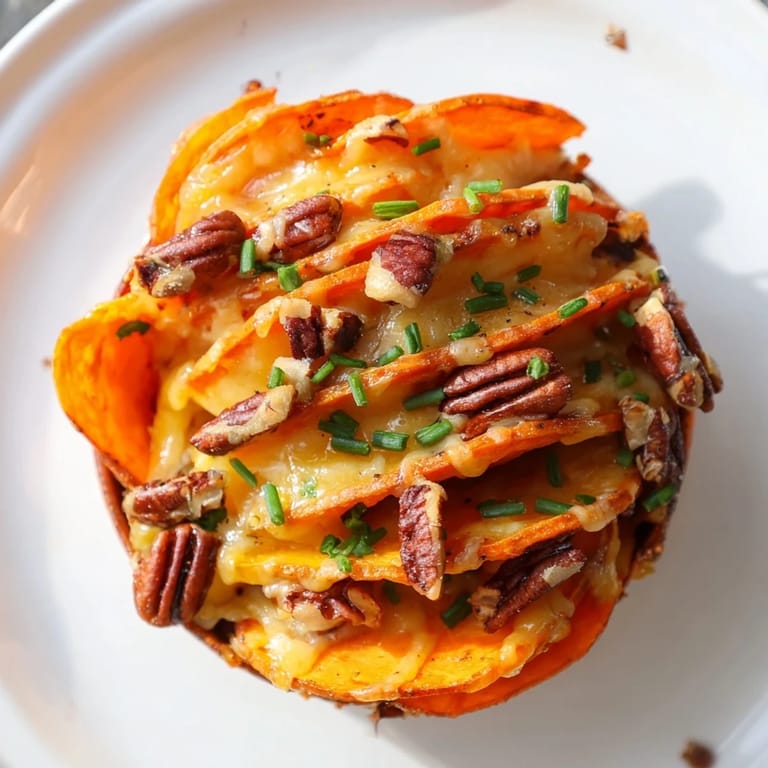
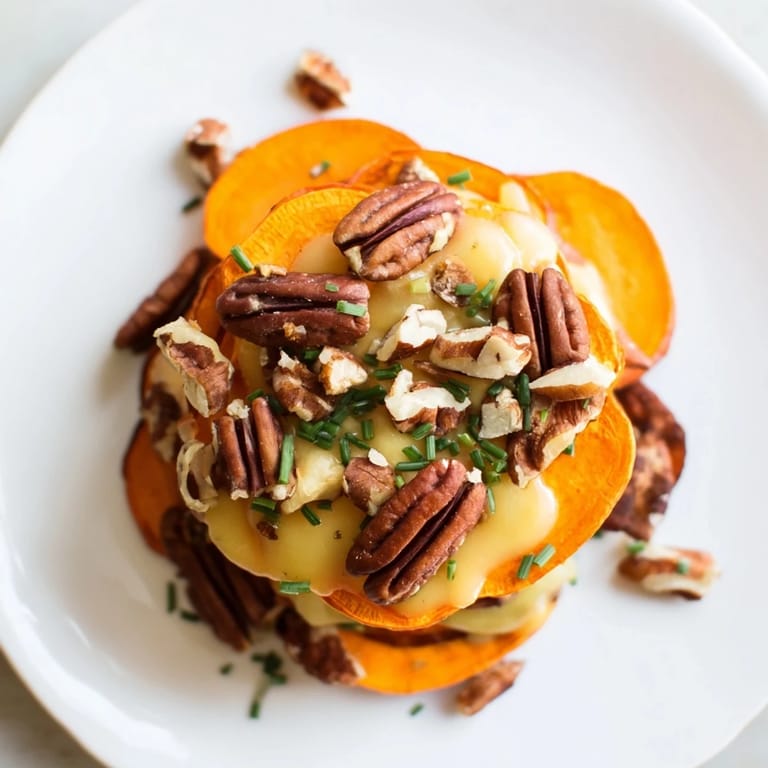
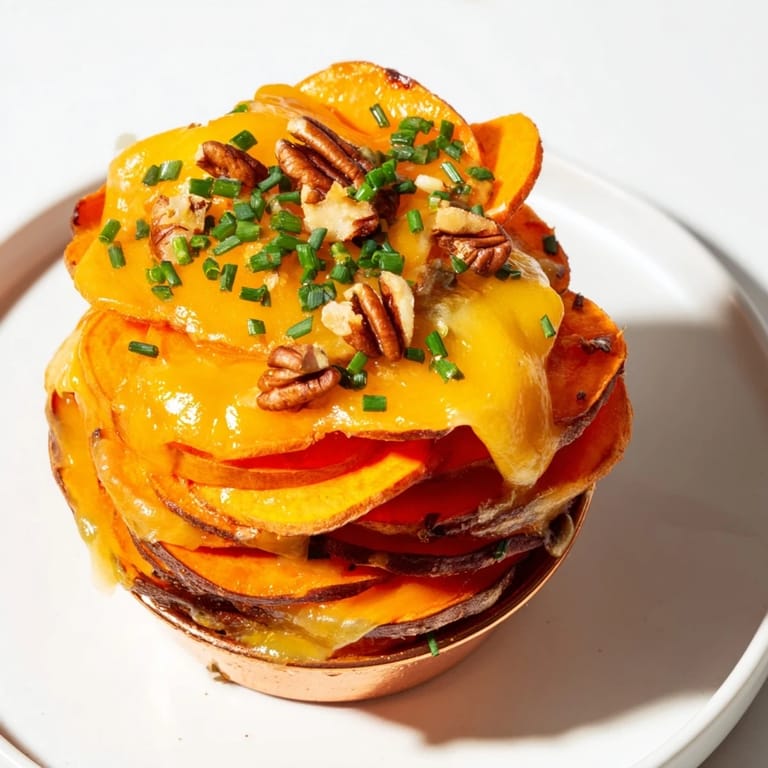
- This is where the magic happens. Take one copper ramekin and begin layering—a slice of sweet potato, then carrot, then a piece of apricot, a few pecan bits, and repeat. Overlap them like shingles on a roof, tilting each slice slightly so you can see the pretty edges. Don't be shy; pack them in gently. The vegetables will shrink slightly as they cook, making room for everything to nestle together.
- First roast:
- Cover each ramekin loosely with foil—this traps steam and helps the vegetables soften. Slide them into the oven for 20 minutes. You'll hear them sizzle slightly; that's the sound of caramelization beginning.
- Finish with cheese:
- Remove the foil carefully (watch for the steam), and top each ramekin generously with grated cheddar. Return to the oven for 5 more minutes, until the cheese is melted and just beginning to turn golden at the edges. It should bubble slightly but not burn—you want that appetizing molten look.
- Rest and serve:
- Let them cool for just a few minutes so you don't burn your mouth on the hot ramekins. Scatter a tiny pinch of fresh chives on top if you're feeling fancy, then serve them right in the copper vessels they've been cooking in. The warmth rises from the dish, and your guests get the full experience.
 Save to Pinterest
 I served this once to a friend who had been going through a difficult time, and as she took her first bite, her whole face softened. She looked at me and said, 'This tastes like someone cares about me.' That's when I really understood—cooking these beautiful individual portions in copper ramekins isn't just about technique. It's about saying, 'You matter enough for me to take time and care.'
Why Copper Ramekins Matter
The copper isn't just pretty—it conducts heat beautifully and evenly, so your vegetables cook uniformly from edge to center. Plus, serving directly in them keeps everything warm and makes each person feel like they're receiving something special. If you don't have copper ramekins, small oven-safe ceramic or glass dishes work fine, but copper really does something special to how the dish feels.
Variations and Substitutions
The beauty of this recipe is how forgiving it is. I've made versions with dried figs instead of apricots for a deeper, more sophisticated flavor. Dates work too, and they add almost a caramel-like sweetness. For nuts, I've swapped walnuts, almonds, or even hazelnuts depending on what I had on hand. Even the cheese can change—a sharp white cheddar gives you a brighter finish, while a mild cheddar makes it feel cozier and less intense.
The Perfect Pairing
This dish loves good company. I always serve it with something that complements its warmth—a medium-bodied Chardonnay if we're being elegant, or a spiced apple cider if we're being cozy. The acidic notes cut through the richness of the cheese while the sweetness in the wine mirrors the roasted vegetables and fruit. It's equally wonderful alongside a simple green salad dressed with a bright vinaigrette, or before a main course at dinner.
- Try it as a sophisticated appetizer at dinner parties—it looks restaurant-quality and tastes like you've been cooking all day
- Pair it with a crisp salad for a vegetarian main course that feels completely satisfying
- Serve it at room temperature as part of a charcuterie-style spread, and watch people gravitate toward it again and again
 Save to Pinterest
 This recipe taught me that sometimes the most memorable meals aren't complicated—they're just made with intention and served with love. Every time you make these, you're creating a moment, not just a dish.
Recipe Questions & Answers
- → What vegetables are used in Copper Penny Warmth?
Sweet potatoes and large carrots are thinly sliced and layered to provide a hearty base.
- → Can I substitute the dried apricots?
Yes, dried figs or dates can be used to vary the sweetness and flavor profile.
- → How is the cheese incorporated in the dish?
Grated aged cheddar is added on top before finishing in the oven until melted and golden.
- → Are copper ramekins necessary?
Copper ramekins provide a warm presentation, but any small oven-safe dishes can be used.
- → What is the purpose of smoked paprika in this dish?
Smoked paprika adds a subtle smoky depth complementing the sweetness of the vegetables and fruits.
- → Is this dish suitable for vegetarian diets?
Yes, it is vegetarian and can be made gluten-free if gluten-free cheese is used.