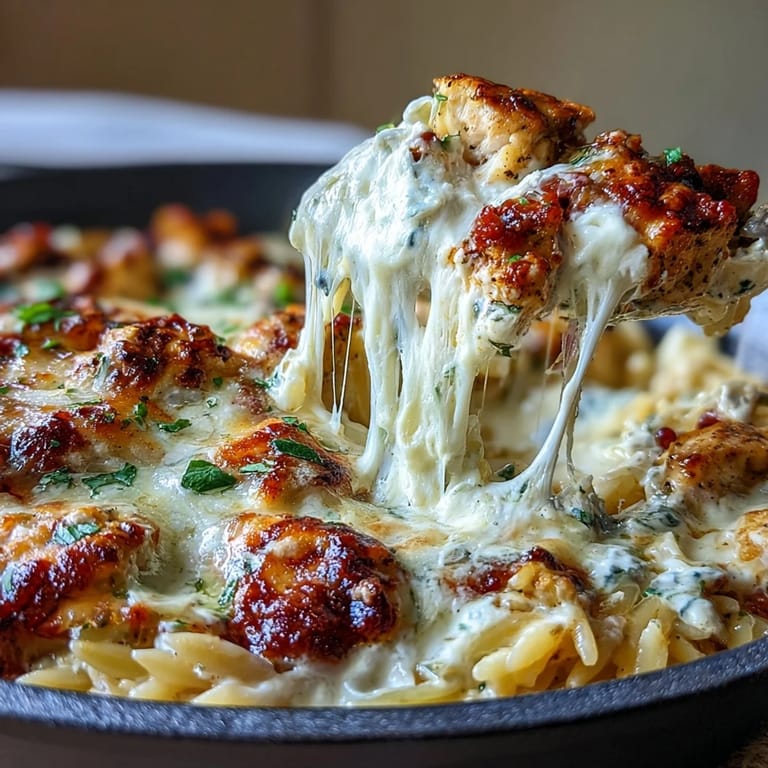
 Save to Pinterest
 There's a weeknight when you're staring into the fridge at 5:45 PM, knowing dinner needs to happen in thirty minutes, and you spot chicken, orzo, and a can of tomatoes. That's when this skillet lasagna was born—not from a craving for something fancy, but from pure necessity and a stubborn refusal to order takeout again. The magic is how it tastes like you've been simmering sauce all afternoon, when really you've just layered flavors in one pan and let them get cozy together. It's become the dish I make when I want to feel like I've actually cooked something substantial without the fuss of traditional lasagna sheets and three separate components.
I made this for my sister when she stopped by unexpectedly on a rainy Thursday, and she watched the whole thing come together from her spot at my kitchen counter, skeptical at first because she's a lasagna purist. By the time I was dolloping ricotta over the bubbling cheese and tomato mixture, she'd already pulled out a bowl. She took a bite and got this quiet, satisfied look—the kind that says comfort food just won without any argument.
Ingredients
- Olive oil: Use a good quality one you actually like tasting; it's doing real work here, not hiding in the background.
- Chicken breast or thighs: Thighs stay juicier if you're not watching the clock obsessively, but breasts work beautifully if you cut them into proper bite-sized pieces.
- Yellow onion and garlic: Mince them fine so they disappear into the sauce and flavor every bite evenly.
- Orzo pasta: Those little rice-shaped pieces are key; they absorb the sauce instead of fighting against it.
- Chicken broth and crushed tomatoes: Low-sodium broth lets you control the salt and prevents the final dish from tasting like a salt lick.
- Tomato paste: Don't skip this; it deepens the whole flavor profile in just one tablespoon.
- Italian herbs: Dried works fine here since they'll have time to bloom in the simmering liquid.
- Mozzarella, ricotta, and Parmesan: This trio is non-negotiable; they each contribute something different to the final texture and taste.
- Fresh basil: Add it at the very end so it stays bright and doesn't taste cooked into submission.
Tired of Takeout? 🥡
Get 10 meals you can make faster than delivery arrives. Seriously.
One email. No spam. Unsubscribe anytime.
Instructions
- Brown the chicken gently:
- Heat oil over medium and add chicken pieces, letting them sit long enough to get golden on one side before stirring. You're not trying to cook them through; you just want them to know the heat and develop a little color.
- Build the aromatics:
- Once chicken is set aside, the onion goes in and softens while you're thinking about what comes next. Stir in garlic for just thirty seconds—that's the whole trick to keeping it from turning bitter.
- Toast the orzo:
- This step sounds small but makes a real difference in flavor; stirring the dry pasta in hot oil for a minute gives it a nutty note. It's the difference between tasting like a quick dinner and tasting like you meant it.
- Create the broth base:
- Pour in broth, tomatoes, paste, herbs, and seasonings all at once, stirring so nothing sticks to the bottom. This is where it starts looking like actual food and stops looking like chaos.
- Return chicken and simmer:
- Add the chicken back with all its juices, cover, and let it cook for about ten minutes, stirring occasionally so the orzo doesn't clump. You'll know it's ready when the pasta is tender and most of the liquid has been absorbed into those little grains.
- Create the creamy finish:
- Lower heat and stir in half the mozzarella and all the Parmesan until they melt into a sauce that coats every piece of orzo. This is the moment it goes from good to irresistible.
- Top with ricotta and final cheese:
- Dollop ricotta spoonfuls over the surface and scatter remaining mozzarella on top. Cover for two more minutes and watch it all melt into a blanket of comfort.
- Finish and serve:
- Remove from heat, scatter fresh basil over everything, and serve straight from the skillet so people feel like they're eating something real and homemade.
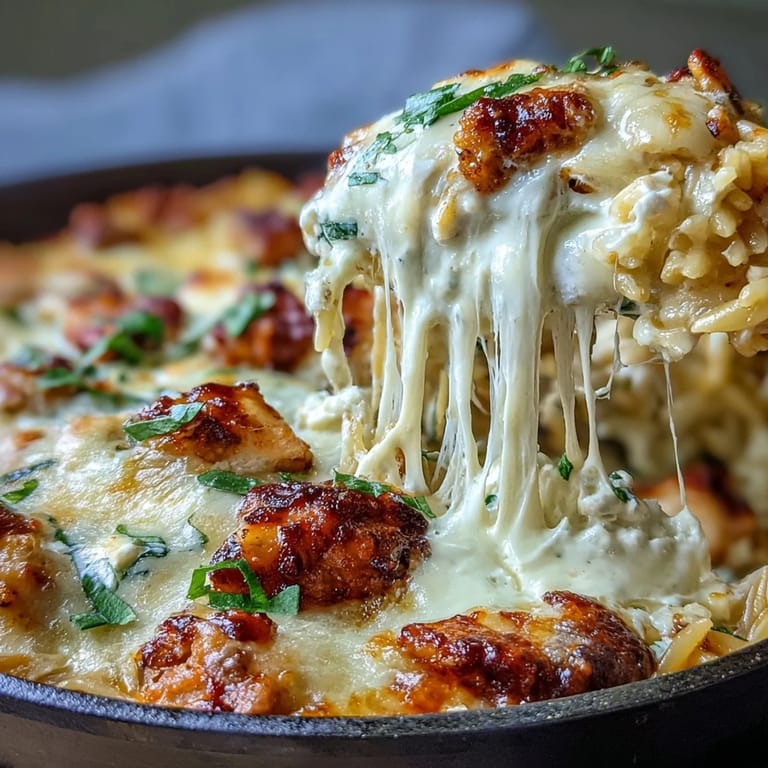 Save to Pinterest
 There's something about serving food directly from a skillet that makes people relax around your table. No formal plating, no pretense—just honest, warm food that says you took the time to make something that matters. That's when lasagna became less about tradition and more about connection.
Why This Skillet Method Works
Traditional lasagna forces you to cook components separately—brown meat, make sauce, boil noodles, layer everything, then bake it all. This version throws that playbook out and trusts that flavors will develop in the same place where they'll finish. The orzo absorbs broth and tomato as it cooks, turning into something between pasta and risotto, creamy without needing cream. By the time you're stirring in cheese, the dish has already become a cohesive whole instead of assembled parts.
Variations Worth Trying
Once you understand how this works, you can shift it in any direction that suits your kitchen. Ground turkey gives you the same comforting texture but feels slightly lighter. A handful of fresh spinach wilts in during the final minutes and adds earthiness without fuss. For vegetarian versions, swap chicken for mushrooms sautéed until golden, using vegetable broth instead, and the dish loses nothing in translation.
Pairing and Storage Wisdom
Serve this with a simple green salad dressed in lemon vinaigrette to cut through the richness, and warm garlic bread for soaking up every last bit of sauce. The leftovers are genuinely better the next day after flavors have settled and the skillet sits in your refrigerator—just reheat gently over medium-low heat with a splash of broth to restore creaminess. This recipe actually improves when you're not rushed, which is a kindness to busy weeks when you're tired and need something warm without starting from scratch.
- Reheat gently on the stovetop rather than nuking it, which keeps the texture tender instead of rubbery.
- If it seems dry when reheating, add a few tablespoons of broth or water to restore that silky sauce.
- Leftovers stay fresh for three days, giving you at least one free dinner if you're lucky enough to have any remaining.
 Save to Pinterest
 This dish has become the answer to the question asked every single week: what's for dinner when we're tired and hungry? It's proof that comfort food doesn't require hours of attention or complicated techniques, just honest ingredients and trust in the process.