 Save to Pinterest
 My coworker Sarah casually mentioned her mom's Korean rice bowl one Tuesday afternoon, and I became slightly obsessed with recreating it at home. What started as a vague craving turned into this creamy, spicy turkey skillet that somehow feels both comforting and exciting on the same plate. The magic happens when that jammy egg yolk breaks into the rice, creating this silky richness that shouldn't work but absolutely does. I've made it probably twenty times now, and it still feels like a small victory when everything comes together in one pan.
I served this to my sister on a rainy Sunday and watched her take that first bite, the egg yolk dripping into the rice like liquid gold. She made this face—the kind where you know someone's genuinely surprised by food—and immediately asked if I could teach her how to make it. Now it's become our go-to dish when she visits, something we've perfected together through trial and error, debating whether the sauce needs more gochujang or if the spinach is overkill.
Ingredients
- Ground turkey (1 lb): The lean protein backbone that doesn't overpower the sauce; I've learned that browning it properly without rushing matters more than you'd think.
- Gochujang (2 tbsp): This Korean chili paste is the entire personality of the dish, so don't skip it or substitute it with sriracha unless you're deliberately going a different direction.
- Yellow onion, garlic, and ginger (1 small, 3 cloves, 1-inch piece): These three create the aromatic base that makes your kitchen smell like something special is happening.
- Carrot (1 medium): Adds a subtle sweetness and texture that keeps the dish from feeling one-dimensional.
- Baby spinach (1 cup): Wilts down almost instantly and adds a nutritional boost without changing the flavor profile.
- Soy sauce (2 tbsp): Brings umami depth and saltiness that balances the sweetness of the honey.
- Honey (1 tbsp): A touch of sweetness that's distinctly Korean in approach; brown sugar works in a pinch but honey creates a smoother sauce.
- Rice vinegar (1 tbsp): The acid that cuts through the richness and keeps everything tasting fresh.
- Toasted sesame oil (1 tbsp): Use the real stuff here—the flavor difference between regular and toasted is everything.
- Chicken or vegetable broth (1/2 cup): Keeps the sauce from becoming too thick and adds gentle depth.
- Heavy cream or coconut cream (1/4 cup): This is what makes it creamy; it transforms the sauce into something velvety without being heavy-handed.
- Cooked white rice (3 cups): Day-old rice is honestly better because it holds its shape instead of getting mushy when you fold it into the warm sauce.
- Large eggs (4): Boiled just right to get that jammy yolk situation that makes this dish special.
- Green onions and sesame seeds (2 sliced, 1 tbsp): Fresh and toasted elements that add brightness and nutty texture to every bite.
Tired of Takeout? 🥡
Get 10 meals you can make faster than delivery arrives. Seriously.
One email. No spam. Unsubscribe anytime.
Instructions
- Build your flavor base:
- Heat your large skillet over medium heat and add the sesame oil first—you'll hear it immediately start to shimmer. Toss in your onion, garlic, and ginger, and spend a few minutes letting them soften and release their fragrance into the kitchen; this is where the magic fundamentally begins.
- Brown the turkey properly:
- Add your ground turkey and break it into smaller pieces as it cooks, letting it get golden and cooked through instead of rushed. This takes about five to six minutes, and you'll know it's done when there's no pink left and the meat has begun to stick slightly to the pan.
- Layer in texture:
- Stir in your diced carrots and let them soften for a couple of minutes alongside the turkey, adding another dimension without crowding the pan. You're building a foundation here, creating depth in every spoonful.
- Make and add the sauce:
- Whisk together your gochujang, soy sauce, honey, rice vinegar, and broth in a small bowl, breaking up any lumps in the gochujang before pouring it into the skillet. The whole mixture will come together and coat everything in this deep reddish-brown glaze.
- Finish with greens and cream:
- Add your spinach and let it wilt, which happens almost instantly, then stir in the cream and your cooked rice, folding everything together gently. Simmer for a couple of minutes so all the flavors can get to know each other.
- Cook the eggs just right:
- While the skillet simmers, bring a saucepan of water to a boil and gently add your eggs, simmering them for exactly seven minutes to get that golden, runny yolk. Transfer them to an ice bath immediately to stop the cooking, then peel and halve them when you're ready to serve.
- Compose and serve:
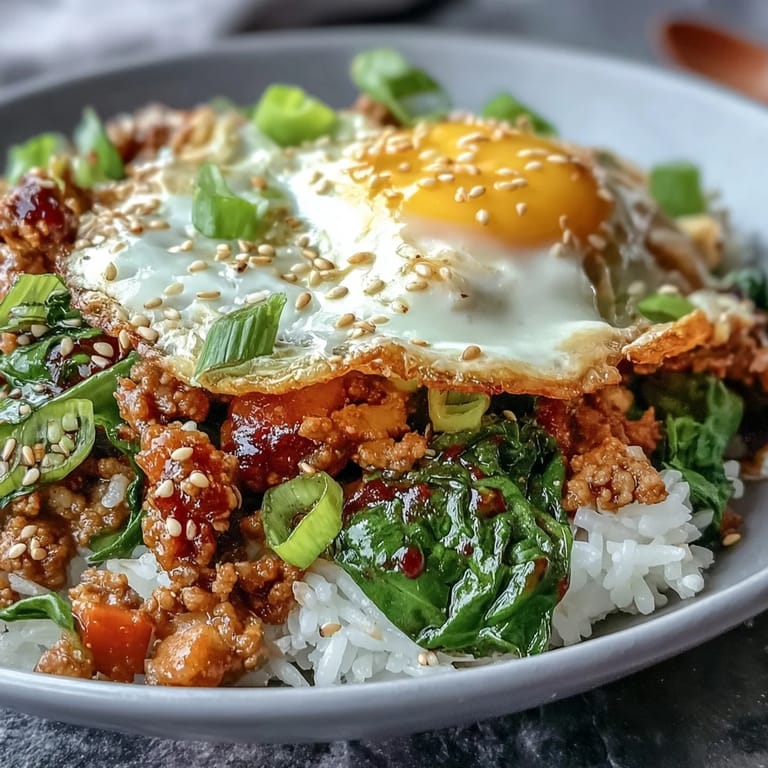
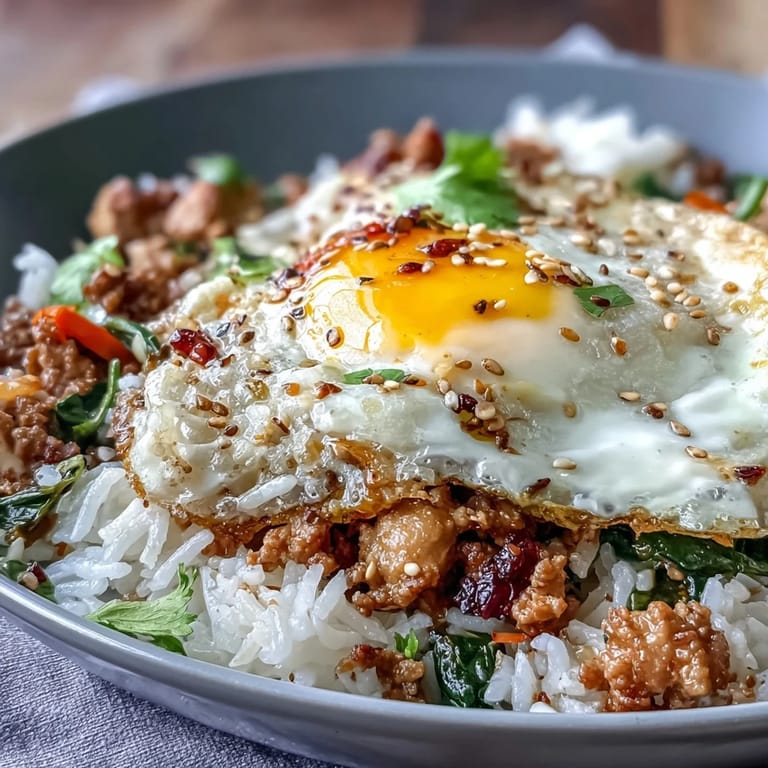
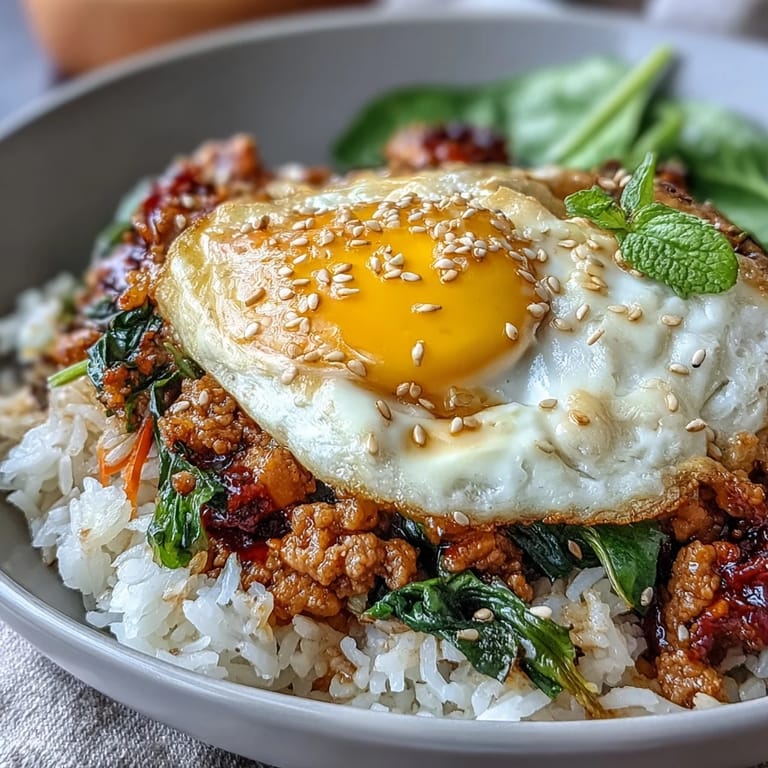
- Divide the creamy turkey rice mixture into bowls and top each one with two halves of a jammy egg, a scatter of green onions, and a sprinkle of sesame seeds. The egg yolk should still be warm and ready to break into the rice on its own.
 Save to Pinterest
 There's a moment right after you crack that jammy egg into the rice when the yolk spreads across everything like a golden river, and suddenly a weeknight dinner becomes something you actually look forward to making. It's the kind of small, everyday luxury that reminds you that good food doesn't require fancy ingredients or complicated techniques.
The Sauce Is Everything
I tried once to make this dish without gochujang, thinking I could approximate it with chili powder and ketchup, and it was genuinely disappointing. The sauce in this skillet is what separates it from being just another ground meat rice bowl—it's sweet, spicy, and complex in a way that feels distinctly Korean. When you get the balance right, every component of the dish tastes better because of it.
Why Day-Old Rice Changes Everything
Fresh rice is too moist and too warm, and when you fold it into the cream-based sauce, it starts absorbing liquid and turning into mush almost immediately. Day-old rice from your fridge is firmer, colder, and when you fold it in, it stays distinct and textured instead of becoming a creamy porridge. I learned this lesson the hard way on maybe my third attempt, when I proudly made fresh rice and watched it deflate into disappointment.
Customization and What Works
This skillet is genuinely forgiving about swaps and substitutions, which is one of the reasons it lives in my regular rotation. Ground chicken works just as well as turkey, pork is actually delicious, and you can adjust the spice level entirely based on your preference. The dairy-free version using coconut cream is almost identical in texture and taste, which I discovered when a friend with dietary restrictions came over unexpectedly.
- For more spice, add extra gochujang or a pinch of gochugaru (Korean chili flakes) at the very end before serving.
- If you want to make it lighter, skip the cream entirely and just use more broth—you'll lose some richness but gain brightness.
- Kimchi on the side adds a fun textural contrast and cuts through the creaminess in a way that feels intentional and balanced.
 Save to Pinterest
 This is the kind of dinner that tastes like you spent hours in the kitchen when you've actually barely spent thirty minutes. It's become my answer to the question of what to make when you want something bold and comforting without the commitment.
Recipe Questions & Answers
- → What type of meat works best in this dish?
Ground turkey is ideal for its lean texture, but ground chicken or pork can be used as alternatives.
- → How do you achieve the jammy yolk for the eggs?
Simmer eggs in boiling water for 7 minutes, then transfer to ice water before peeling to get soft, jammy yolks.
- → Can I adjust the spice level of the sauce?
Yes, modify the amount of gochujang chili paste to suit your preferred spice level.
- → Is it better to use leftover rice for this dish?
Day-old or leftover rice works best to prevent sogginess and helps achieve a better texture when combined with the sauce.
- → What can be used for a dairy-free version?
Substitute heavy cream with coconut cream or omit it entirely for a dairy-free option.