 Save to Pinterest
 I discovered this dish on a lazy Sunday morning when my roommate challenged me to combine two things she loved into one impossible creation. The idea sounded ridiculous at first, but watching that golden custard-soaked bread hit the pan with a satisfying sizzle, then biting into the warm, melting cheese inside, made me understand why she'd been excited. It's the kind of dish that makes you wonder why it didn't exist in your kitchen sooner. This isn't your typical breakfast or lunch, it's something that sits beautifully in between, indulgent but not heavy.
I made this for a brunch gathering once and watched people's faces light up when they realized what they were eating. Someone actually asked if I'd been trained as a chef, which made me laugh because ten minutes earlier I was still in my pajamas debating whether I had the right cheese on hand. That moment reminded me that the best cooking happens when you trust yourself enough to take a small risk with flavors you love.
Ingredients
- Eggs: You need three large ones to create that silky custard coating that soaks into the bread without turning it to mush, the eggs are your safety net.
- Whole milk and heavy cream: The combination gives you richness without being overwhelming, milk alone makes it too thin.
- Granulated sugar: Just a tablespoon, enough to balance the savory without making this dessert.
- Kosher salt and black pepper: Season generously because the bread will absorb these flavors and they're what separate this from sweet French toast.
- Dijon mustard: The secret ingredient that sounds weird until you taste it, it adds a subtle sophistication that lingers.
- Brioche or challah bread: Cut to about half an inch thick, these breads are sturdy enough to hold custard and cheese without falling apart.
- Gruyère or sharp cheddar: Two slices per sandwich is the magic number, Gruyère melts like butter and tastes elegant, cheddar is bolder and more forgiving.
- Unsalted butter and neutral oil: The combination prevents the butter from browning too fast, giving you those perfectly golden edges.
Tired of Takeout? 🥡
Get 10 meals you can make faster than delivery arrives. Seriously.
One email. No spam. Unsubscribe anytime.
Instructions
- Make Your Custard Base:
- Whisk eggs with milk, cream, sugar, salt, pepper, and that optional Dijon mustard until it looks like pale yellow silk. You want everything dissolved and combined, no egg white streaks hiding anywhere.
- Build Your Sandwiches:
- Lay out four bread slices and top each with two cheese slices, then press the remaining bread on top. This is where you can slip in that fig jam or caramelized onion if you're feeling fancy.
- Heat Your Pan Properly:
- Let your skillet warm over medium heat with the butter and oil swirling together, you want it hot enough that a drop of custard sizzles gently on contact. Too hot and you'll burn the outside before the cheese melts inside.
- Dip with Confidence:
- Coat both sides of each sandwich in the custard mixture with just enough dip time that it soaks in but doesn't turn soggy, about two seconds per side. You're looking for a light coating, not a bath.
- Cook Until Golden:
- Place sandwiches in the hot pan and let them sit for three to four minutes per side, pressing gently with your spatula. You'll know it's ready when the exterior is deep golden brown and you can hear the cheese starting to escape at the edges.
- Rest and Serve:
- Transfer to a cutting board and let everything settle for two minutes so the cheese stabilizes, then slice and serve while everything is still warm.
 Save to Pinterest
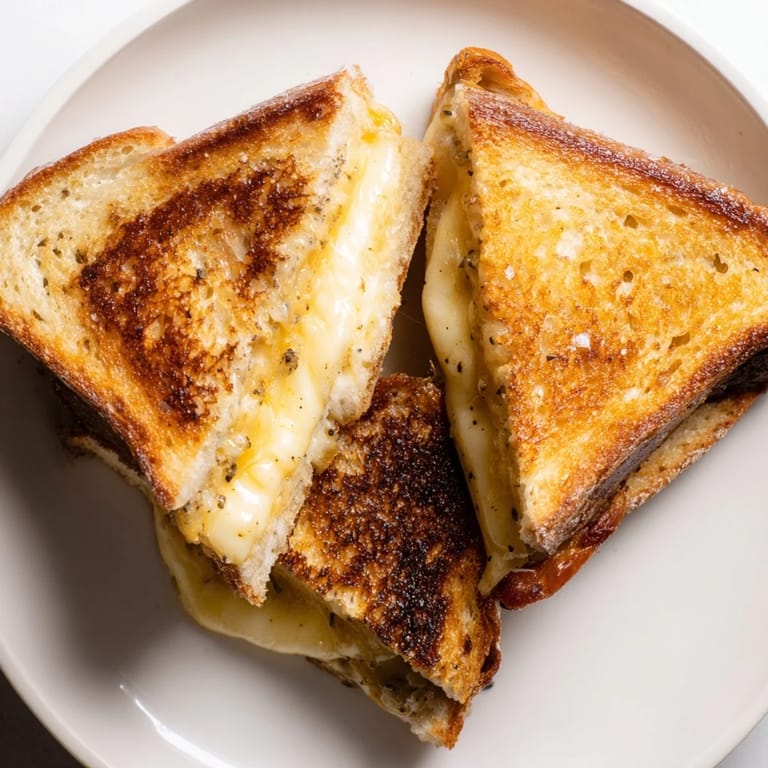
 There's something about biting into melted cheese wrapped in custard-soaked bread that makes ordinary moments feel special. It transformed a regular Sunday for me into something worth remembering, the kind of meal that tastes like care.
The Sweet and Savory Balance
This dish lives in an interesting space where the sugar in the custard wants to remind you of French toast, but the cheese and mustard pull everything toward savory. That tension is exactly what makes it interesting. The sugar is subtle enough that you're not eating dessert for lunch, but strong enough that you notice the slight sweetness lingering under the cheese. Trust that balance, it's been thought through.
Cheese Selection Matters More Than You Think
I've made this with everything from aged Gruyère to sharp Vermont cheddar to a quick grab of whatever was in my fridge, and each version tastes distinctly different. Gruyère gives you elegance and a nutty whisper, cheddar is bold and straightforward, Swiss adds a slight sweetness that works in a pinch. The bread and custard are the canvas, but the cheese is the personality of the dish. Pick something you genuinely like eating on its own, because that's what you'll taste here.
Beyond the Basic Recipe
Once you master the technique, this becomes a playground for flavor combinations. I've added fig jam between the bread and cheese for a sweet note, layered in thin slices of prosciutto for smokiness, and even experimented with caramelized onions for something deeper. The base formula stays the same, but your toppings can change with what's calling to you that morning. The beauty of this dish is that it's flexible enough to bend to your tastes while staying true to its custard and cheese foundation.
- Try pairing this with a light tomato soup or simple green salad to cut through the richness.
- Make your custard mixture the night before and store it in the fridge to save time in the morning.
- Use a nonstick skillet or griddle so you don't spend the whole cooking time wrestling with sticking cheese.
 Save to Pinterest
 This recipe taught me that sometimes the best ideas come from gentle challenges and willingness to mix things that shouldn't work. It's become my go-to when I want to impress people without spending hours in the kitchen.
Recipe Questions & Answers
- → What kind of bread works best for this dish?
Brioche or challah bread, sliced about half an inch thick, provides the perfect soft yet sturdy base to soak the custard and hold the melted cheese.
- → Can different cheeses be used?
Yes, Gruyère or sharp cheddar are recommended, but Swiss, mozzarella, or fontina can offer delicious variations.
- → How do I achieve a golden crust without sogginess?
Dip the bread thoroughly yet avoid soaking through, then pan-sear in a mix of butter and neutral oil over medium heat, pressing gently for an even crisp.
- → What are some flavor enhancements for this dish?
Adding fig jam or caramelized onions inside the sandwich brings a sweet-and-savory twist that complements the cheese beautifully.
- → Can this be prepared in advance?
Assemble sandwiches ahead and refrigerate. Dip in custard and cook just before serving to maintain freshness.