 Save to Pinterest
 My first encounter with frikadeller happened on a grey Copenhagen afternoon when my neighbor invited me over for an impromptu lunch. She moved the skillet across the burner with practiced ease, and the kitchen filled with a smell I'd never quite placed before—savory, slightly sweet, deeply comforting. Within minutes, golden patties landed on my plate alongside tart pickles and dark rye bread, and I understood instantly why this simple dish has fed Danish families for generations. It's the kind of food that tastes like home, even if you're eating it for the first time.
Years later, I made these for my partner's parents, nervously watching their faces as they took the first bite. His mother closed her eyes and smiled—a smile that said something like 'yes, you understand'—and I realized that feeding people food from their childhood is its own kind of language. She asked for the recipe right there at the table, and I've made them countless times since, always thinking of that moment.
Ingredients
- Ground pork (500 g): The foundation of everything; it needs enough fat to stay tender, so don't reach for the leanest cut.
- Small onion, finely grated: Grating instead of mincing breaks it down into invisible flecks that dissolve into moisture and subtle sweetness.
- Egg (1): Acts as a binder without making the meatballs dense or rubbery.
- Whole milk (100 ml): This is the secret to juiciness—it keeps the meat impossibly tender as it cooks.
- Breadcrumbs (60 g): They absorb the milk and distribute it evenly through the meat, preventing dryness.
- Salt (1 tsp), ground black pepper (½ tsp): Season generously because the milk will dilute the flavors slightly.
- Ground allspice (½ tsp, optional): This is what makes them taste authentically Danish, almost imperceptibly warming the background.
- Unsalted butter (2 tbsp) and neutral oil (1 tbsp): Butter alone would brown too fast; the oil keeps the heat even and prevents burning.
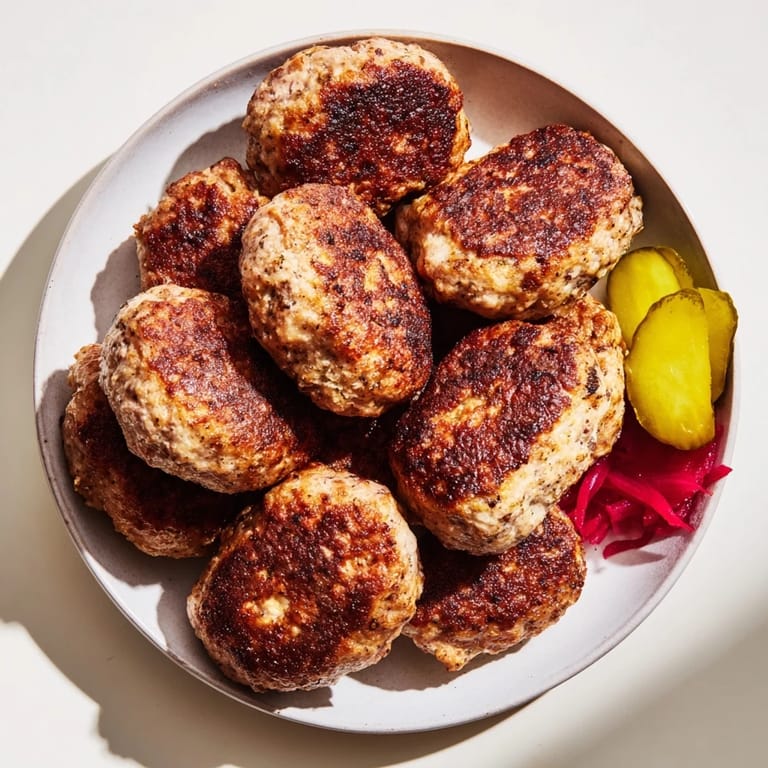
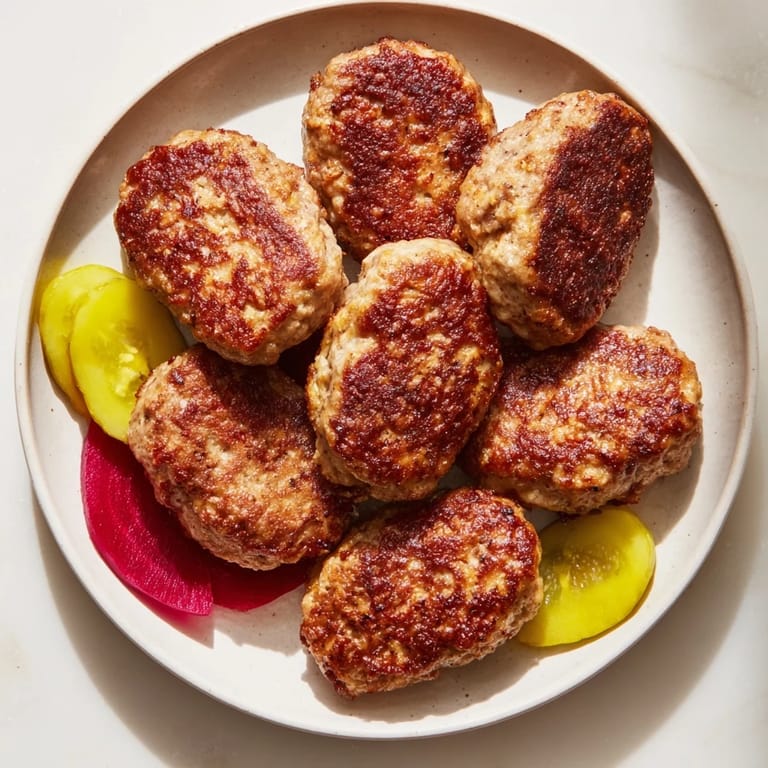
- Danish pickles: Tart, slightly spiced—they're not just garnish but essential balance to the richness.
Tired of Takeout? 🥡
Get 10 meals you can make faster than delivery arrives. Seriously.
One email. No spam. Unsubscribe anytime.
Instructions
- Mix the meat with feeling:
- Combine pork, grated onion, egg, milk, breadcrumbs, salt, pepper, and allspice in a large bowl. Use your hands or a wooden spoon to work everything together until it feels cohesive and slightly tacky—you're looking for the texture where everything clings together, not a loose pile. Don't overmix or the meatballs will turn tough.
- Let it rest and absorb:
- Set the bowl aside for 10 minutes while the breadcrumbs drink in the milk and everything binds together more firmly. This small pause makes a noticeable difference in how tender they'll be.
- Shape with wet hands:
- Dip your hands in cool water and gently form the mixture into 12–14 oval or round shapes, each about the size of a golf ball. The water prevents sticking and makes the process almost meditative.
- Heat your pan properly:
- Warm the butter and oil in a large skillet over medium heat until the butter foams and smells nutty—this takes just a minute or two. You'll know it's ready when a tiny piece of mixture sizzles immediately.
- Fry until golden and cooked through:
- Working in batches so you don't crowd the pan, lay the meatballs in the hot fat and gently press them with a spatula to create a flat-bottomed patty shape. Fry for 4–5 minutes per side, listening for that gentle sizzle and watching for a deep golden-brown crust to form before flipping.
- Drain on paper towels:
- Transfer finished frikadeller to a plate lined with paper towels to shed excess oil while they stay warm and crispy on the outside.
- Serve immediately:
- Plate them while they're still warm, surrounded by tangy pickles and perhaps some rye bread or boiled potatoes if you want to round out the meal.
 Save to Pinterest
 I once made a batch for a potluck on a Sunday afternoon, and someone who'd grown up in Aarhus ate three before even reaching for anything else on the table. We talked for an hour about food and memory, and I understood then that these little patties are more than dinner—they're a bridge between people and places.
Why the Milk Matters
Most meatball recipes use milk as an afterthought, but in frikadeller it's absolutely central to the magic. The milk softens the breadcrumbs into a paste that distributes moisture evenly throughout the meat, which means when you bite down there's no dry center, just tender juiciness all the way through. I learned this the hard way after making rubbery versions with less milk, and never went back.
The Allspice Question
Allspice is traditional in Danish frikadeller, but it's so gentle and warm that many people don't notice it—they just think 'something about this tastes right and homey.' If you can't find it or don't have it, skip it without guilt; the meatballs will still be excellent. But if you do have a jar tucked in your spice cabinet, that half-teaspoon is worth reaching for.
Serving and Variations
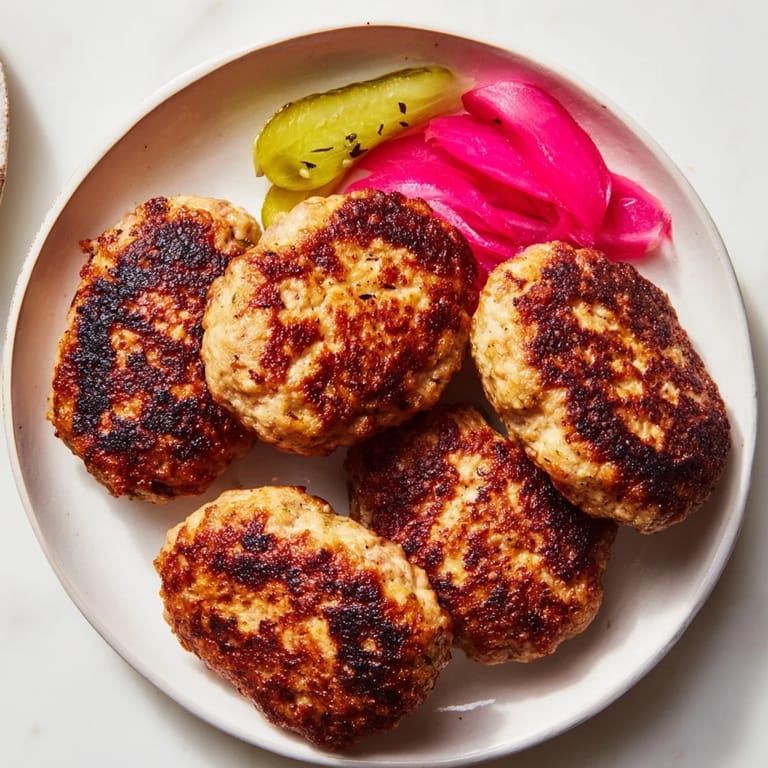
Frikadeller are at their best served hot with pickles that cut through the richness and rye bread to soak up any pan drippings. In Denmark, they're sometimes served with creamy potato salad or tangy red cabbage, and I've found both of these sides make the meal feel less like dinner and more like an occasion. Try them with a dollop of mustard or a drizzle of pan sauce if you want to add another layer of flavor.
- Boiled new potatoes are lighter than potato salad if you want something fresher.
- A simple horseradish cream is spectacular if you like heat and tang together.
- Leftover frikadeller make excellent cold snacks the next day, sliced into an open-faced sandwich.
 Save to Pinterest
 There's something deeply satisfying about food that asks so little but gives so much back—no fancy techniques, just good ingredients treated with care. Make these when you want to feed people something that tastes like it comes from somewhere real.
Recipe Questions & Answers
- → What type of meat is best for frikadeller?
Ground pork is traditional, though mixing pork with veal can create a lighter texture without sacrificing flavor.
- → How do you achieve the perfect golden crust?
Frying the meatballs in a mix of unsalted butter and neutral oil over medium heat helps develop a golden, crispy exterior while keeping them juicy inside.
- → Can I prepare the meat mixture in advance?
Yes, allowing the mixture to rest for at least 10 minutes helps the breadcrumbs absorb moisture, improving texture.
- → What sides complement Danish frikadeller?
Traditional accompaniments include tangy Danish pickles, rye bread, boiled potatoes, creamy potato salad, or red cabbage.
- → Is allspice necessary in the seasoning?
Allspice adds authentic Danish flavor but can be omitted if unavailable or preferred.