 Save to Pinterest
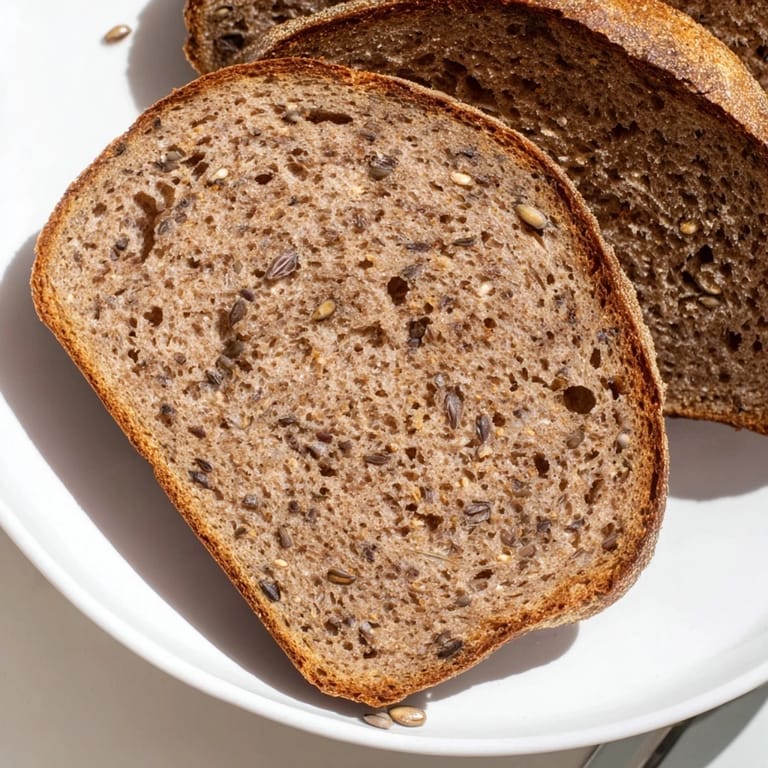
 My first Estonian leib came together on a gray afternoon when my neighbor pressed a jar of her rye starter into my hands with the simple instruction: don't kill it. That starter sat on my kitchen counter for two weeks before I found the courage to use it, watching it bubble and settle like it had its own quiet rhythm. When I finally mixed it with dark rye flour and molasses, the kitchen filled with a smell that felt ancient somehow—earthy, a little sweet, with something sharp underneath that I later learned was the caraway. The dough transformed slowly over twelve hours, becoming this dark, alive thing that seemed to know exactly what it needed to become.
I made this bread for the first time to bring to a dinner party where I didn't know many people, which was maybe foolish—showing up with homemade sourdough feels like you're either brave or trying too hard. But something shifted when everyone went quiet after the first bite, when someone asked if it was from a bakery, when the loaf disappeared faster than the wine. That's when I understood that this bread doesn't need fanfare; it speaks for itself, dark and honest and completely sure of what it is.
Ingredients
- Active rye sourdough starter (100 g): This is your living foundation—it needs to be fed and bubbly, not sluggish. If your starter looks tired, feed it a few hours before using it.
- Dark rye flour (400 g): The heart of this bread, bringing that deep color and earthy flavor that defines leib; don't substitute light rye or you'll lose the whole character of the thing.
- Bread flour (100 g): Just enough wheat flour to give the dough enough structure to hold itself together without turning this into white bread.
- Lukewarm water (300 ml): Temperature matters more than you'd think—too hot kills your starter, too cold and nothing happens.
- Dark rye malt (50 g): This is the secret that makes people pause and ask what the flavor is; it adds sweetness and depth that molasses alone can't achieve, so try not to skip it.
- Molasses or dark honey (2 tbsp): Feeds the starter and rounds out the flavor, but resist the urge to add too much or you'll mask the grain flavors.
- Caraway seeds (1 tbsp): They seem like an accent until you taste this bread without them, then you realize they're essential—sharp, slightly spicy, unmistakably Estonian.
- Fine sea salt (2 tsp): Use fine salt so it dissolves properly and doesn't create gritty pockets in your finished loaf.
Tired of Takeout? 🥡
Get 10 meals you can make faster than delivery arrives. Seriously.
One email. No spam. Unsubscribe anytime.
Instructions
- Wake and combine your starter:
- Pour your starter into a large bowl with the lukewarm water and molasses, stirring until the molasses dissolves and everything looks unified. This is your starter introducing itself to the party.
- Build the dough:
- Add all your dry ingredients—flours, malt, caraway, salt—and mix with a wooden spoon until you have a thick, shaggy dough that's almost impossible to stir. Don't expect this to feel like regular bread dough; rye dough is naturally stickier and more compact, like it's holding something back.
- Let time do the work:
- Cover the bowl with a damp cloth and leave it at room temperature for 10–12 hours or overnight. You're looking for visible bubbles breaking the surface and the dough visibly expanded, which is how you know the starter is awake and working. Don't peek constantly; just trust the process.
- Transfer and shape:
- Line a loaf pan with parchment paper and use a wet spatula to scrape the dough in, smoothing the top gently. If you want to be fancy, sprinkle caraway seeds on top now.
- The final rise:
- Cover again and let it rise for 2–4 hours until the dough reaches close to the rim of the pan. In a warm kitchen this might be just a couple hours; in a cool one, give it the full four.
- Bake with steam:
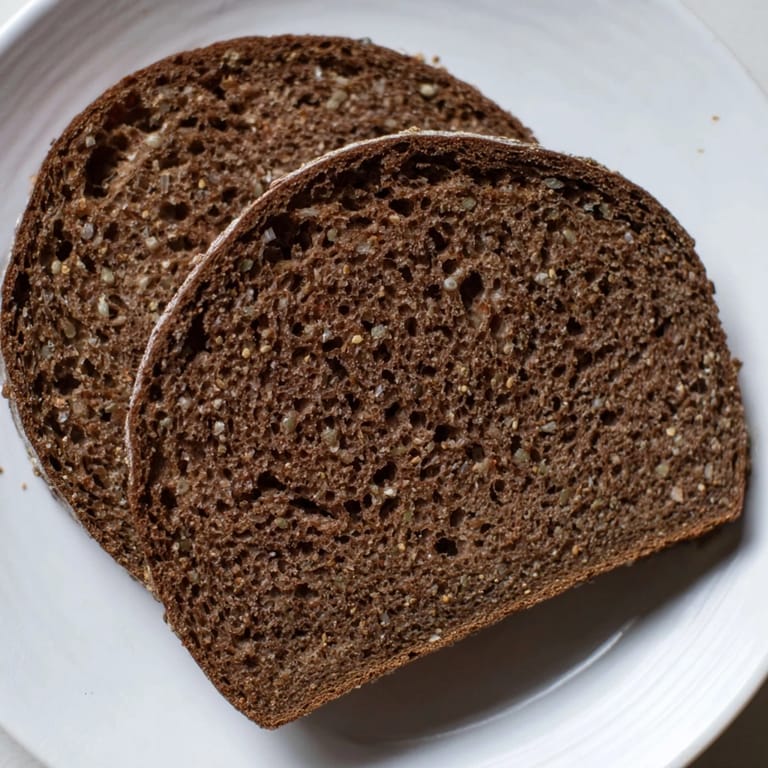
- Preheat your oven to 220°C with a pan of hot water on the bottom rack—steam is what gives Estonian leib that dark, crackly crust. Bake at high heat for 15 minutes, then drop to 190°C and bake another 30 minutes until the crust is very dark and the loaf sounds genuinely hollow when you tap the bottom.
- Cool completely:
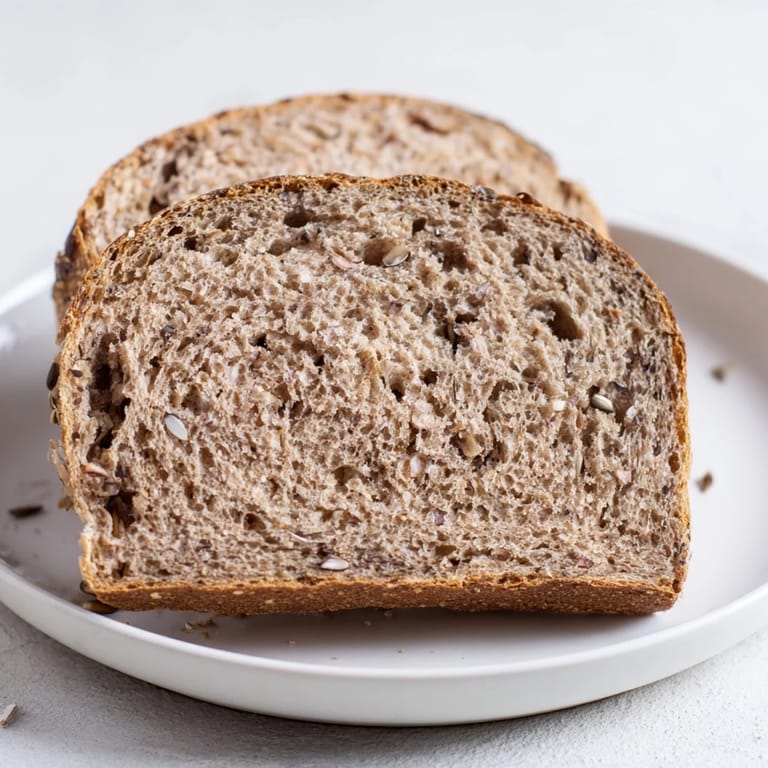
- Pull it from the oven and let it rest on a wire rack until it's completely cool. This is the hardest part because the smell is incredible, but cutting into warm bread turns the interior gummy.
 Save to Pinterest
 I learned the real value of this bread one morning when I was hungover and didn't want anything except coffee and butter on dark bread, and suddenly understood why people kept jars of starter alive through wars and relocations. It's the kind of food that asks nothing of you except to appreciate it, and somehow that makes it mean more.
The Starter Is Everything
If you don't have an active rye sourdough starter, you can feed wheat starter for a few days in a row using rye flour and water to convert it, or you can start from scratch with just rye flour, water, and patience. A healthy starter should roughly double in volume within 6–8 hours of feeding and smell pleasantly sour with a bit of that yeasty funk. If your starter is new or sluggish, this bread will still work, but it might take longer to rise and won't have the deep flavor complexity you're after.
Why Caraway Matters
Caraway is polarizing, I know—some people taste licorice where others taste brightness, and some people just find the whole seed thing vaguely suspicious. But in Estonian leib, caraway does something specific: it cuts through the heaviness of rye and malt, adding a sharp herbal note that makes you want another slice instead of declaring yourself full. If caraway genuinely makes you unhappy, you can reduce it to half a teaspoon or toast seeds of something else like fennel or anise, but know that you're making a different bread.
Storage and Serving
This bread keeps remarkably well—wrap it in a clean kitchen towel and it stays good for a week, and honestly gets slightly better as it ages and the flavors deepen. Slice it the day after baking when the crumb has set completely, and serve it with almost anything: butter and salt, smoked fish, aged cheese, pickled vegetables, or just on its own to taste the grain. It's the kind of bread that makes simple food feel like celebration.
- Toast thick slices and serve with butter and a scraping of malt extract if you want to lean into the flavor.
- Thin slices are perfect for smoked salmon, dill, and sour cream, the classic pairing.
- If your loaf dries out, wrap it loosely in foil and warm it in a low oven for ten minutes to restore some softness.
 Save to Pinterest
 This bread is worth making over and over until you stop thinking about the steps and start feeling your way through them. After a few loaves, you'll understand it in a way that no recipe can teach you.
Recipe Questions & Answers
- → What gives this bread its unique flavor?
The combination of dark rye flour, malt, molasses, and caraway seeds creates a rich, aromatic taste characteristic of traditional Estonian bread.
- → How long should the dough rise for best results?
Allow the dough to rise for 10–12 hours at room temperature, then a second rise of 2–4 hours to develop texture and flavor.
- → Why is steam used during baking?
Steam helps form a thick, crunchy crust by keeping the surface moist initially, allowing the loaf to expand fully before the crust sets.
- → Can I substitute caraway seeds if unavailable?
While caraway seeds add distinct aroma, fennel or cumin seeds can be used as milder alternatives, altering the flavor subtly.
- → How should the bread be stored after baking?
Wrap the cooled loaf in a towel and store at room temperature; it keeps well for up to a week without drying out.