 Save to Pinterest
 The first time I made schnitzel at home, I was trying to recreate that crispy-golden magic from a restaurant visit years ago, but I was convinced I'd need some professional technique I didn't possess. What surprised me was how forgiving the process turned out to be—just good meat, proper pounding, and hot oil. Now I make it whenever I want that satisfying crack of the crust against tender meat, without any of the fuss I imagined.
I remember cooking this for a small dinner party where I'd promised something quick and elegant, and I was standing there, slightly panicked, thinking I'd bitten off more than I could chew. But watching my guests' faces when they bit into those golden cutlets—the sound of that crust shattering between their teeth—made me realize this dish has a quiet power to it. It's humble but never feels rustic, and somehow it makes people feel cared for.
Ingredients
- Boneless pork chops or chicken breasts (4 pieces, about 150 g each): Pound these down to 1/4-inch thickness so they cook evenly and stay tender; thicker cuts won't get that delicate texture.
- All-purpose flour (100 g): This is your base layer, creating a seal that helps the egg stick and keeps moisture locked in.
- Large eggs (2) mixed with milk (2 tbsp): The milk lightens the mixture and helps the breading adhere more evenly without clumping.
- Fine dry breadcrumbs (150 g): Use the finest crumbs you can find—they give you that shatteringly crisp exterior instead of a thick, doughy crust.
- Vegetable oil or clarified butter (120 ml): Clarified butter (Butterschmalz) gives authentic German flavor and a higher smoke point; either way, you need enough to come halfway up the cutlets.
- Salt, freshly ground black pepper, lemon wedges, and fresh parsley: These simple finishes brighten the richness and cut through the fat beautifully.
Tired of Takeout? 🥡
Get 10 meals you can make faster than delivery arrives. Seriously.
One email. No spam. Unsubscribe anytime.
Instructions
- Pound the meat evenly:
- Place each cutlet between two sheets of plastic wrap and pound steadily with a meat mallet, working from the center outward until you reach that 1/4-inch thickness. You're aiming for even thickness so nothing cooks faster than anything else.
- Season generously:
- Hit both sides with salt and pepper—don't be timid here, as this is your only real seasoning.
- Set up your breading station:
- Three shallow plates or bowls lined up in order: flour in the first, egg-milk mixture in the second, breadcrumbs in the third. This assembly line approach keeps things clean and efficient.
- Bread each cutlet carefully:
- Coat the meat in flour, shake off excess, dip into egg mixture until fully coated, then press gently into breadcrumbs on both sides. Gentle is key—over-pressing squashes the crumbs and creates a thick, tough layer instead of a delicate crust.
- Heat your oil properly:
- Get your skillet hot over medium-high heat with enough oil to come halfway up the cutlets; a small piece of breadcrumb should sizzle immediately when it hits the surface. This is your cue that you're ready.
- Fry with confidence:
- Add cutlets to the hot oil and fry 2-3 minutes per side without moving them around—let them build that golden crust undisturbed. You'll hear a gentle sizzle and smell that toasted, nutty aroma when they're getting close to done.
- Drain and serve hot:
- Transfer to a paper towel-lined plate for just a minute to drain excess oil, then serve immediately while the crust is still crackling.
 Save to Pinterest
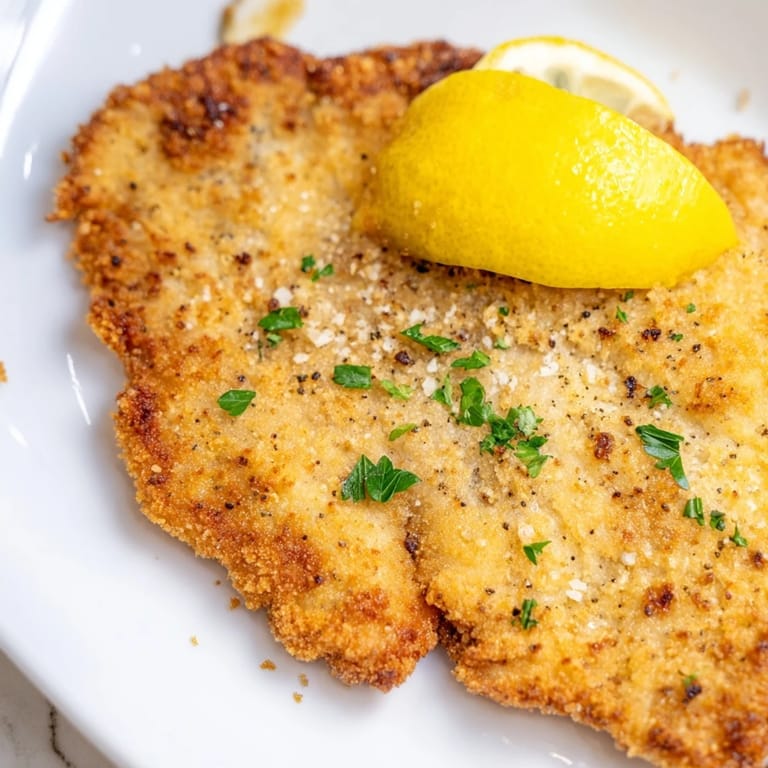
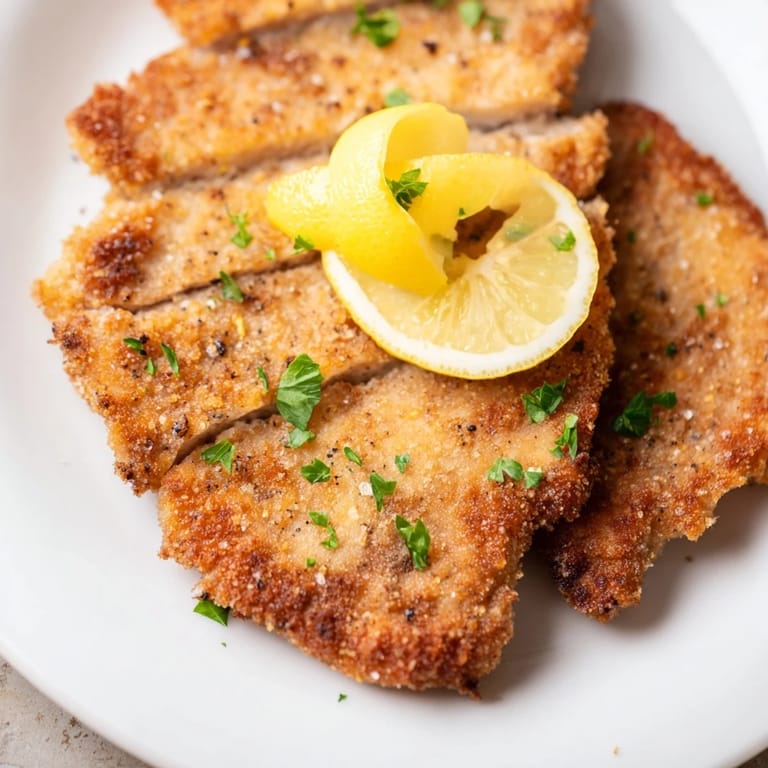
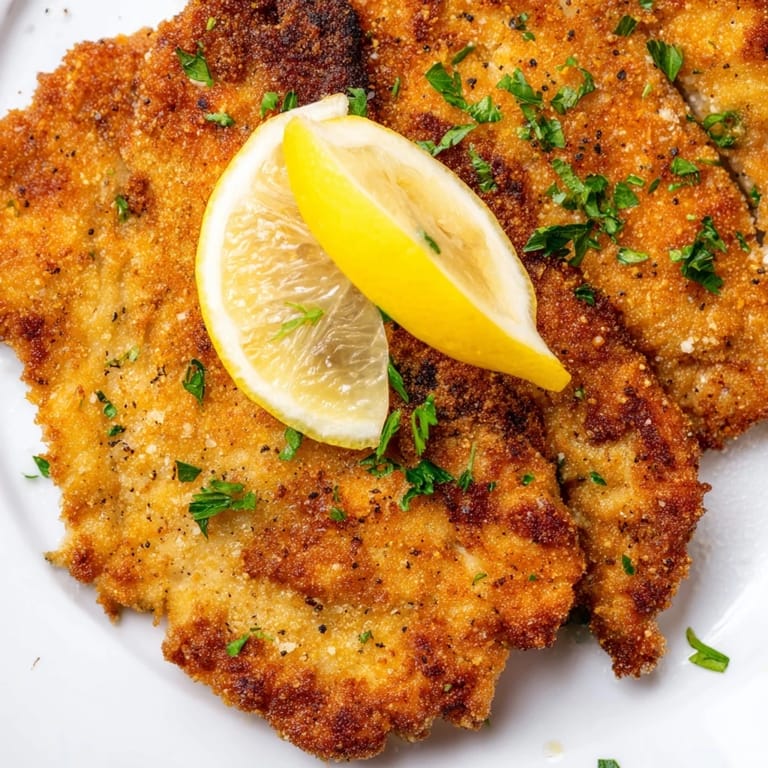
 There's something quietly satisfying about standing in front of a hot skillet, watching the meat transform from pale and fragile-looking to this deep, burnished gold—that moment when you know everything is going right. Plating it with fresh lemon wedges and a scatter of parsley feels like the final bow in a small, delicious performance.
The Pounding Technique That Changes Everything
I used to skip the plastic wrap and pound directly on the cutting board, which just made a mess and occasionally sent raw meat flying. Wrapping the meat keeps things contained and gives you better control—plus you can see the thickness developing underneath, so you're not guessing. Start in the center and work outward with steady, firm strokes rather than wild whacking; the meat will flatten naturally without toughening.
Why Fresh Breadcrumbs Won't Work Here
I learned this the hard way when I tried to save time by blitzing up some stale bread in the food processor—the resulting schnitzel came out dense and chewy with a thick, doughy coating. Fine dry breadcrumbs have much less moisture, so they crisp up instead of steaming and turning dense. The difference is genuinely noticeable, and store-bought panko or fine crumbs are worth buying specifically for this.
Serving and Pairing Ideas
Traditionally this comes with potato salad (creamy or vinegar-based, both work beautifully), cucumber salad, or a pile of crispy fries and cold beer. The acidity and cold elements balance the richness perfectly, and honestly, the meal feels more complete with these sides than without. I've also served it alongside a simple green salad dressed with lemon and extra-virgin olive oil, which feels lighter but no less satisfying.
- A dry German Riesling or pilsner beer is the classic pairing—the carbonation and slight bitterness cut through the fat elegantly.
- Don't skip the lemon wedges; squeezing fresh lemon over the hot cutlet brings everything into focus and prevents the dish from feeling heavy.
- Make extra if you can—cold schnitzel makes extraordinary sandwiches the next day, though honestly it rarely lasts that long in my house.
 Save to Pinterest
 Schnitzel reminds me that sometimes the most memorable meals come from the simplest techniques executed with care. Make this whenever you want to feel confident in the kitchen and feed people something that tastes like love and attention.
Recipe Questions & Answers
- → What type of meat can I use for schnitzel cutlets?
Boneless pork chops or chicken breasts pounded thin are ideal, but veal can be used for a traditional touch.
- → How can I achieve an extra crispy crust?
Use fine dry breadcrumbs and avoid pressing them too firmly onto the meat before frying.
- → What fat is best for frying schnitzel?
Vegetable oil or clarified butter (Butterschmalz) provides excellent flavor and crispiness.
- → How should the meat be prepared before breading?
Pound the slices to about 1/4 inch thickness and season with salt and freshly ground black pepper.
- → What sides complement this German cutlet dish?
Potato salad, cucumber salad, fries, and a squeeze of fresh lemon make excellent accompaniments.