 Save to Pinterest
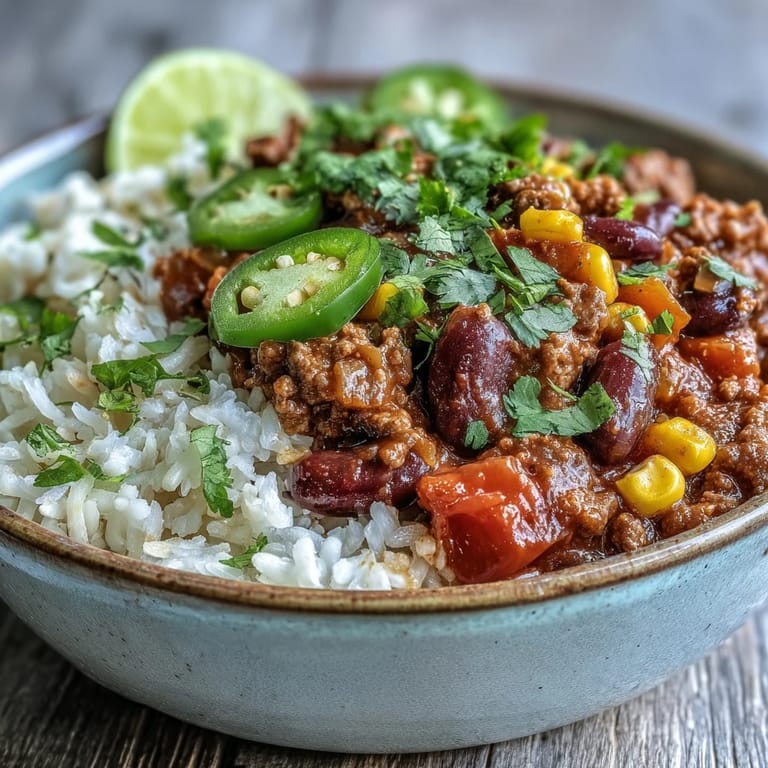
 There's something about the smell of chili simmering on a weeknight that makes everything feel manageable. I discovered this bowl while experimenting with what I had in the pantry on a particularly hectic Tuesday, and somehow it became the dish I turn to when I need something that feels both comforting and put-together. The beauty of it is how forgiving it is—you can make it exactly as written or adapt it to whatever's in your fridge. It's become my go-to answer when someone asks what's for dinner.
I made this for a group of friends on a cold November evening, and what struck me most was watching everyone personalize their bowls so differently. One friend piled it high with avocado and cilantro, another went minimalist with just cheese and lime, and suddenly the same pot of chili became four completely different meals. That's when I realized this dish isn't just about filling bellies—it's about giving people permission to make it their own.
Ingredients
- Olive oil: Use a good quality oil here since it flavors the aromatics from the very start.
- Onion and garlic: These are your flavor foundation, so don't rush them—let them soften and become fragrant before moving forward.
- Bell peppers (red and green): The color contrast isn't just for looks; the red brings natural sweetness while the green adds slight bite.
- Ground beef: I've used turkey and plant-based alternatives successfully; the key is browning it well to build depth.
- Tomato paste: This small amount concentrates tomato flavor remarkably and should be cooked briefly to remove any raw taste.
- Diced tomatoes: Canned is perfectly fine here and arguably more convenient than fresh.
- Kidney beans and black beans: Drain and rinse them to remove excess sodium and the cloudy liquid that can muddy your broth.
- Corn: Frozen corn works beautifully and honestly tastes fresher than fresh corn sitting in the store.
- Chili powder, cumin, smoked paprika, oregano: This spice blend was the result of trial and error, and this ratio hits that sweet spot of warmth without harshness.
- Cayenne pepper: Optional but recommended if you enjoy heat that builds gradually rather than hits hard.
- Beef or vegetable broth: This liquid prevents the chili from becoming paste-like and carries all the flavors through.
- Rice or grains: Choose whatever you have on hand—the chili is the star, and grains just provide a neutral base.
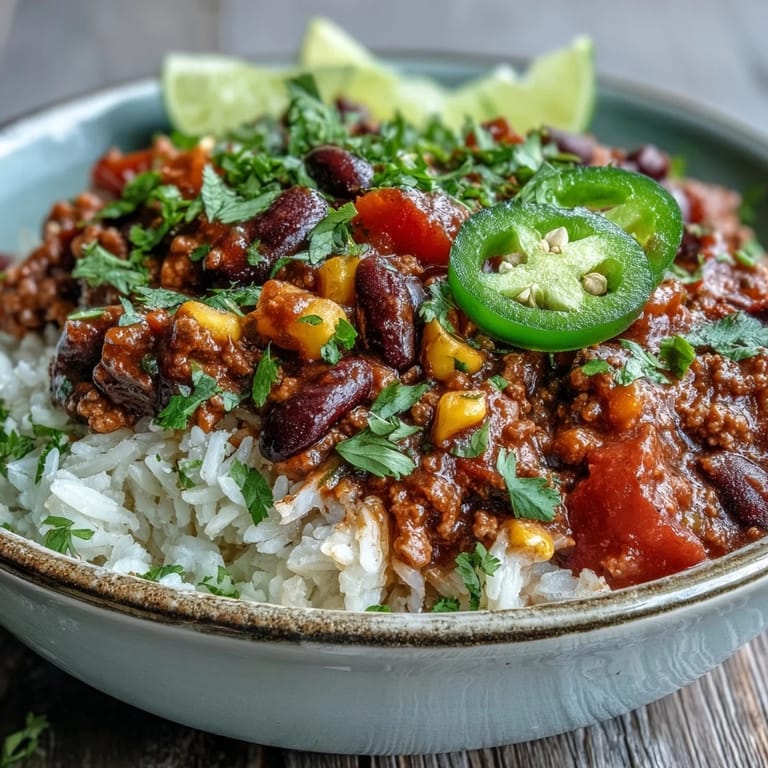
- Toppings: Cheese, sour cream, cilantro, avocado, and jalapeños are my usual lineup, but honestly anything fresh and crisp works.
Tired of Takeout? 🥡
Get 10 meals you can make faster than delivery arrives. Seriously.
One email. No spam. Unsubscribe anytime.
Instructions
- Start with heat and aromatics:
- Warm the olive oil in a large pot over medium heat, then add your diced onion. Let it soften for a couple minutes—you'll know it's ready when the raw edge goes away and it becomes translucent and slightly golden.
- Build the flavor layer:
- Add the garlic and bell peppers, stirring constantly for three to four minutes. The kitchen will smell increasingly alive, and that's exactly what you want.
- Brown the meat:
- Add your ground beef, breaking it up with the back of a spoon as it cooks, about five to seven minutes total. You want no pink remaining and the meat to be broken into small pieces.
- Deepen with paste:
- Stir in the tomato paste and cook it for just one minute, stirring constantly. This cooking step removes any metallic taste and lets the paste caramelize slightly into the oil.
- Bring it all together:
- Add the diced tomatoes, both beans, corn, and all your spices plus broth. Stir until everything is combined and there are no dry pockets of spice.
- Let it simmer:
- Bring the pot to a simmer, then reduce the heat to low, cover, and let it cook for twenty-five to thirty minutes. Stir occasionally and listen for gentle bubbles rather than aggressive boiling—the low heat develops flavor far better than rushing it.
- Finish the base:
- While the chili simmers, cook your rice or grains according to package directions. Timing this so everything finishes together makes the whole process feel effortless.
- Plate and celebrate:
- Spoon warm grains into bowls, ladle the chili generously over the top, and let everyone add toppings according to their mood.
 Save to Pinterest
 One evening, a friend who rarely cooks asked to watch me make this, and by the end she was texting me the next day saying she'd made it twice already. That moment reminded me that sometimes the best recipes aren't the most complicated ones—they're the ones that make you feel capable and proud.
Why This Works as a Weeknight Dinner
The beauty of this chili bowl is that it bridges the gap between quick cooking and deep flavor. Everything goes into one pot, there are no fussy techniques, and somehow after forty-five minutes you've got a meal that tastes like you've been simmering it for hours. It's honest food that doesn't pretend to be something it's not, which is precisely why it works on nights when you're tired but still want something satisfying.
Customizing to Your Taste
I've learned that this recipe is more of a template than a strict formula. Some evenings I'll add diced zucchini or mushrooms, sometimes I use pinto beans instead of kidney, and occasionally I'll make it entirely vegetarian by doubling the beans and corn. The spices stay relatively consistent because they're well-balanced, but I adjust heat based on who's eating—some guests appreciate mild, others want their lips tingling.
Storage and Make-Ahead Magic
This chili actually tastes noticeably better the next day once the flavors have had time to meld and deepen. You can make a full batch on Sunday, refrigerate it in an airtight container for up to four days, and simply reheat and serve whenever you need dinner to be easy. It also freezes beautifully for up to three months, making it an excellent choice for batch cooking when you're feeling proactive.
- Reheat gently on the stovetop over medium-low heat rather than nuking it, stirring occasionally until warmed through.
- If frozen, thaw overnight in the refrigerator before reheating, or heat directly from frozen with a splash of broth to loosen it.
- Keep the grains separate if you're storing for later, as they can absorb too much liquid and become mushy when combined with chili from the start.
 Save to Pinterest
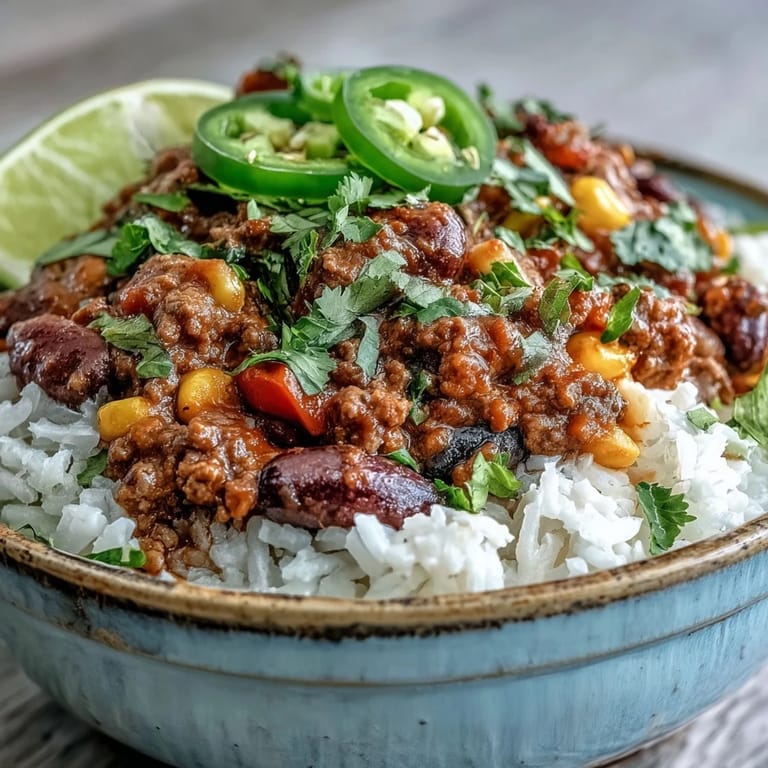
 This chili bowl has become one of those recipes I come back to again and again, not because it's fancy, but because it simply works. It's the kind of dish that builds community around the dinner table and makes everyone feel welcome.
Recipe Questions & Answers
- → What grains work best as a base?
White rice, brown rice, quinoa, farro, bulgur, and barley all make excellent foundations. Choose based on texture preference and what you have available.
- → Can I make this vegetarian?
Absolutely. Substitute plant-based ground meat or simply add an extra can of beans for protein. The spices and vegetables provide plenty of flavor without meat.
- → How spicy is the default seasoning?
The base blend offers mild to medium heat. Increase cayenne and chili powder for more kick, or reduce them for a milder version everyone can enjoy.
- → How long does the chili keep?
Store cooled chili in an airtight container for up to 4 days in the refrigerator or freeze for up to 3 months. Reheat gently on the stovetetop.
- → What toppings complement this bowl?
Shredded cheddar, sour cream, sliced green onions, chopped cilantro, diced avocado, jalapeño slices, and lime wedges all add fresh contrast to the hearty, spiced base.
- → Can I make this in a slow cooker?
Brown the meat and vegetables first, then transfer everything to your slow cooker. Cook on low for 4-6 hours or high for 2-3 hours until flavors meld together.