 Save to Pinterest
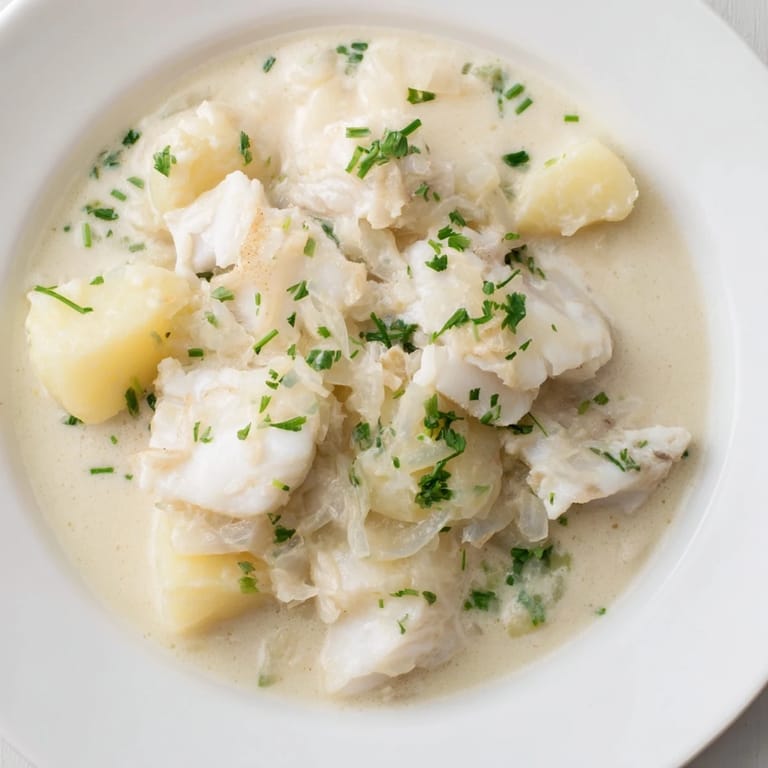
 There's something about a grey afternoon in the kitchen that calls for this stew. Years ago, my neighbor brought a steaming bowl of Icelandic fish soup to my door on a day when the weather had turned unexpectedly bitter, and I watched my skepticism melt with the first spoonful. The way the cream caught the light, how the potatoes had softened into the broth without disappearing entirely—it felt less like a recipe and more like a warm invitation. Since then, this has become my quiet ritual whenever I need something that feels both nourishing and gently indulgent.
I made this for my partner on a night when we'd both had the kind of day that felt too long, and I remember watching them take that first bite and visibly relax. The kitchen filled with the gentle sound of a spoon against the bowl, and there was something almost sacred about sharing something so simple and complete. It taught me that food doesn't need to be complicated to feel like care.
Ingredients
- Cod or haddock fillets (500 g): The fish is the heart here—look for bright, firm fillets and don't skip the gentle poaching step, which keeps them tender instead of turning them into rubber.
- Butter (60 g): This creates the base for your roux and builds the richness that makes this feel luxurious despite being straightforward.
- Whole milk and heavy cream (500 ml milk, 100 ml cream): The combination gives you that creamy texture without being heavy—adjust toward more milk if you prefer it lighter.
- Potatoes (500 g): Waxy varieties hold their shape better than floury ones, but either works if that's what you have.
- Onion (1 medium): Chopped finely, it dissolves almost completely into the cream, adding sweetness and depth.
- Fresh parsley and chives (2 tbsp each): Save half for finishing—the fresh herbs scattered on top are what lift this from ordinary to memorable.
- Bay leaf, salt, white pepper, and a pinch of nutmeg: The bay leaf flavors the fish poaching liquid, the white pepper keeps the color clean, and nutmeg whispered into the cream makes people ask what your secret is.
Tired of Takeout? 🥡
Get 10 meals you can make faster than delivery arrives. Seriously.
One email. No spam. Unsubscribe anytime.
Instructions
- Boil your potatoes first:
- Cut them into small cubes so they cook through in 12–15 minutes, then drain and set aside—you want them tender but not falling apart.
- Poach the fish gently:
- Barely simmer the fillets in salted water with the bay leaf for 6–8 minutes until opaque, then flake them into large, rustic pieces and keep about a third of a cup of that poaching liquid—it's liquid gold for your stew.
- Build the base with butter and onion:
- Melt the butter and let the onion soften and turn translucent over medium heat, which takes about 5 minutes and fills your kitchen with a gentle sweetness.
- Mash the potatoes lightly:
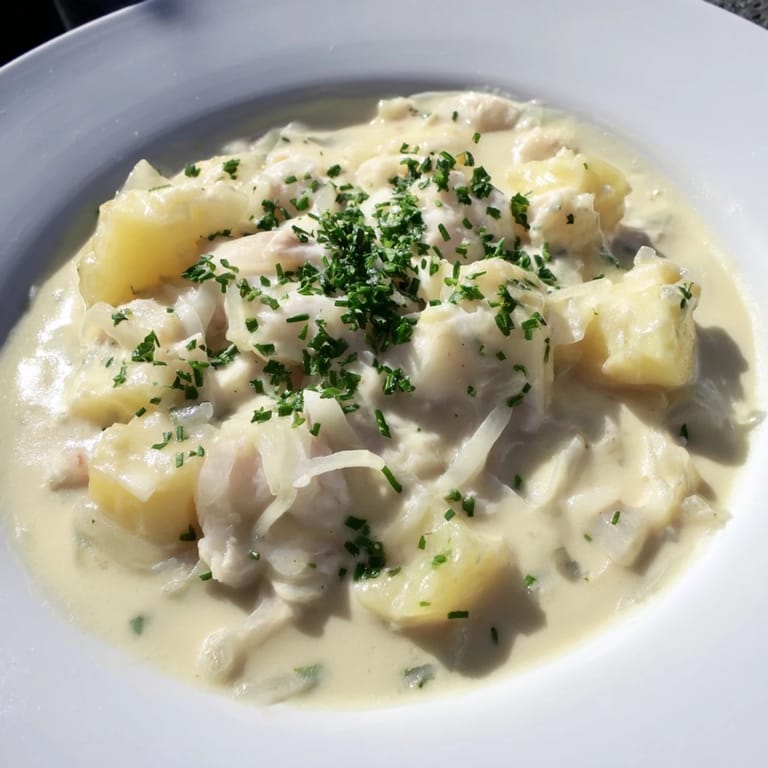
- Add them to the pot and press gently with a potato masher, leaving chunks throughout—this is what gives the stew its characteristic texture, part silky and part substantial.
- Combine everything gently:
- Add the flaked fish and reserved poaching liquid, then pour in the milk and cream, stirring frequently over low heat until it's heated through and creamy but never quite boiling, which should take about 10 minutes.
- Season with restraint:
- Taste as you go—add salt, white pepper, and a whisper of nutmeg, then stir in half the fresh herbs, saving the rest for the bowl.
 Save to Pinterest
 I learned the power of this dish one winter when a friend came by just to sit, and we ended up talking for three hours over bowls of this stew, barely noticing the spoons. Food that asks nothing of you except to slow down and taste it—that's when it becomes something you carry with you.
Why Texture Matters
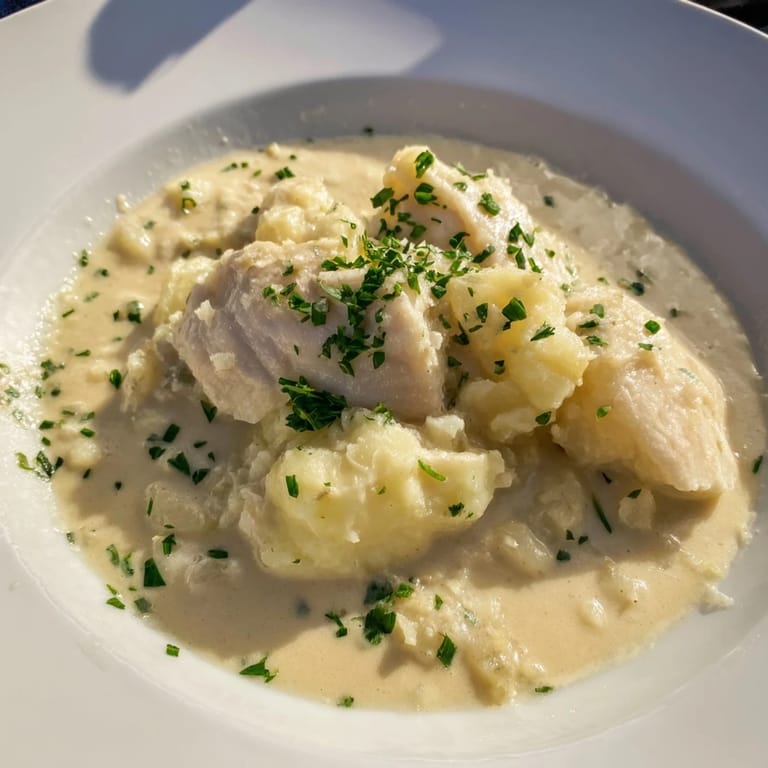
The beauty of this stew is in the restraint of the mashing—you want some potatoes to dissolve into the cream, thickening it naturally, while others hold their shape and remind you that you're eating something real. I've seen versions blended smooth, and they're fine, but they miss the point. This is peasant cooking at its most refined, the kind of thing that asks you to embrace imperfection as part of its charm.
Serving This Stew
A bowl of this, scattered with fresh herbs and a generous crack of black pepper, is complete on its own, but tradition suggests dark rye bread alongside it, something with enough body to stand up to the cream. I like to tear it into pieces and let it soak up the broth, turning it into something almost bread-like in the best way possible.
Variations Worth Trying
This stew welcomes small changes without losing its soul—some people add a splash of white wine or a squeeze of lemon juice to brighten it, others swap the haddock for smoked fish or a combination of white fish. You can make it lighter by using only milk and omitting the cream, or add root vegetables like carrots and parsnips if you like more in the bowl. The core of it remains the same: tender fish, soft potatoes, cream, and the understanding that simple food often tastes better than complicated food.
- Try adding a small splash of white wine or fresh lemon juice just before serving to add brightness and cut the richness slightly.
- Smoked fish creates a deeper, more complex flavor that some people find irresistible.
- A pinch of cayenne pepper instead of white pepper gives it a whisper of heat that won't overpower anything.
 Save to Pinterest
 This stew is proof that the most nourishing meals are often the simplest ones, the ones you can make without thinking too hard. I hope it becomes as much a part of your kitchen as it is of mine.
Recipe Questions & Answers
- → What type of fish works best for this stew?
Certain white fish like cod or haddock are ideal due to their tender texture and mild flavor.
- → How can I achieve a creamy texture without cream?
Using only whole milk and butter still provides a rich base while keeping it lighter in texture.
- → Can I prepare the stew ahead of time?
Yes, gently reheat the stew over low heat to maintain its creamy consistency before serving.
- → What herbs enhance the flavor best?
Fresh parsley and chives add a bright, herbal note that complements the creamy fish broth.
- → Is there a recommended side to accompany this dish?
Traditional Icelandic rye bread (rúgbrauð) or a hearty dark bread pairs perfectly with the stew.