 Save to Pinterest
 My grandmother taught me cepelinai on a cold November afternoon when the kitchen smelled like earth and butter. She had this way of squeezing potato juice from cheesecloth like she was wringing out secrets, watching the starch settle at the bottom with the patience of someone who had made these dumplings a thousand times. The first batch I shaped felt clumsy in my wet hands, but she never corrected me, just smiled when they floated to the surface perfectly cooked. Now, whenever I make them, I think of her standing beside the stove, humming something in Lithuanian while the sour cream sauce bubbled gently on the burner.
I remember serving these to my Polish coworker who said her Lithuanian grandmother made something similar, and suddenly we were both leaning against the counter swapping stories about our families' kitchens instead of working. She took a bite and got this faraway look, then asked for the recipe on the spot. That's when I realized cepelinai aren't just dumplings—they're edible memories that connect people across time and borders.
Ingredients
- Starchy potatoes (1.5 kg raw, peeled): The backbone of these dumplings; use Russets or Yukon Golds that have real substance and won't turn into mush when you grate them. Starchy varieties hold together better and create that tender, slightly fluffy texture that makes these special.
- Boiled and mashed potatoes (2 medium): These add moisture and help bind the raw potato shreds together, preventing the dumplings from becoming dense or grainy. Cook them until they fall apart easily when you press them.
- Salt (1 tsp): Essential for seasoning the potato dough so it tastes like something on its own, not just a vehicle for the filling.
- Potato starch (1 tbsp, optional): This is your safety net if the mixture feels too wet after squeezing; it absorbs excess moisture without making the dumplings gluey or heavy.
- Ground pork and beef (250 g and 150 g): Together they create a filling with depth—the pork brings richness while beef adds structure and a slight earthiness that keeps the mixture from tasting one-dimensional.
- Onion and garlic for filling: Finely chopped and mixed raw into the meat, they'll season everything as the dumplings cook, distributing flavor throughout rather than just on the surface.
- Bacon or smoked pork belly (150 g): Rendered low and slow until crispy, it becomes the star of the sauce—salty, smoky, and the textural contrast that makes people ask for seconds.
- Sour cream (300 ml): Poured into the pan after the bacon is done, it becomes this silky, tangy sauce that balances the richness and adds brightness without overpowering the potato flavor.
- Fresh dill (1 tbsp, optional): A whisper of it stirred into warm sour cream lifts the entire dish; don't skip this if you have it.
Tired of Takeout? 🥡
Get 10 meals you can make faster than delivery arrives. Seriously.
One email. No spam. Unsubscribe anytime.
Instructions
- Prepare the potatoes:
- Grate the raw potatoes on the fine side of your grater—the texture should look like damp snow, not chunky. Wrap them tightly in cheesecloth or a clean kitchen towel and squeeze hard, turning and re-squeezing until no liquid drips out; this step takes longer than you'd think but it's the difference between tender dumplings and gluey ones. Save the liquid you've expressed in a bowl, let it sit for five minutes, then carefully pour off the water layer, scraping up the white potato starch that has settled at the bottom.
- Build the dough:
- In a large bowl, combine the squeezed grated potatoes with the boiled mashed potatoes, salt, and that reserved starch. Mix gently with your hands or a wooden spoon until the whole thing comes together into one cohesive mass that holds together when you squeeze it. If it still feels too sticky, sprinkle in a little more potato starch and fold it in.
- Season the meat:
- In a separate bowl, mix the ground pork, ground beef, minced onion, minced garlic, salt, and pepper until everything is evenly distributed. Don't overmix it to the point of being dense; you just want the seasonings and vegetables threaded through. Taste a tiny bit (cooking it briefly if you prefer) to check the salt level, because the filling is the soul of these dumplings.
- Shape the dumplings:
- Wet your hands under cold water and keep them damp throughout; this prevents sticking better than any flour could. Take a portion of potato dough about the size of a large egg, press it flat into your palm, add a heaping tablespoon of the meat mixture to the center, then gently fold the dough up and around it, pinching and sealing until you have an oval shape. It should feel like a smooth, sealed football in your hands—no cracks or holes where filling could escape.
- Cook the dumplings:
- Bring a large pot of salted water to a gentle simmer—it should bubble quietly, not violently, because aggressive boiling can break them apart. Slide in the dumplings a few at a time (don't overcrowd), and they'll sink at first, then bob to the surface after about 15 minutes; let them simmer for another 10 to 15 minutes after that until they feel firm to the touch and the potato has absorbed the filling's flavors.
- Make the sauce:
- In a skillet over medium heat, cook the diced bacon until the fat renders out and the pieces turn crispy and golden. Add the finely chopped onion and let it soften and brown slightly in that bacon fat, about 5 minutes. Reduce heat to low, stir in the sour cream and fresh dill, and let it warm through for a minute or two—never boil it, or the sour cream can separate and turn grainy.
- Finish and serve:
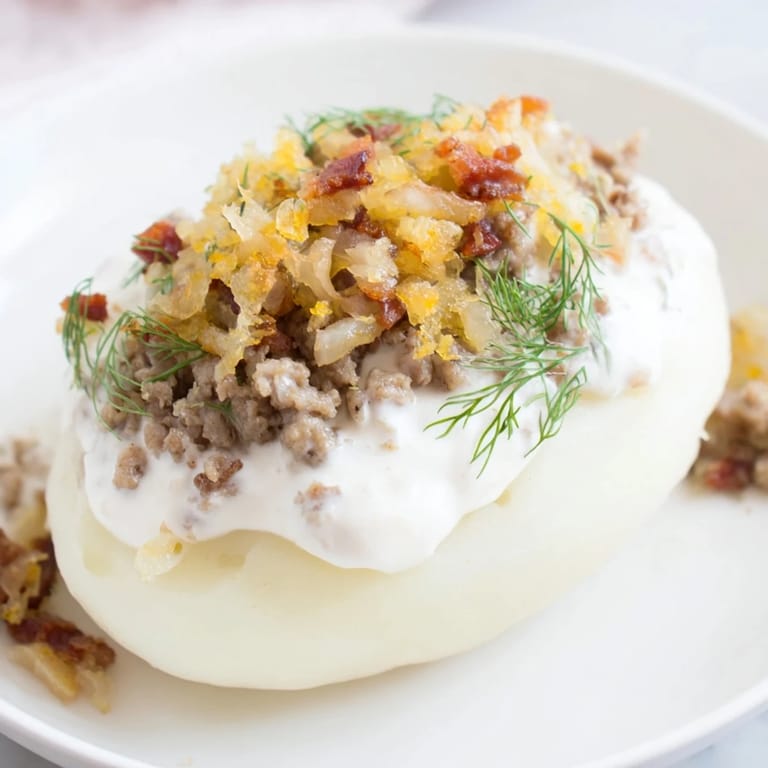
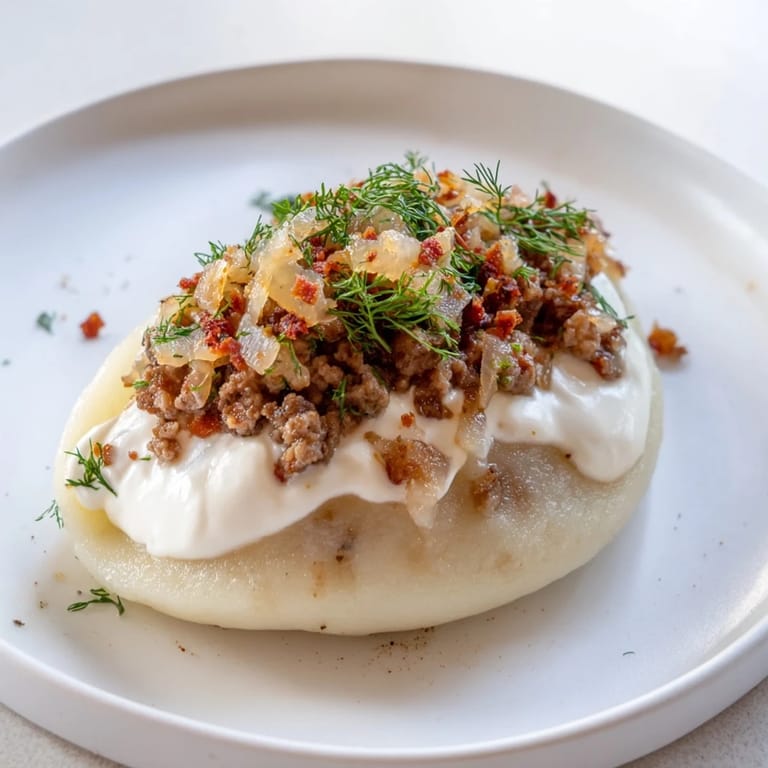
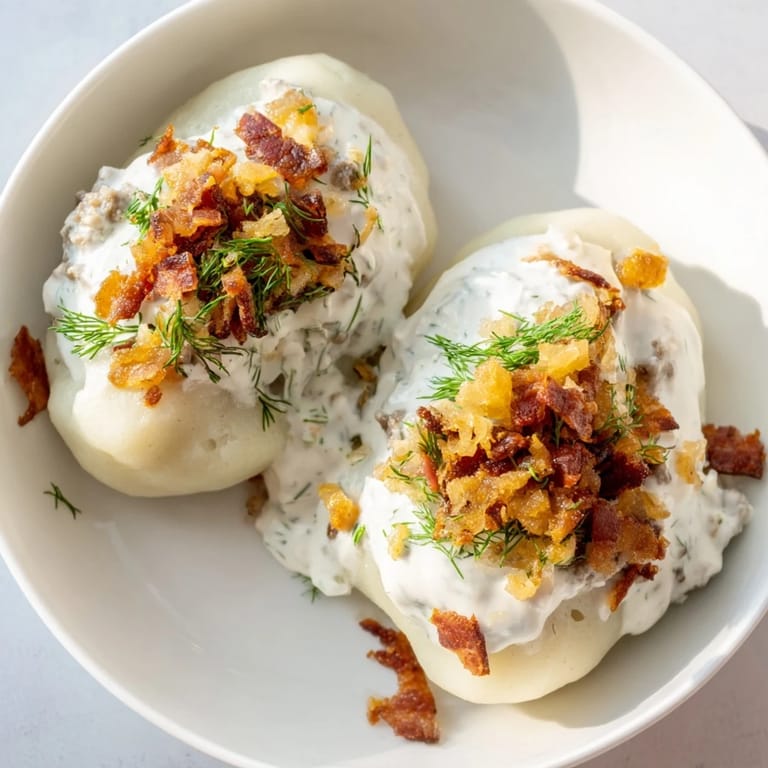
- Transfer the cooked dumplings to a serving dish and ladle the warm bacon-sour cream sauce over them, making sure every dumpling gets a share of the crispy bacon pieces and creamy coating. Taste and adjust salt if needed, then serve immediately while everything is warm and the dumplings still have that tender, yielding texture.
 Save to Pinterest
 The first time I served these to my family, my dad took one bite and closed his eyes like he was somewhere else entirely. Later he told me they reminded him of a trip to Lithuania he never made—that somehow the taste carried a memory he didn't have yet. That moment made me understand why certain dishes survive for generations and travel across oceans in people's hearts; they're not really about following a recipe perfectly, they're about cooking something that makes people feel less alone.
The Art of Shaping
Getting the shape right matters more than people think, but not for the reason you'd expect. It's not about Instagram perfection; it's about engineering the dumpling so it cooks evenly and holds together under the stress of boiling water. The oval shape means the filling is distributed across the whole thing rather than pooling in one spot, and a sealed seam prevents leaks. The first few you make will be wonky, and that's completely fine—they'll still taste incredible, and by your third batch, your hands will remember the motion like muscle memory.
Freezing and Reheating
These dumplings are honestly one of the best things to have in your freezer because they keep for up to three months and cook from frozen without any fussing. Just slide them straight into simmering salted water and add about five minutes to the cooking time; they don't need to thaw first. This means you can shape a whole batch on a quiet afternoon, freeze them on a tray until solid, then bag them up, and on a busy Thursday night you can have homemade cepelinai on the table in under an hour without ever making them fresh that day.
Variations and Swaps
While the traditional meat filling is irreplaceable, there are moments when other options make sense. If you use all pork or all beef instead of the blend, lean toward pork for juiciness and beef for earthiness, or mix in a bit of caramelized mushroom to stretch the filling further or add umami depth. For a vegetarian version that actually works, sauté finely diced mushrooms, onions, and a pinch of thyme until most of the moisture has cooked off, then season aggressively with salt because vegetables need more seasoning than you'd expect.
- You can make these with all pork or all beef, but the combination balances richness with structure better than either one alone.
- Mushroom and caramelized onion filling carries enough body that it won't taste one-dimensional, especially with fresh herbs stirred in before serving.
- The bacon-sour cream sauce is non-negotiable—it's what makes cepelinai actually taste like cepelinai, so don't skip it in favor of other toppings.
 Save to Pinterest
 These dumplings carry the weight of history and the lightness of something made with care. Serve them hot, watch people's faces soften as they eat, and know that somewhere, someone is remembering their own grandmother's version.
Recipe Questions & Answers
- → What type of potatoes are best suited for Cepelinai?
Starchy potatoes are ideal for creating a firm, cohesive dough that holds the dumpling shape well during cooking.
- → Can I substitute the meat filling with another protein?
Yes, you can use all pork, all beef, or a vegetarian filling like sautéed mushrooms and onions for a different twist.
- → How is the potato starch obtained for the dough?
The starch settles at the bottom after squeezing the grated potatoes and letting the liquid stand, which helps bind the dough.
- → What is the best way to cook the dumplings?
Simmering in salted water gently until they float and feel firm ensures they cook evenly without breaking.
- → How do I prepare the sauce served with Cepelinai?
Fry diced bacon until crisp, sauté onions, then stir in sour cream and fresh dill, heating gently without boiling.
- → Are there common allergens in this dish?
It contains dairy from sour cream and pork; cross-contamination with gluten can occur, so check ingredient labels carefully.