 Save to Pinterest
 The first time I tasted mici was at a street vendor's stand in Bucharest on a humid summer evening, the smell of grilled meat and paprika smoke pulling me in before I even saw the cart. An older woman with flour-dusted hands wrapped three of them in paper, still snapping and crackling from the heat, and when I bit into one, the contrast between that crispy, charred exterior and the impossibly tender, juicy center made me stop walking entirely. I stood there on the sidewalk, sauce dripping onto my shirt, realizing I'd found something special—something that tasted like tradition and street-food magic in equal measure. Years later, after a few kitchen disasters and learning the tricks the hard way, I finally cracked the code to making them at home. Now they're my go-to when I want to impress people or when I'm simply craving something that feels both comforting and exciting.
I remember making these for a casual dinner party, skeptical that my guests would understand why I was so excited about ground meat rolls. One friend watched me pull them off the grill, took a bite, and said nothing for a full ten seconds—just chewed with his eyes closed. When he finally spoke, he asked for the recipe and said they tasted like something he'd eaten on a trip to Romania years ago and thought he'd never have again. That moment reminded me that the best dishes aren't about complexity; they're about capturing something real and making people feel transported.
Ingredients
- Ground beef (500 g, 80/20 ratio): The backbone of the mici, providing richness and structure; the lean-to-fat ratio matters because too much fat makes them fall apart on the grill, and too little makes them dry.
- Ground pork (300 g): Adds a subtle sweetness and helps bind everything together, creating that tender texture inside.
- Ground lamb (200 g, optional but traditional): This is the secret weapon that makes people ask what you did differently; it brings an earthy complexity that beef and pork alone can't achieve.
- Garlic (5 cloves, finely minced): Raw garlic will taste sharp, so mince it as fine as you can to distribute it evenly and let the cooking mellow it out.
- Smoked paprika (1½ tsp): This is where the Romanian soul lives; regular paprika won't give you that subtle smoke that makes everyone pause and ask what spice that is.
- Black pepper, coriander, and cumin (1½ tsp each): Together they create warmth without heat, a spice profile that feels almost savory-sweet.
- Dried thyme (1 tsp): A whisper of herbiness that keeps the mixture from tasting one-dimensional.
- Baking soda (1 tsp): This is the trick that keeps the texture light and airy, preventing a dense, meatball-like result; don't skip it.
- Salt (2 tsp): Mix into the raw meat to help it bind and hold moisture.
- Cold beef stock or sparkling water (200 ml): The cold liquid is crucial—it keeps the mixture cool so the fat doesn't start breaking down, and it creates that tender, almost creamy interior when cooked.
Tired of Takeout? 🥡
Get 10 meals you can make faster than delivery arrives. Seriously.
One email. No spam. Unsubscribe anytime.
Instructions
- Combine Your Meats:
- In a large bowl, mix all three ground meats together thoroughly, breaking up any clumps with your hands so they're fully integrated. This is the foundation, and taking a moment to do it right ensures even spice distribution later.
- Add the Spice Blend:
- Sprinkle in the garlic, paprika, black pepper, coriander, cumin, thyme, baking soda, and salt, then mix gently but thoroughly until the color is uniform and no white streaks of salt remain. You're looking for that moment when the mixture starts to smell unmistakably Romanian.
- Knead in the Liquid:
- Pour the cold stock or sparkling water slowly while kneading with your hands for about five minutes; the mixture will go from shaggy to sticky and almost paste-like. This kneading is when the proteins start to bind, which is what holds everything together on the grill.
- Chill and Develop Flavor:
- Cover and refrigerate for at least two hours, ideally overnight; the cold time lets the spices infuse and helps the baking soda work its magic. I usually do this step the morning before I plan to grill, so the flavors have time to deepen.
- Shape with Cool Hands:
- Lightly oil your hands to prevent sticking, then roll each portion into a finger-thick cylinder about 8–10 cm long and 2 cm wide. Think of them as plump little logs, not thin like hot dogs, and don't overthink the perfection of your shaping—rustic is part of their charm.
- Fire Up the Grill:
- Preheat your grill or grill pan to medium-high heat and lightly oil the grates so the mici won't stick. You want it hot enough that they sizzle immediately when they hit the surface but not so hot that they char before cooking through.
- Grill Until Golden:
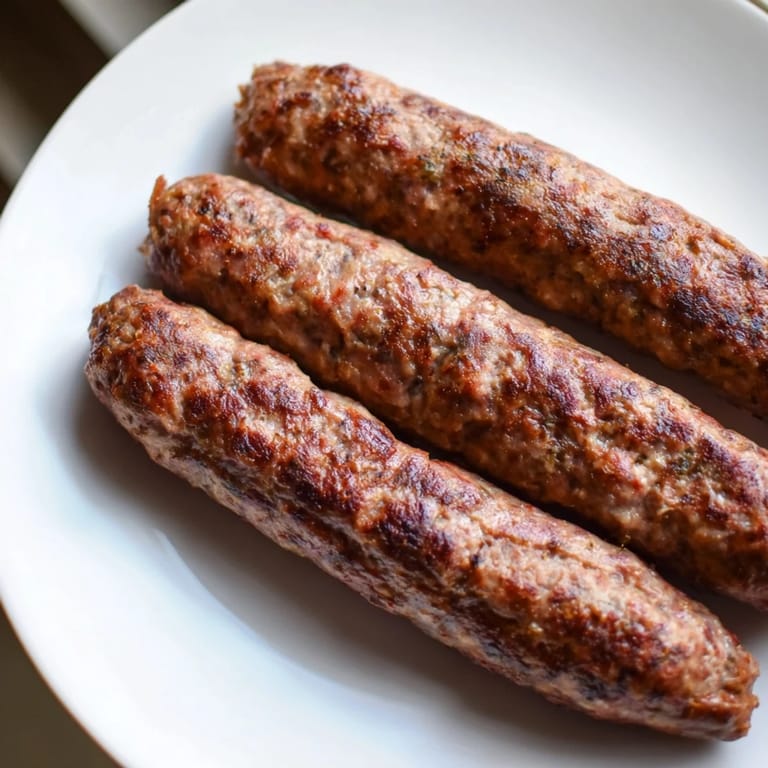
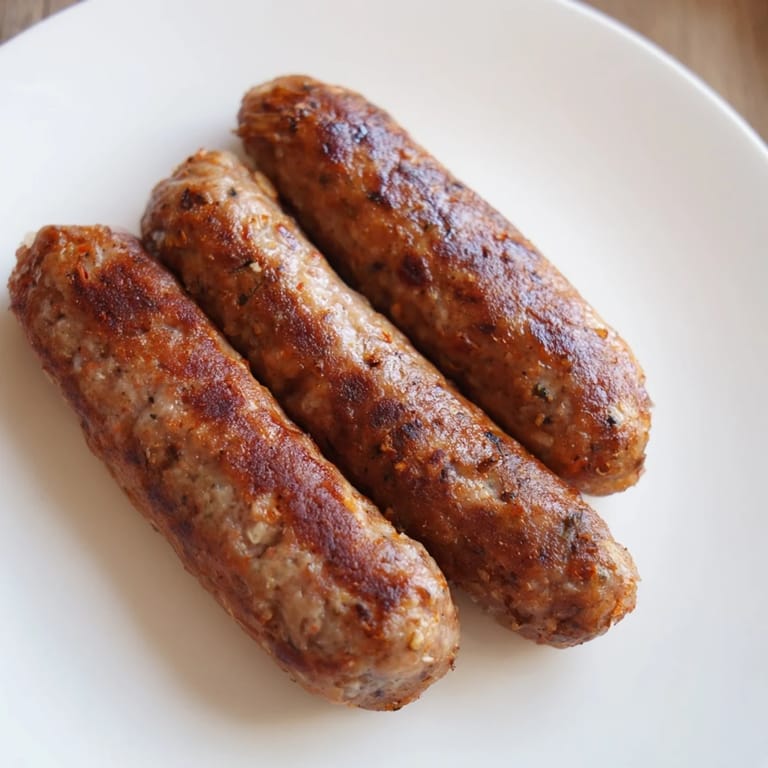
- Place each mici on the hot grate and leave it alone for 3–4 minutes before turning; they need time to develop that crispy, caramelized crust. Turn them once to crisp the other side, aiming for a deep golden-brown with charred spots.
 Save to Pinterest
 I once invited my Romanian colleague to try a batch and watched her face carefully, knowing I was about to be judged by someone who'd eaten the real thing her whole life. She took one bite, looked at me, and said something close to "okay, you did not disgrace us," which in her language was practically a standing ovation. That moment taught me that food can be a bridge between people, and when you care enough to get the details right, people notice and feel respected.
The Trick to Juicy Mici
The secret isn't some fancy technique or an ingredient you've never heard of; it's understanding why each component matters. The three-meat combination creates a flavor spectrum that no single meat can achieve alone, the baking soda keeps the texture light, and the cold liquid ensures the fat stays suspended in the mixture rather than rendering out during mixing. I learned this by making mici too many ways, and each failure taught me something essential. The grinding ratio matters too—I started buying pre-ground meat and got inconsistent results until I realized the butcher's grinder settings changed the texture. Once I started getting meat ground to my specifications, everything clicked into place.
Grilling Like You Mean It
There's a specific moment when you know a batch is going to turn out right: it's when they hit the grill and immediately start releasing their aromatics, that combination of smoke, paprika, and caramelizing meat that fills your entire outdoor space. I've learned to use my ears as much as my eyes—when the sizzle becomes a steady crackle, that's when they're developing the proper crust. Some people finish them under the broiler or on a stovetop grill pan if they don't have access to a true grill, and while the texture is slightly different, they're still excellent. The key is high, direct heat and resisting the urge to fuss with them too much.
Serving and Pairing
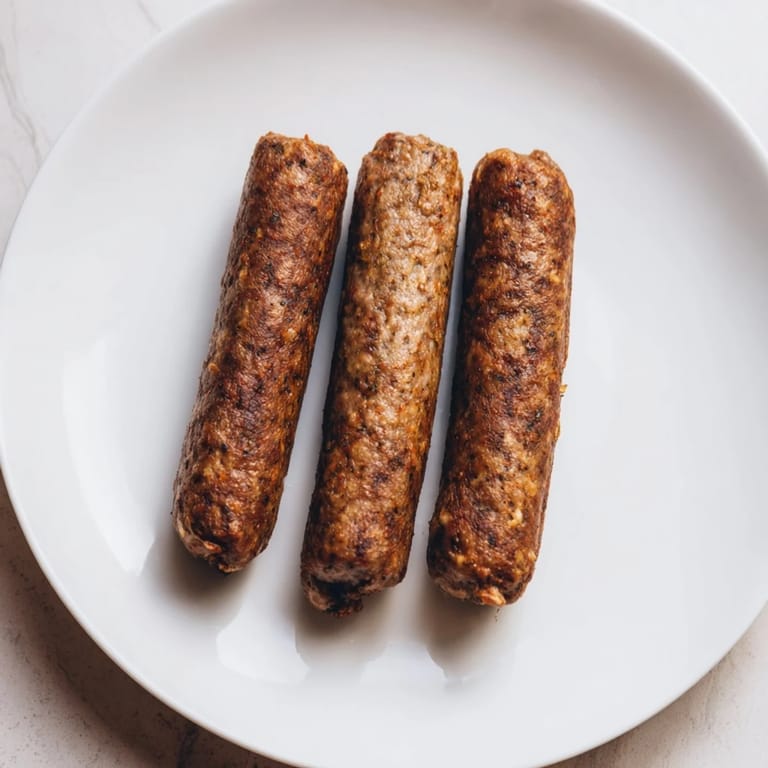
Mici are traditionally served hot, straight off the grill, wrapped in paper or parchment with a small wooden skewer through the center. The mustard and fresh bread are non-negotiable additions; the sharp mustard cuts through the richness of the meat, and the bread soaks up every bit of juice that escapes. A cold lager or Romanian white wine turns this from a snack into an experience, and I've found that the informality of eating them by hand, maybe standing around a table or outdoors, somehow makes them taste even better.
- Always serve them within minutes of grilling while the crust is still snapping and the inside is still warm.
- A simple mustard—yellow, Dijon, or spicy brown—is all you need; no elaborate sauces required.
- If you're making them ahead, you can refrigerate them cooked and reheat gently on a grill or in a warm oven, though they're always best fresh.
 Save to Pinterest
 Making mici at home feels like bringing a piece of a Romanian street corner into your kitchen, and the fact that you're doing it yourself makes them taste even better. Once you master this recipe, you'll find yourself making them for every occasion, watching people's faces light up when they realize what they're eating, and feeling that quiet satisfaction that comes from nailing something traditional and delicious.
Recipe Questions & Answers
- → What meats are traditionally used in mici?
Typically a mix of ground beef, pork, and optionally lamb is combined to create the rich flavor and texture of mici.
- → How do I achieve the signature crisp outside on mici?
Grill the mici over medium-high heat, turning frequently for 3–4 minutes per side until the exterior is nicely browned and crisp.
- → Can sparkling water be used instead of beef stock?
Yes, substituting sparkling water for some or all of the beef stock adds extra juiciness and lightness to the mixture.
- → How long should the meat mixture be chilled?
Chilling for at least 2 hours, preferably overnight, helps the flavors meld and the texture firm up for shaping and grilling.
- → What are traditional accompaniments for mici?
Mici are often served hot with mustard and fresh bread, and they pair well with a cold lager or Romanian white wine.
- → Are these sausages gluten-free?
Yes, the traditional ingredients are naturally gluten-free, but always verify stock and spice labels for hidden additives.