 Save to Pinterest
 My sister called me three days before her birthday asking if I could make something yellow and cheerful, something that tasted like spring itself. I had exactly enough time to figure it out, and somehow I landed on this sheet cake—tender vanilla layers hiding a tart-sweet lemon curd filling, topped with clouds of whipped cream. The first slice I cut was messy, the frosting cracked at the edges, but when she took a bite her whole face changed. That's when I knew this cake was worth making again and again.
I tested this cake on a gray April afternoon when my kitchen smelled like butter and lemon in equal measure. My neighbor stopped by unannounced, and I nervously offered her a slice still warm from the cooling rack. She sat at my counter, took one bite, and asked me to make it for her daughter's graduation party two weeks later. That's when I realized this wasn't just a cake—it was something people wanted to remember you by.
Ingredients
- All-purpose flour (2 ½ cups): The foundation of a tender crumb—make sure it's not packed when you measure, or your cake will be too dense and dry.
- Baking powder and baking soda (2 ½ tsp and ½ tsp): Together they give the cake its subtle lift without making it taste metallic or chemical.
- Unsalted butter (1 cup): Room temperature is non-negotiable—cold butter won't cream properly with the sugar, and your cake will suffer for it.
- Granulated sugar (2 cups): This dissolves into the batter, creating that delicate, even crumb texture you're after.
- Eggs (4 large, room temperature): Temperature matters because cold eggs don't emulsify smoothly, and they can break the batter.
- Vanilla extract (1 tbsp): Use real vanilla—the imitation kind will fade into the background when the lemon takes over.
- Whole milk (1 cup, room temperature): Cold milk can shock the batter and cause lumps, so let it sit on the counter while you prep everything else.
- Lemon zest (1 from the cake, 2 from the curd): Zest before juicing so you don't lose any precious oils, and use a microplane for the finest texture.
- Egg yolks (4 for the curd): Save your leftover egg whites for an omelet or meringues—don't waste them.
- Fresh lemon juice (⅓ cup): Bottled lemon juice will taste tinny and sharp; fresh juice is mellower and more complex.
- Heavy cream (2 cups, chilled): Chill your bowl and beaters too, or your frosting will split and turn into butter.
- Powdered sugar (½ cup): Sift it first if it has any lumps, or your frosting will have gritty flecks.
Tired of Takeout? 🥡
Get 10 meals you can make faster than delivery arrives. Seriously.
One email. No spam. Unsubscribe anytime.
Instructions
- Prepare your pan and preheat:
- Get your oven warming to 350°F while you grease that 9x13 pan and line it with parchment—it saves you from scraping dried cake edges later. This small step is the difference between beautiful slices and crumbly fragments.
- Combine your dry ingredients:
- Whisk flour, baking powder, baking soda, and salt together in a medium bowl, making sure everything is evenly distributed. This prevents baking soda lumps that can leave bitter spots in your cake.
- Cream butter and sugar into submission:
- Beat them together for 3-4 minutes until the mixture looks pale and fluffy—you're literally whipping air into the butter, and that's where the cake's tender structure comes from. Stop and scrape down the bowl halfway through, or your mixer will miss some of the sugar hiding on the sides.
- Add eggs one at a time:
- This seems fussy, but each egg needs to fully incorporate before the next one arrives, creating a smooth, stable emulsion. If you dump all four eggs in at once, the mixture can look curdled and broken.
- Mix in vanilla and lemon zest:
- Beat just until combined, then you're ready to alternate with your dry ingredients. The zest should be distributed throughout, giving little bursts of flavor in every bite.
- Alternate wet and dry ingredients:
- Add one-third of the flour mixture, then one-third of the milk, then another third of flour, milk, and finish with the last flour portion. This pattern prevents overmixing and keeps your cake tender rather than tough.
- Pour and bake:
- Spread the batter evenly in your prepared pan and smooth the top so it bakes uniformly. Bake for 28-32 minutes—start checking at 25 with a toothpick, because every oven runs a little hot or cool.
- Make the lemon curd while cake cools:
- In a small saucepan, whisk egg yolks, sugar, lemon juice, and zest together, then cook over medium-low heat while stirring constantly for about 5-7 minutes until it thickens enough to coat the back of a spoon. Remove from heat and whisk in butter until it's glossy and smooth, then transfer to a bowl and cover the surface with plastic wrap to prevent a skin from forming.
- Whip your frosting:
- With everything chilled, whip heavy cream with powdered sugar and vanilla until stiff peaks form—about 3 minutes with an electric mixer. Don't walk away once it looks close to done, because the difference between frosting and butter happens in seconds.
- Layer the cake:
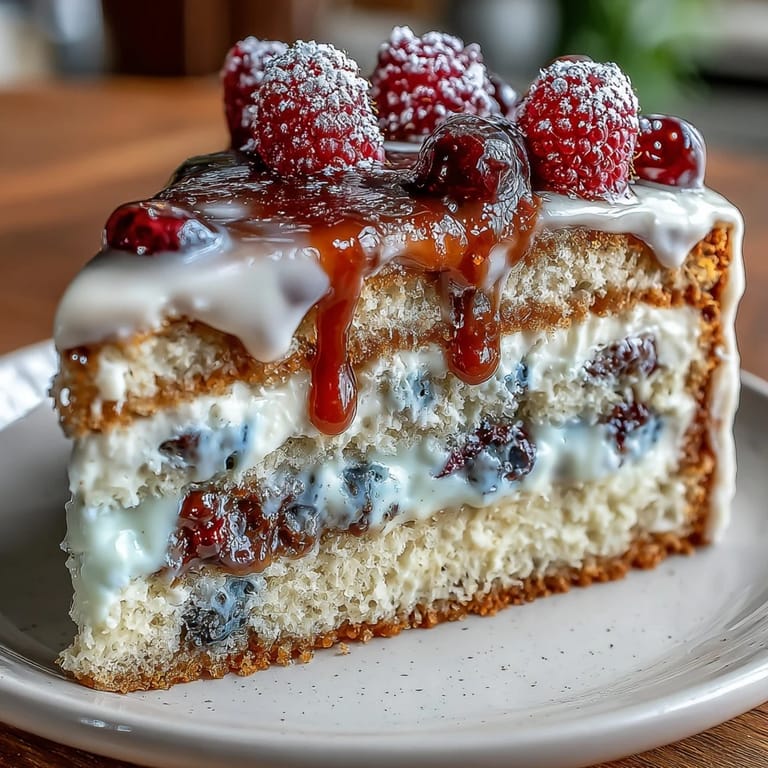
- Once completely cool, use a serrated knife and gentle sawing motions to slice the cake horizontally into two layers. Spread the chilled lemon curd on the bottom layer, replace the top, and frost everything with whipped cream.
- Decorate and chill:
- Scatter fresh berries, edible flowers, or lemon zest curls over the top as your heart desires. Let the finished cake chill for at least an hour so you can cut clean slices instead of crumbly fragments.
 Save to Pinterest
 The moment I understood this cake's real power came at a dinner party when a guest who usually orders dessert elsewhere asked for thirds. Nobody asked what flour I used or whether I'd sifted anything—they just ate, smiled, and asked when they could have it again. That's the kind of cake worth making, the kind that doesn't need to show off.
Why Fresh Lemon Matters
Bottled lemon juice carries a metallic aftertaste that no amount of sugar can hide, and in a cake this delicate, it becomes noticeable. Fresh lemon juice is mellower, rounder, and has a natural complexity that makes the curd taste elegant rather than aggressively sour. I learned this the hard way by trying to save time, and the difference was honestly stark enough that I've never gone back.
Timing and Temperature
Room-temperature ingredients mix more smoothly and create a more stable batter—this isn't just a technique myth. Cold eggs and cold milk will cause your butter to seize up, and you'll end up with a grainy mess that bakes into a dense cake. The extra five minutes of prep time to let things warm up pays dividends in texture and taste that you'll notice in every bite.
Storage and Serving Suggestions
This cake is best served cold or very cool, so it should live in the refrigerator once assembled—the whipped cream frosting needs that chill, and the lemon curd stays silky when it's cold. It keeps beautifully for up to three days covered loosely with plastic wrap, though it rarely lasts that long in my house. You can also bake the layers a day ahead and assemble everything the morning of serving, which takes some pressure off your timeline.
- Pair this cake with something bubbly like prosecco or sparkling lemonade to echo the brightness of the lemon.
- If you're making this ahead, assemble it the morning of serving so the frosting stays fresh and fluffy.
- For a less tart version, reduce the lemon curd filling and rely more on the delicate vanilla cake underneath.
 Save to Pinterest
 This cake feels like spring in edible form—bright, a little tart, and somehow celebratory without trying too hard. Make it for someone you care about and watch their face light up the same way my sister's did.
Recipe Questions & Answers
- → How do I ensure the cake layers are even?
After baking and cooling, slice the cake horizontally with a serrated knife for clean, even layers. Chilling the cake beforehand helps maintain structure during slicing.
- → What is the best way to prepare lemon curd filling?
Cook egg yolks, sugar, lemon juice, and zest over medium-low heat, stirring constantly until thickened. Remove from heat and whisk in butter until smooth, then chill before spreading.
- → Can I substitute store-bought lemon curd?
Yes, using store-bought lemon curd can save time and still provide a tart, creamy layer between the cake layers.
- → How should the whipped cream frosting be made?
Whip cold heavy cream with powdered sugar and vanilla extract until stiff peaks form. Keep chilled until ready to frost the cake.
- → How can I decorate the cake for spring celebrations?
Use fresh berries like strawberries, raspberries, and blueberries, along with edible flowers or lemon zest curls to enhance its festive appearance.
- → What pairs well with this cake?
A glass of sparkling wine or refreshing lemonade complements the bright citrus flavors and creamy frosting well.