 Save to Pinterest
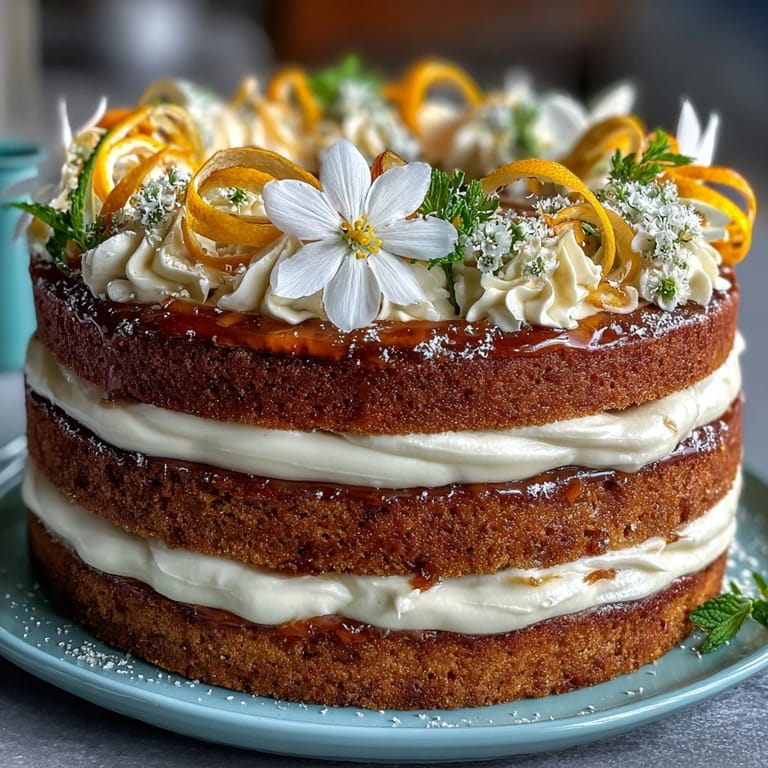
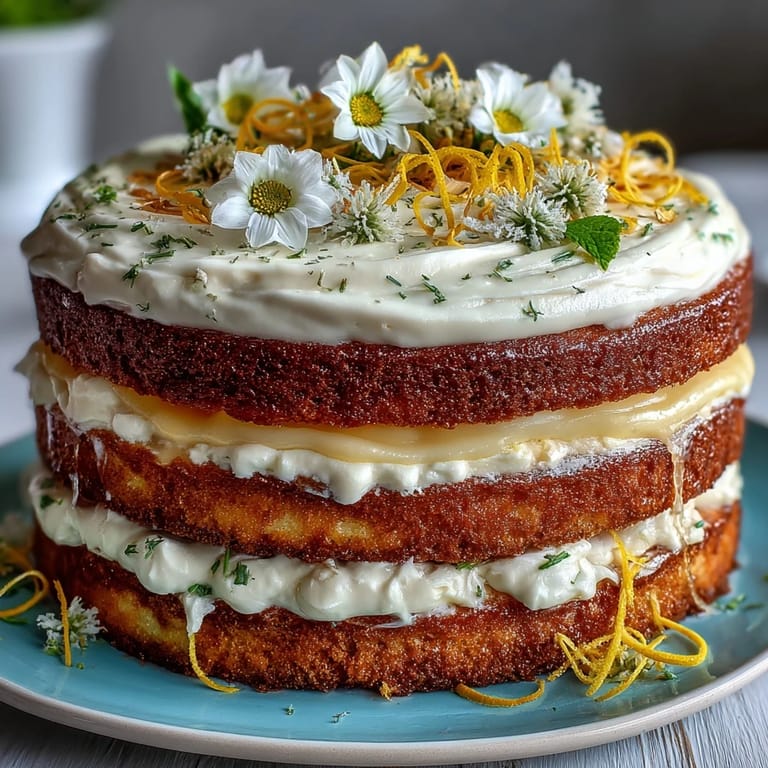
 Last spring, my neighbor dropped by with a basket of pansies from her garden, and I found myself staring at them thinking they were too beautiful to waste. That's when it clicked—why not bake something as stunning as those flowers? This naked cake came together that afternoon, layers of tender lemon sponge peeking through clouds of whipped cream and jeweled with those edible blooms. It felt like bringing the garden inside, one elegant bite at a time.
I made this cake for my sister's baby shower last May, and watching her face when she saw it surrounded by those fresh flowers was worth every minute of assembly. Someone asked if I'd ordered it from a fancy bakery, and I'll admit I let that compliment sit for a moment before revealing the secret was just good timing, fresh ingredients, and a little patience with the lemon curd.
Ingredients
- All-purpose flour (2 1/2 cups): The base keeps everything tender; measure by spooning and leveling, not scooping straight from the bag, which packs it down and throws off your ratios.
- Baking powder and baking soda (2 tsp and 1/2 tsp): These work together to give you a cake that rises evenly and bakes through without doming.
- Salt (1/2 tsp): A small amount deepens the lemon flavor and balances sweetness in ways you won't consciously notice but will definitely taste.
- Unsalted butter, softened (1 cup): Room temperature is non-negotiable here; cold butter won't cream properly and you'll end up with a dense cake instead of an airy one.
- Granulated sugar (1 3/4 cups): Creaming this with butter incorporates tiny air pockets that make the cake light and fluffy.
- Large eggs, room temperature (4): Cold eggs won't emulsify smoothly into the batter, so pull them out at least 30 minutes before you start.
- Vanilla extract (2 tsp): Use real vanilla; the synthetic stuff tastes one-dimensional next to fresh lemon.
- Buttermilk, room temperature (1 cup): The acidity reacts with the baking soda and keeps the crumb tender and moist.
- Lemon zest (1 zest in cake, 2 in curd): A microplane grater gives you fine, feathery zest that distributes evenly; a box grater yields chunks that can taste bitter if you're not careful.
- Freshly squeezed lemon juice (3/4 cup for curd): Bottled juice tastes flat and slightly metallic; real lemons take 10 extra minutes and taste like the difference between ordinary and memorable.
- Egg yolks (4 for curd): These create the silky, luxurious texture of lemon curd; save your whites for an omelet.
- Heavy cream, cold (2 cups): Chill your bowl and beaters too; cold equipment whips cream faster and more stably.
- Powdered sugar (1/3 cup): Finer than granulated sugar, it dissolves instantly into whipped cream without grittiness.
- Edible flowers (1–2 cups): Source these from a farmer's market, specialty grocer, or a trusted online vendor; never use florist flowers, which are often treated with pesticides.
Tired of Takeout? 🥡
Get 10 meals you can make faster than delivery arrives. Seriously.
One email. No spam. Unsubscribe anytime.
Instructions
- Prep your pans and oven:
- Set the oven to 350°F (175°C) and get three 8-inch round cake pans ready with parchment paper, grease, and a light touch. Starting with an already warm oven means your cakes bake evenly and rise at the right pace.
- Whisk the dry team:
- In a medium bowl, combine flour, baking powder, baking soda, and salt, breaking up any lumps with your fingers as you go. This distributes the leavening agents evenly, which is what gives you those delicate crumbs.
- Cream butter and sugar into clouds:
- Beat them together in a large bowl for about 3 minutes until the mixture is pale, fluffy, and visibly lighter. This is where the magic of airiness begins, so don't rush it.
- Add eggs one at a time:
- Drop each egg in individually, beating well after each addition until fully incorporated before the next one goes in. This prevents a curdled or broken batter and ensures smooth, even texture.
- Mix in vanilla and lemon zest:
- Stir these in gently, making sure the zest is evenly distributed throughout the wet mixture. The aroma at this point should make you pause and enjoy what's coming.
- Alternate dry and wet ingredients:
- Add the flour mixture and buttermilk in three additions each—dry, wet, dry, wet, dry—stirring until just combined after each addition. Overmixing toughens gluten and ruins your tender crumb, so stir gently and stop as soon as you don't see streaks of flour.
- Divide and bake:
- Split the batter evenly among the three pans, smooth the tops with an offset spatula, and slide them into the oven for 25–30 minutes until a toothpick comes out clean. The edges will pull slightly from the sides of the pan when they're done.
- Cool with patience:
- Let cakes rest in their pans for 10 minutes, then turn them out onto a wire rack to cool completely before assembly. Rushing this step leads to broken, crumbly layers.
- Make lemon curd over gentle heat:
- Set a heatproof bowl over a saucepan of simmering (not boiling) water and whisk lemon juice, zest, sugar, and egg yolks constantly for 8–10 minutes until the mixture thickens enough to coat the back of a spoon. Remove from heat, whisk in cubed butter until smooth, and let it cool completely before using.
- Whip cream to soft, then stiff peaks:
- Beat cold heavy cream with powdered sugar and vanilla until stiff peaks form, being careful not to go too far or you'll have sweet butter. Chill the whipped cream until you're ready to assemble.
- Assemble with a light hand:
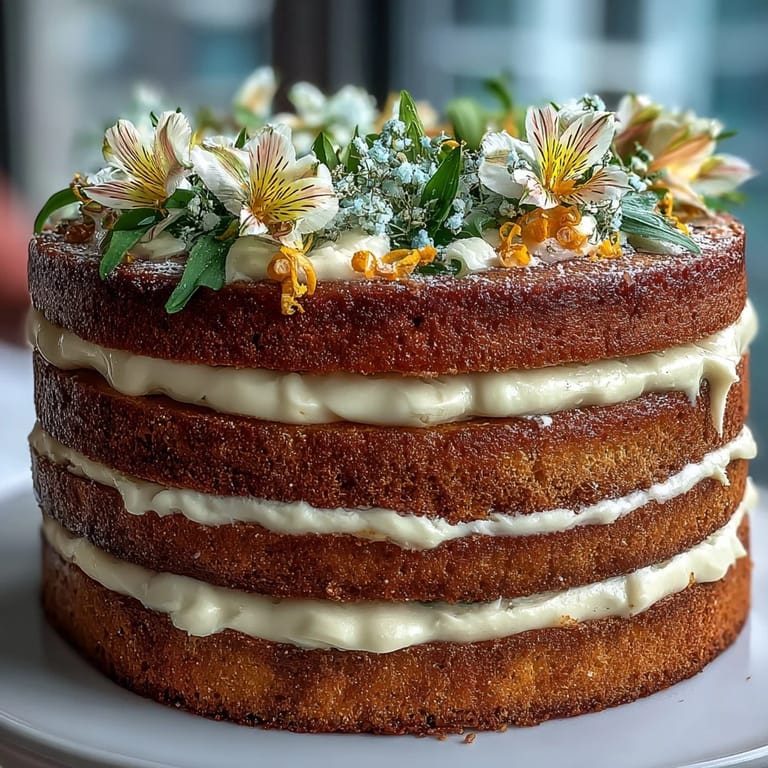
- Place the first cake layer on your serving platter, spread half the lemon curd over it, then top with a generous layer of whipped cream. Repeat with the second layer, then crown everything with the third cake and a thick final layer of whipped cream.
- Decorate just before serving:
- Arrange edible flowers across the top and scatter lemon zest curls around them, waiting until the last moment so the flowers stay fresh and vibrant. This is where the cake transforms into something that stops conversation.
 Save to Pinterest
 There's something almost magical about watching someone bite into this cake for the first time—the delicate crunch of an edible flower petal, the brightness of lemon cutting through rich cream, the way light filters through those naked cake layers. It's the kind of dessert that tastes like springtime and celebration all at once.
The Secret Behind Naked Cakes
Naked cakes aren't about being rustic or imperfect; they're about confidence and showcasing what you've actually baked. There's nowhere to hide crumbs or uneven layers, so precise measuring and gentle handling matter more than ever. I learned this the hard way by trying to rush assembly and ending up with a slightly lopsided cake that still tasted wonderful but didn't photograph quite as beautifully.
Working with Edible Flowers
Not all flowers are safe to eat, and this matters deeply when you're serving something to guests. I once grabbed some gorgeous roses from a local florist without realizing they were treated with fungicides; learning that lesson taught me to build relationships with farmers' market vendors and specialty grocers who can guarantee their flowers are food-safe. Pansies, violets, marigolds, and nasturtiums are foolproof choices and taste faintly floral without overwhelming the lemon and cream.
Making This Cake Your Own
The beauty of this recipe is that it's a canvas for your preferences and what's in season. I've made it with a mascarpone cream mixed into the whipped cream for richness, added edible gold leaf for weddings, and even substituted the lemon curd with a light strawberry jam when that's what the moment called for. The cake itself is what matters most—sturdy enough to hold your filling but delicate enough to feel like something special.
- Substitute half the whipped cream with mascarpone for a more luxurious, tangy filling.
- Make the lemon curd a day ahead and store it in the refrigerator so you're not rushed on baking day.
- If you're nervous about the egg yolks in the curd, look for pasteurized eggs at your grocery store for peace of mind.
 Save to Pinterest
 This cake became my go-to for celebrations because it tastes as beautiful as it looks, and there's real pride in serving something you've made by hand. Every spring, I find myself thinking about those pansies and baking this again.
Recipe Questions & Answers
- → How do I ensure the flowers are safe to eat?
Use only flowers labeled as edible and free from pesticides or chemicals to ensure safety.
- → Can I prepare lemon curd in advance?
Yes, lemon curd can be made a day ahead and refrigerated to enhance flavors and ease assembly.
- → What is the best way to achieve fluffy whipped cream?
Chill the cream and beat it with powdered sugar and vanilla until stiff peaks form for ideal texture.
- → How should I store this layered cake?
Keep the assembled cake refrigerated and cover it to preserve freshness and prevent drying.
- → Are there suitable substitutions for whipped cream?
Mascarpone can replace half the cream for a richer texture, adding a slight tang and creaminess.