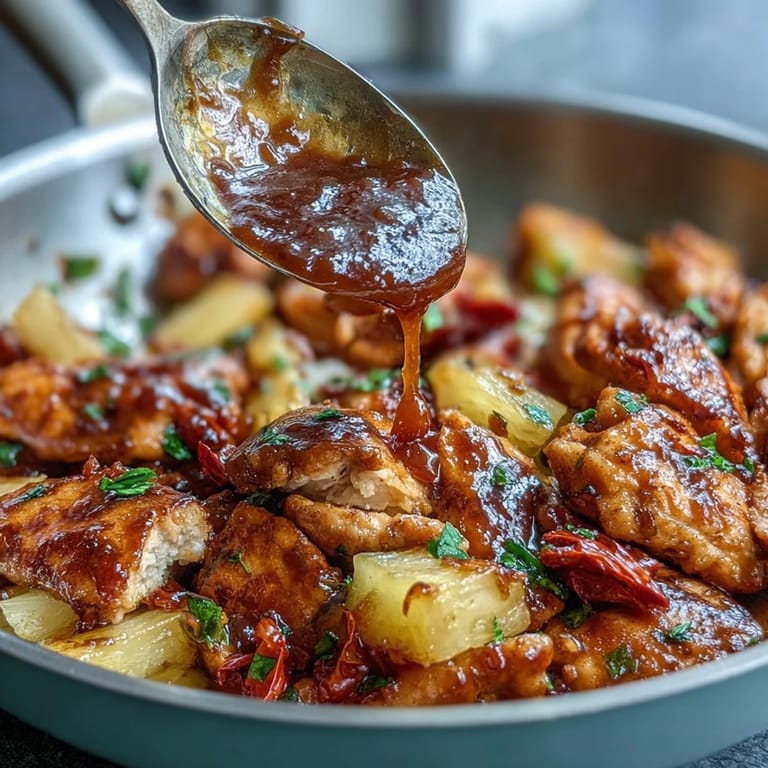
 Save to Pinterest
 There's something about the sizzle of chicken hitting a hot skillet that makes me pause whatever I'm doing. One weeknight, my kids were hovering around the kitchen asking what was for dinner, and I spotted a can of pineapple in the pantry alongside some bell peppers that needed using. What started as improvisation became this bright, tangy-sweet skillet that had everyone asking for seconds before I'd even finished plating. The whole thing comes together in barely 35 minutes, which felt like a small miracle on a day when I couldn't imagine spending hours cooking.
I made this for my neighbor one Thursday after she mentioned being exhausted from work. She sat at my kitchen counter with a glass of wine while the skillet bubbled away, and by the time the sauce thickened, she was already asking for the recipe. That's when I realized this dish has this quiet, uncomplicated charm that makes people feel cared for without any fuss.
Ingredients
- Boneless, skinless chicken breast: Cut into 1-inch cubes so they cook evenly and stay tender throughout the sauté.
- Cornstarch: This does double duty, coating the chicken to help it brown beautifully and then thickening the sauce into something silky.
- Salt and black pepper: Season the chicken before it hits the pan so the flavor goes deeper than just the surface.
- Vegetable oil: Use a neutral oil with a high smoke point so it can handle the heat without burning.
- Red and green bell peppers: Cut them into similar sized pieces so they soften at the same pace and look intentional on the plate.
- Red onion: Its slight sharpness cuts through the sweetness and adds color that makes the whole dish feel less heavy.
- Pineapple chunks: Fresh tastes brighter, but canned works beautifully too, just drain it well so excess liquid doesn't dilute your sauce.
- Garlic and ginger: These two create this warm, aromatic base that makes the dish taste more complex than it actually is.
- Rice vinegar: This is gentler and more delicate than regular vinegar, giving the sauce brightness without harshness.
- Ketchup: It sounds simple, but it adds both sweetness and umami depth that makes the sauce feel rounder.
- Brown sugar: Melts into the sauce smoothly and adds a caramel note underneath the tang.
- Soy sauce: The salt and savory backbone that keeps everything from tasting like pure dessert.
- Pineapple juice: Echoes the fruit and adds natural sweetness that feels right in the sauce.
- Cornstarch slurry: This mixture of cornstarch and water transforms the sauce from thin to glossy in just a couple of minutes of stirring.
Tired of Takeout? 🥡
Get 10 meals you can make faster than delivery arrives. Seriously.
One email. No spam. Unsubscribe anytime.
Instructions
- Coat your chicken:
- Toss the chicken cubes with cornstarch, salt, and pepper in a bowl until each piece is evenly dusted. This coating will help the chicken brown gorgeously and stay moist inside.
- Brown the chicken in batches:
- Heat oil in your skillet over medium-high heat until it's shimmering, then add about half the chicken. Don't crowd the pan or the pieces will steam instead of sear. Let them sit for a minute or two before you turn them so they develop a golden crust, then flip and cook until all sides are browned, about 3 to 4 minutes total.
- Cook the vegetables:
- In the same skillet, add your minced garlic and ginger and let them perfume the oil for about 30 seconds. Then add the onion and bell peppers, stirring them around for 3 to 4 minutes until they're just starting to soften but still have a bit of snap.
- Bring it all together:
- Add the pineapple chunks to the skillet, then return the browned chicken. This is when your kitchen will smell absolutely irresistible, and you'll start feeling like dinner is actually happening.
- Make the sauce magic:
- In a small bowl, whisk together the rice vinegar, ketchup, brown sugar, soy sauce, and pineapple juice. Pour this mixture over everything in the skillet and bring it to a gentle simmer.
- Thicken and finish:
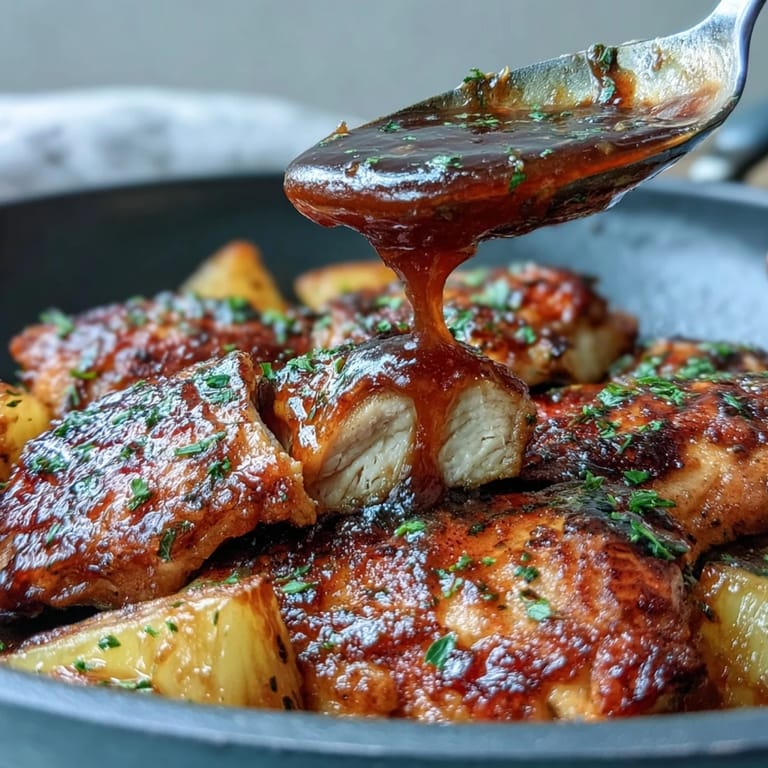
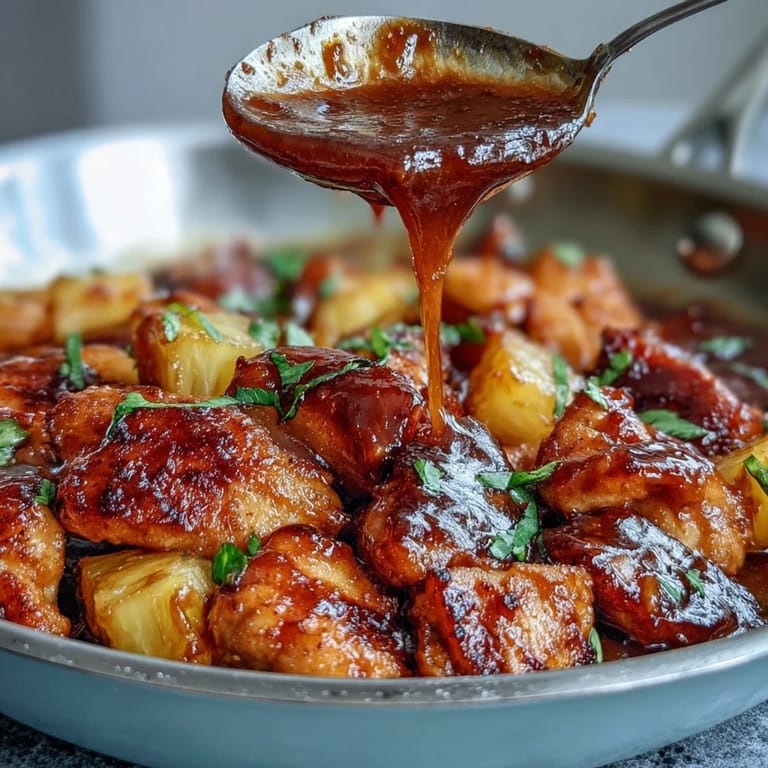
- Stir your cornstarch slurry one more time so it's smooth, then pour it slowly into the simmering sauce while stirring constantly. Watch as the sauce goes from thin to glossy and clings to everything in the pan, usually just 2 to 3 minutes.
 Save to Pinterest
 I served this to my family on a rainy Sunday when we were all a little tired of our usual routines. My youngest asked for thirds, and my partner said it tasted like a restaurant dish, which felt like winning the lottery in terms of weeknight cooking validation. That's when I understood that sometimes the simplest meals, the ones that come together quickly without any drama, are the ones that mean the most.
Flavor Layers That Make This Work
What makes this dish sing is how the sweet, sour, and savory elements don't compete but instead support each other. The brown sugar and ketchup provide sweetness, the rice vinegar brings brightness, and the soy sauce anchors everything with umami depth. I learned this by accident once when I skipped the soy sauce thinking the other ingredients would be enough, and the result felt one-dimensional and unfinished. Now I understand that each component has a job, and none of them can be cut or the whole thing loses its balance.
Why This Cooks So Fast
The secret to the speed is in the prep and in trusting medium-high heat. If you cut everything to roughly the same size and get your skillet properly hot before you start, the whole cooking process moves quickly without anything getting overdone. I used to think faster cooking meant worse results, but with this dish I learned that high heat and good timing actually preserve the snap in the vegetables and keep the chicken from drying out.
Serving and Scaling This Up
Serve this over steamed rice, cauliflower rice for a lighter version, or even noodles if you're in the mood. This recipe easily doubles if you're feeding a crowd, though you might need to work in two batches when browning the chicken so you don't overcrowd the skillet. One thing I've learned is that this dish tastes just as good the next day reheated gently over the stove, making it perfect for leftovers.
- Swap the chicken breast for boneless thighs if you like more juiciness and richer flavor, just add a minute or two to the cooking time.
- Add a pinch of red pepper flakes to the sauce if heat appeals to you, or even a tiny drizzle of sesame oil at the very end for toasted depth.
- If you need it gluten-free, swap the soy sauce for tamari or coconut aminos and double-check your ketchup label.
 Save to Pinterest
 This skillet has become my go-to when I want something that feels special but doesn't require special effort. It's proof that the best meals are often the ones that come together without overthinking.
Recipe Questions & Answers
- → Can I use chicken thighs instead?
Yes, boneless, skinless chicken thighs offer a juicier alternative and work well in this dish.
- → How do I thicken the sauce properly?
Mix cornstarch with water to create a slurry and stir it into the simmering sauce; cook until it thickens to a glossy consistency.
- → Can I substitute fresh pineapple with canned?
You can use canned pineapple chunks, just be sure to drain the juice before adding to prevent excess liquid.
- → What can I serve with this skillet meal?
This pairs wonderfully with steamed rice, cauliflower rice, or even noodles for a complete meal.
- → Is there a way to add more heat?
Adding red pepper flakes to the sauce brings a gentle kick without overpowering the sweet and sour flavors.