 Save to Pinterest
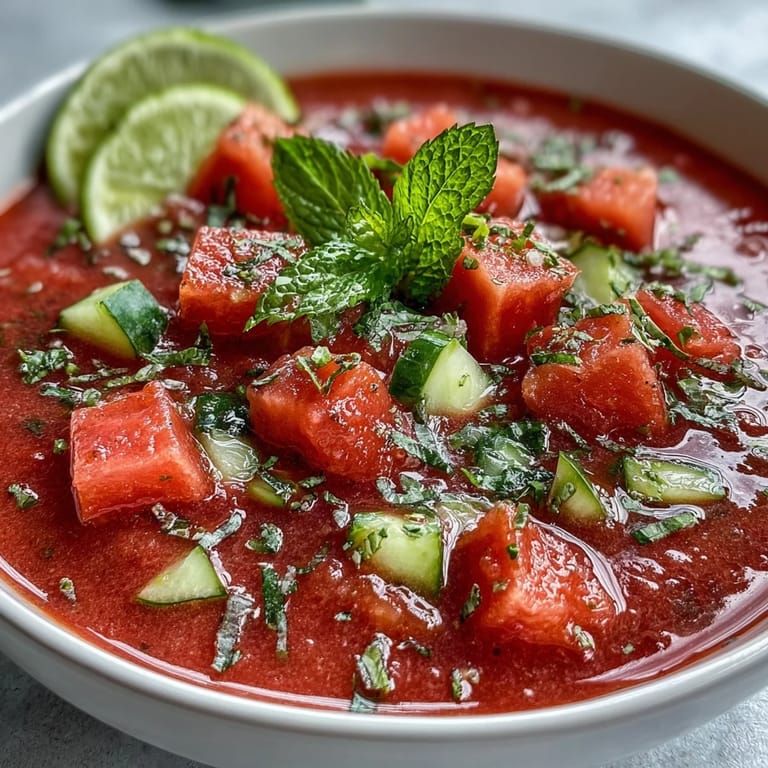
 There's a particular kind of relief that comes from standing in front of an open refrigerator on a scorching afternoon, searching for something that feels less like eating and more like salvation. That's when watermelon gazpacho entered my life—not from a cookbook but from pure kitchen desperation and a pile of farmers market produce that demanded to be used. The first spoonful was a revelation: sweet, cool, herbaceous, and alive in a way that made the heat seem almost manageable. I've made it countless times since, and it never feels like a recipe so much as a ritual that signals summer has fully arrived.
Last summer I served this to my neighbors on their tiny porch during a power outage, ladling it from a pitcher while we sat in the gathering dark. It became the thing we all remembered about that strange evening—not the inconvenience, but the unexpected moment of coolness and togetherness. That's when I realized this soup isn't just about the ingredients; it's about what happens when you slow down enough to actually taste your food.
Ingredients
- Fresh watermelon, cubed (5 cups): Use the sweetest, ripest melon you can find—smell it first, and choose one that feels heavy for its size, which signals high water content and better flavor.
- Cucumber (1 large, peeled and chopped): English cucumbers work beautifully because they're less watery than standard varieties, and peeling them prevents any bitter skin from sneaking into your soup.
- Red bell pepper (1 medium, chopped): This adds subtle sweetness and body; red peppers are naturally sweeter than green ones, which matters when you're building a delicate balance of flavors.
- Red onion (½ small, chopped): The sharpness cuts through the fruit sweetness and keeps the soup from tasting one-dimensional, though use restraint or it will dominate.
- Fresh mint leaves (¼ cup, plus extra for garnish): Mint is the voice that brings everything together—pinch a leaf to check for fragrance, and avoid wilted bunches at all costs.
- Fresh cilantro (2 tablespoons, optional): This is the wildcard that either sings or doesn't depending on your palate, so taste as you go if you're unsure.
- Lime zest and juice (from 2 limes): The zest carries the most flavor and brightness, so don't skip it; fresh lime juice is non-negotiable here.
- Extra-virgin olive oil (2 tablespoons): This rounds out the flavors and adds a silky mouthfeel that transforms the soup from refreshing to genuinely luxurious.
- Sea salt and black pepper (½ teaspoon and ¼ teaspoon): These seem humble but they're what make every other flavor pop and become memorable.
Tired of Takeout? 🥡
Get 10 meals you can make faster than delivery arrives. Seriously.
One email. No spam. Unsubscribe anytime.
Instructions
- Gather and prep your produce:
- Cube your watermelon into rough chunks, peel and chop the cucumber, deseed and chop the bell pepper, and finely mince the red onion. Having everything ready before you blend means you won't be fumbling with a knife while your blender sits waiting.
- Blend the fruits and herbs:
- Add the watermelon, cucumber, bell pepper, red onion, mint, cilantro if using, lime zest, and lime juice to your blender. Pulse first, then blend on high until completely smooth—you want zero chunks, just vibrant, uniform color.
- Add richness and seasoning:
- Drizzle in the olive oil and add salt and pepper, then blend again for about thirty seconds until the mixture is silky and the oil is fully incorporated. Taste it now and remember this baseline.
- Adjust texture and flavor:
- If your soup feels too thick, add cold water one tablespoon at a time until it reaches the consistency you want—soupy enough to sip, not thin enough to be watery. Taste and adjust salt and lime juice until it makes you close your eyes a little.
- Chill and let flavors marry:
- Transfer to a bowl or pitcher, cover, and refrigerate for at least two hours. This waiting period is where the magic happens—flavors soften and meld into something greater than their parts.
- Serve with care:
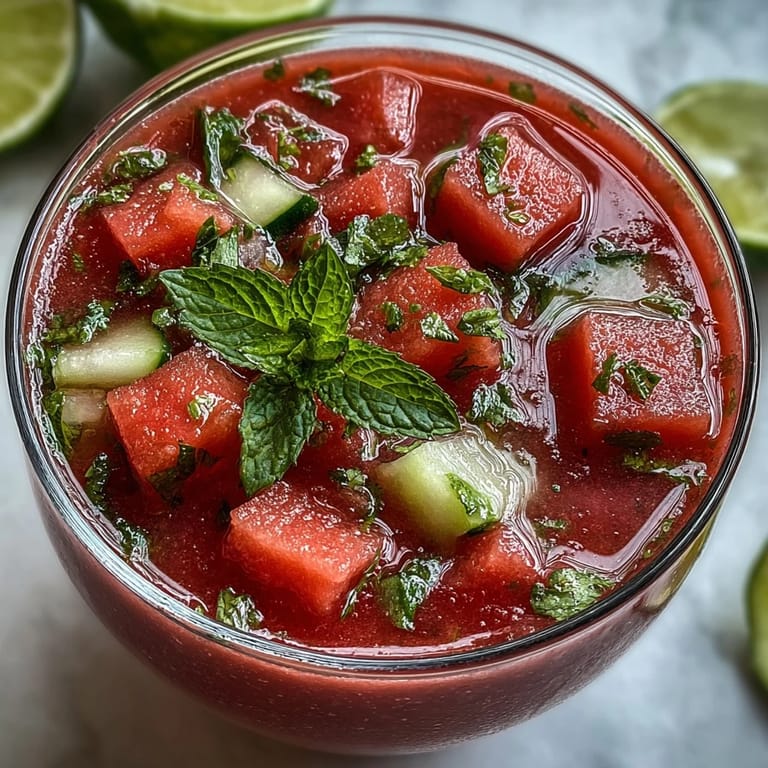
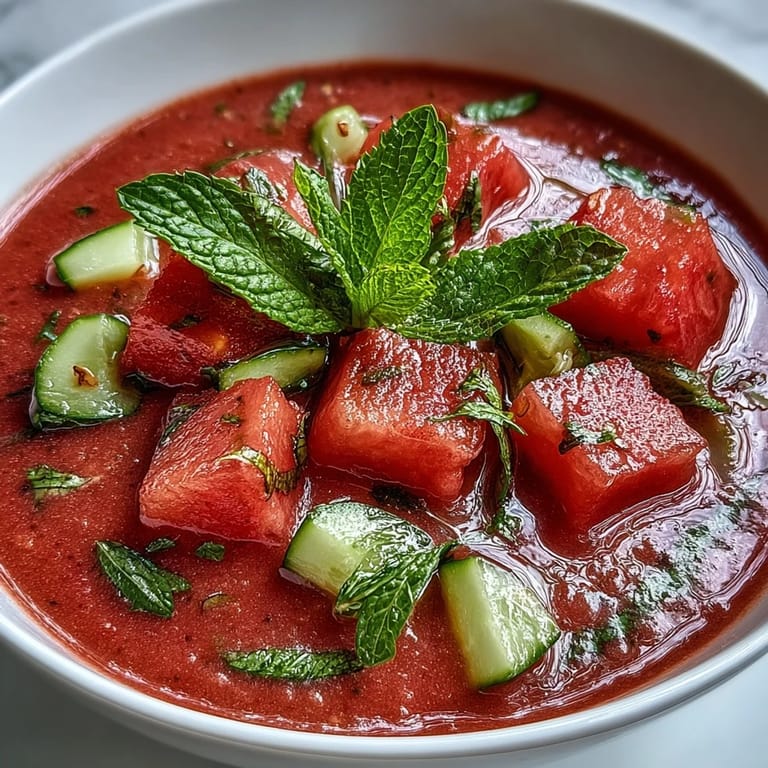
- Stir well before serving, pour into chilled bowls, and top with your reserved diced cucumber, watermelon, and fresh mint. The garnish isn't just decoration; it adds texture and a fresh herbal note that grounds the sweetness.
 Save to Pinterest
 A friend who rarely cooks brought this to a potluck and people kept returning to the table for more, asking for the recipe with the kind of genuine curiosity that happens when someone tastes something that feels both indulgent and good for them simultaneously. Watching her face light up as she realized she'd made something special was worth more than any compliment directed at me.
On Watermelon Selection and Ripeness
The difference between a transcendent watermelon gazpacho and a disappointing one comes down to one choice: your watermelon. A ripe melon should have a creamy yellow spot on the bottom where it rested on the ground, and it should sound hollow when you tap it—a dull thud means it's likely underripe or past its peak. Weight matters too; lift two melons of similar size and choose the heavier one, which indicates higher water and sugar content. The smell is your final test: lean in and inhale near the stem end, and if it smells sweet and melon-like rather than neutral, you've found your candidate.
The Power of the Chill
There's chemistry happening in your refrigerator while you wait for this soup to chill, and it's worth understanding so you don't rush it. Cold temperatures suppress bitterness and amplify sweetness and acidity, which is why a soup that tastes pleasant at room temperature becomes extraordinary when ice-cold. The flavors have time to marry and soften, with the aggressive bite of raw onion becoming more subtle and pleasant. If you're impatient like I am sometimes, at minimum chill your serving bowls in the freezer—it's a shortcut that genuinely helps and signals to your guests that they're about to eat something special.
Variations and Flavor Pairings
Once you understand the skeleton of this recipe, you can make it your own without losing what makes it work. I've added a half jalapeño blended in for heat, stirred in a tablespoon of balsamic vinegar for depth, and even experimented with a whisper of white miso for umami that no one could quite identify but everyone noticed. Basil replaces cilantro beautifully if that herb doesn't speak to you, and some people swear by a tiny pinch of cumin or coriander. The key is adding anything new gradually and tasting constantly, because you're building on an already-balanced flavor structure.
- For heat, add half a jalapeño seeded and blended in, or a pinch of cayenne pepper stirred in after blending.
- For depth, a splash of balsamic vinegar or a squeeze of fresh ginger transforms the flavor profile entirely.
- Serve it alongside grilled vegetables or a simple grain salad to make it a light main course rather than just a starter.
 Save to Pinterest
 This soup has become my answer to those moments when the heat makes you question everything, when you need something that tastes like summer itself and requires almost nothing from you. Make it when you want to feel good, serve it when you want people to remember the meal, and return to it whenever you need reminding that the simplest ingredients, treated with care, can become something transcendent.
Recipe Questions & Answers
- → What is the best way to prepare the watermelon and cucumber?
Use seedless watermelon cubed into small pieces and peel the cucumber before chopping. This ensures a smooth blend and a refreshing texture.
- → Can I adjust the consistency of the chilled soup?
Yes, if you prefer a thinner texture, simply add a few tablespoons of cold water and blend again until desired consistency is reached.
- → What herbs complement the flavors in this dish?
Fresh mint leaves provide cooling notes, while optional cilantro can add a herbal depth. Basil is a good alternative for a different herbal accent.
- → How should this chilled mixture be served for best taste?
Serve well chilled after resting for a couple of hours in the refrigerator to allow flavors to meld. Garnish with diced cucumber, watermelon, and mint leaves for brightness.
- → Are there any suggested pairings to accompany this fresh cold soup?
This dish pairs nicely with crisp white wines like Sauvignon Blanc or sparkling water infused with lime to enhance its citrus notes.