 Save to Pinterest
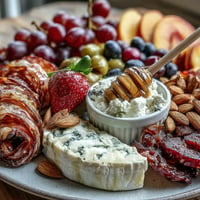
 I discovered the magic of a waterfall board by accident at a dinner party where I'd overcommitted to too many appetizers. Rather than stress about fitting everything neatly, I let ingredients tumble over the wooden board's edge onto the table below, and something clicked—guests were drawn to it like moths to flame, treating the cascade as part of the design. That chaotic moment became the foundation for this intentional arrangement, where abundance and artistry collide in the most delicious way possible.
The first time I made this for my sister's engagement celebration, I was terrified the whole thing would collapse before people arrived. Instead, the precarious stacking became the conversation starter—everyone wanted to know how I'd balanced things so carefully, and I loved having a secret about the intentional chaos. It transformed from just food into an experience, one people still mention when they talk about that evening.
Ingredients
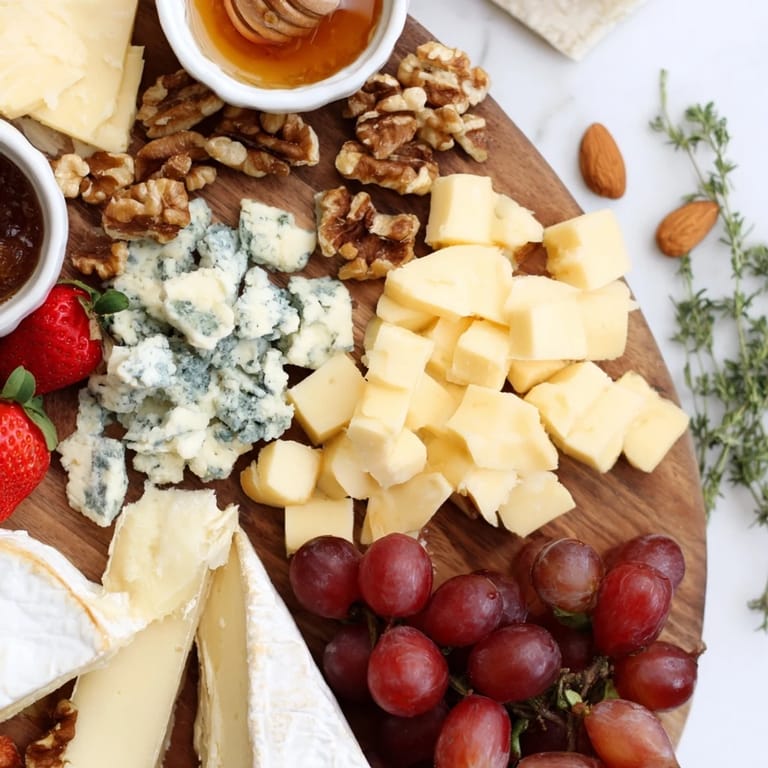
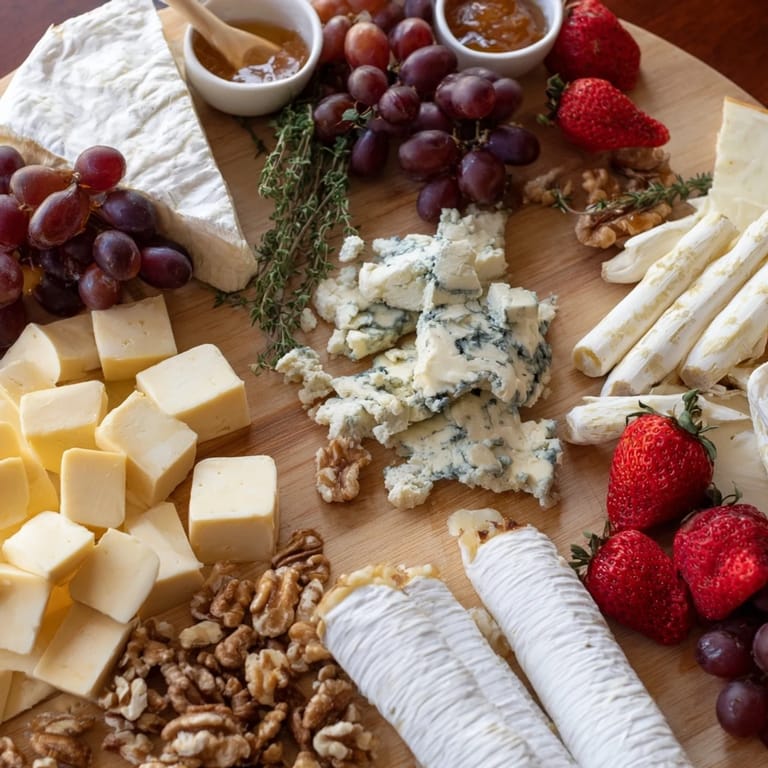
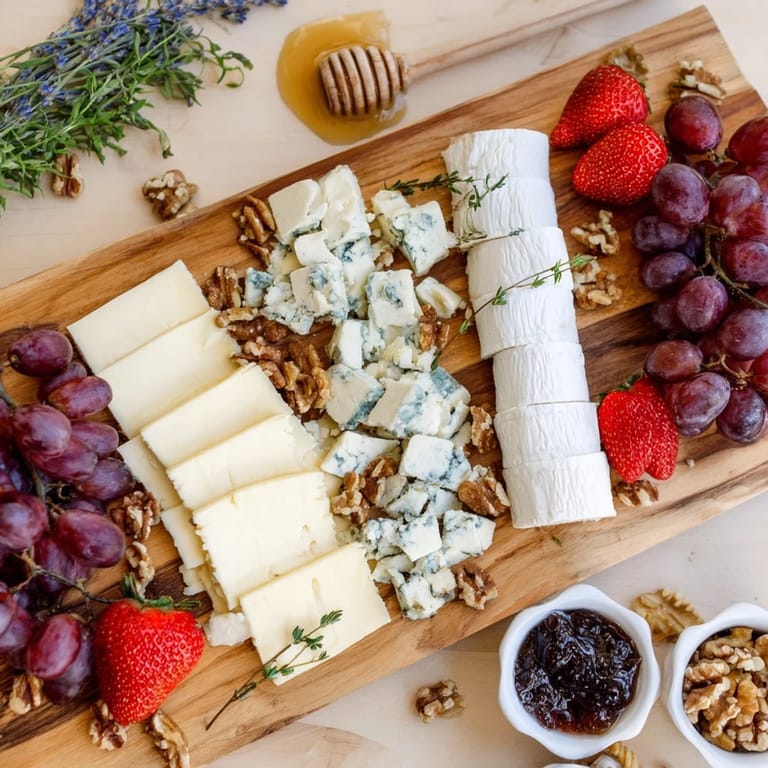
- Brie, sliced (150 g): Soft and creamy, it anchors the board with elegance and melts slightly at room temperature, becoming more forgiving as the board sits out.
- Aged Cheddar, cubed (150 g): The sharp bite cuts through richness and holds its shape beautifully when stacked, giving structure to your cascade.
- Blue cheese, crumbled (100 g): A bold statement cheese that reminds guests this is for adventurous palates—use less if you prefer subtlety.
- Goat cheese, sliced (100 g): Tangy and delicate, it bridges sweet and savory elements without overpowering softer fruits.
- Prosciutto (100 g): Its translucency lets you layer it dramatically, and it drapes gorgeously when you guide it gently toward the edge.
- Salami, sliced (100 g): Firmer than prosciutto, it stacks reliably and adds a pop of color that photographs beautifully.
- Red grapes in small clusters (1 cup): Keep them on the vine in tight groups so they nestle into gaps and roll realistically off the board.
- Strawberries, halved (1 cup): Their bright red catches light and their weight helps anchor lighter elements nearby.
- Blueberries (1/2 cup): These roll easily, which is exactly what you want—they'll naturally cascade and fill empty spaces.
- Pear, thinly sliced (1): Slice just before serving to prevent browning, and fan the slices for maximum visual impact.
- Dried apricots (1/2 cup): Their chewy texture and sunset color add warmth to the arrangement.
- Dried figs, halved (1/2 cup): Deep and luxurious-looking, they nestle into crevices and feel special to reach for.
- Almonds (1/3 cup): Their neutral tone and uniform size make them perfect for filling awkward gaps.
- Walnuts (1/3 cup): Slightly darker and crunchier, they add textural variety and earthiness.
- Baguette, sliced and toasted (1): Toasting prevents sogginess and gives you crispy soldiers to lean artfully against the board's edge.
- Assorted crackers (150 g): Mix shapes and textures—some should be sturdy enough to stand vertically without support.
- Honey (1/4 cup): Keep it in a small bowl or let a drizzle trail off the edge, and it doubles as edible décor.
- Fig jam (1/4 cup): Its deep color adds visual richness and its sweetness coaxes people toward trying cheeses they might skip.
- Mixed olives (1/4 cup): A few scattered down the cascade suggest abundance and guide the eye off the board.
- Fresh herbs for garnish (rosemary and thyme): Add these last and sparingly—they're more about color and fragrance than flavor.
Tired of Takeout? 🥡
Get 10 meals you can make faster than delivery arrives. Seriously.
One email. No spam. Unsubscribe anytime.
Instructions
- Set the stage:
- Position your wooden or marble board near the edge of your table with clear space below for the cascade. Wipe it clean and admire the canvas you're about to create.
- Build the cheese foundation:
- Arrange your cheeses in overlapping layers closest to the board's edge, letting 2–3 slices of Brie and a few cubes of cheddar intentionally extend past the boundary. Think of it as a carefully orchestrated tumble rather than a mistake.
- Drape the cured meats:
- Fold prosciutto gently beside the cheese, letting it flow toward the table like silk scarves. Overlap salami slices in a gentle wave pattern that enhances the cascading effect.
- Nestle fresh fruit:
- Place grape clusters so some sit on the board while others rest on the table edge, making the boundary ambiguous. Fan strawberry halves and scatter blueberries strategically so they roll slightly and feel alive.
- Scatter dried bounty:
- Tuck apricots and fig halves into gaps, letting a few spill onto the surface below. Sprinkle almonds and walnuts across both the board and table, creating a path that leads the eye downward.
- Arrange bread and crackers:
- Lean toasted baguette slices vertically and horizontally, stacking some so they appear to be tumbling. Position sturdy crackers so they stand or lean naturally without supports.
- Position the bowls:
- Place small ramekins of honey and jam on the board itself, then let a few olives or honey drips lead off the edge as a visual continuation.
- Add the final flourish:
- Tuck fresh rosemary sprigs and thyme leaves into gaps for color and a whisper of fragrance. Step back and adjust until it feels abundant and intentional, not chaotic.
- Serve with joy:
- Invite guests to scoop from both the board and the table, treating the fallen elements as part of the feast. Refresh and adjust as the evening unfolds.
 Save to Pinterest
 I once arranged everything perfectly, stepped back to admire it, and a guest arrived early and started eating from the cascade immediately. Instead of being annoyed, I realized that's exactly what a waterfall board should do—it should invite immediate, joyful eating, and the fact that it's a living, changing arrangement is part of its charm.
Design Philosophy
A waterfall board works because it breaks the rules of traditional grazing tables. Rather than everything contained neatly on one surface, you're embracing the drama of overflow, the visual richness of abundance spilling beyond boundaries. The key is making overflow feel intentional, not accidental—every element positioned to guide the eye from the board down to the table, as if the feast itself is so generous it can't be contained.
Timing and Preparation
You can prep components hours in advance: cube and slice cheeses, toast bread, hull berries, and arrange nuts in small bowls. The final assembly takes 20–30 minutes and should happen no more than an hour before guests arrive so everything looks fresh and nothing has oxidized or wilted. If you're preparing earlier, keep cheese and cured meats in the fridge and add them last, so they're cool and firm enough to stack without sliding.
Creative Variations
Once you understand the waterfall principle, adapt freely. A chocolate and fruit board uses dark chocolate chunks, candied nuts, and berries for a dessert version. For fully plant-based, swap dairy cheeses for cashew or almond varieties and skip the cured meats entirely. A Mediterranean twist leans into olives, hummus, roasted vegetables, and herbs like oregano. The structure stays the same; only the ingredients change.
- Add candied nuts or chocolate pieces if you want a sweet-savory moment.
- Include a small bowl of olives or cornichons for briny, palate-cleansing bites.
- Arrange everything on parchment or butcher paper placed under the table edge to simplify cleanup.
 Save to Pinterest
 There's something deeply satisfying about building a board that people don't just eat from but remember. It becomes part of the story of the gathering, proof that sometimes the most stunning centerpieces are ones that invite abundance and mess in equal measure.
Recipe Questions & Answers
- → How do I create the cascading waterfall effect?
Arrange cheeses and other elements in overlapping layers near the board’s edge, allowing some pieces to hang over. Let fruits and nuts spill naturally onto the table below for the dramatic cascade.
- → Can I make the board vegetarian-friendly?
Yes, simply omit cured meats and use plant-based cheeses to maintain a rich assortment suitable for vegetarians.
- → What are ideal accompaniments for this grazing board?
Honey, fig jam, olives, and fresh herbs complement the flavors beautifully and add variety and freshness to the presentation.
- → How long does it take to assemble?
Preparation takes about 30 minutes with no cooking required, making it practical for last-minute entertaining.
- → What tools are helpful for assembling?
A large wooden or marble board, small bowls for accompaniments, cheese knives, and serving tongs help arrange and serve the spread effectively.