 Save to Pinterest
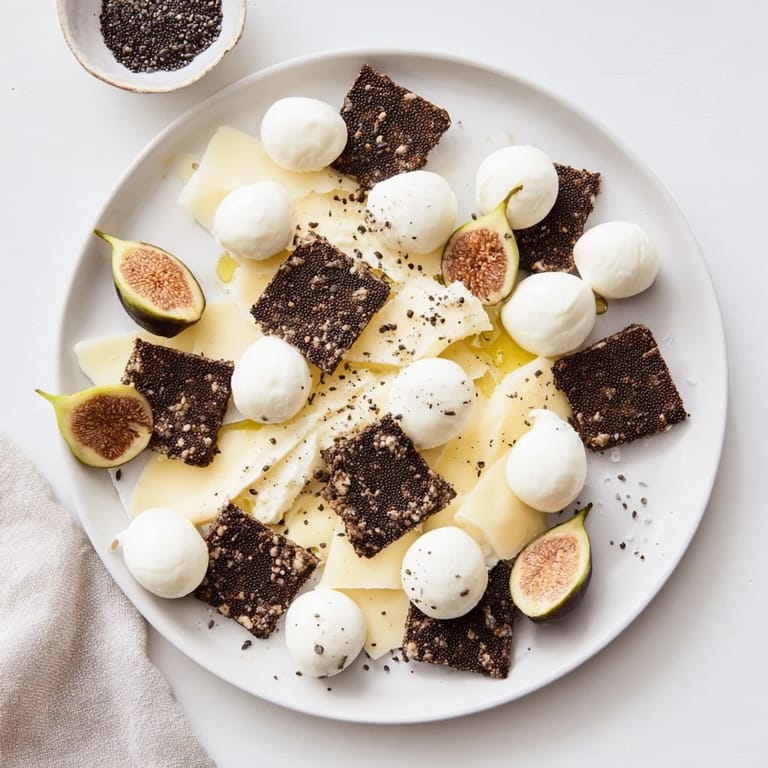
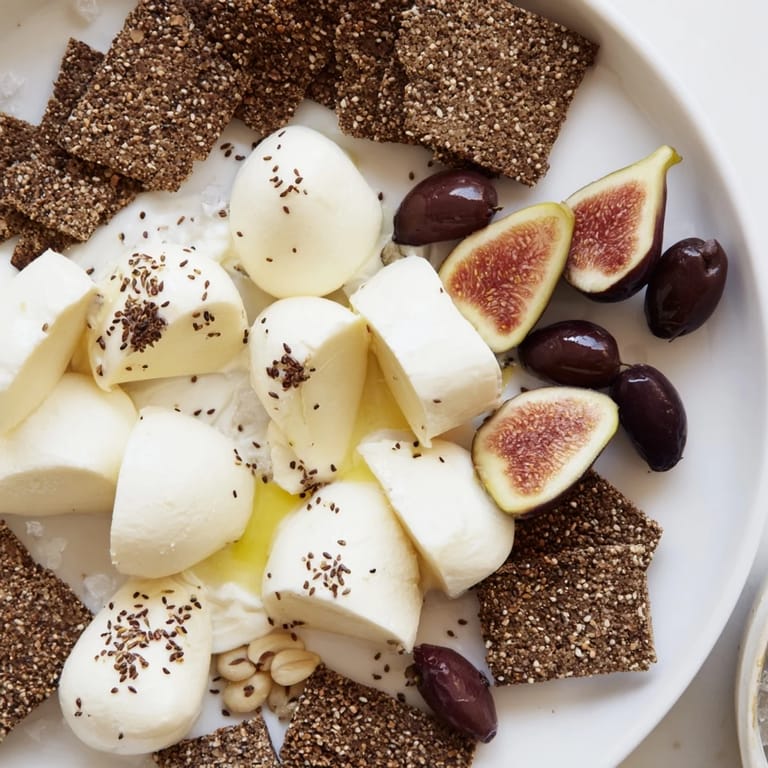
 I still remember the moment I decided that black and white wasn't just a color palette—it was a philosophy. I was preparing for an important dinner party, standing in my kitchen at dusk, and I realized that the most elegant presentations don't shout; they whisper. That's when this platter came to life. I wanted to create something that would make my guests pause the moment they walked in, something that proved that sophistication lives in simplicity and contrast. Black olives against creamy mozzarella, dark rye against blanched almonds—it was like creating edible art that felt both approachable and utterly refined.
I made this platter for a gallery opening last spring, and something magical happened. As people mingled and chatted, they kept drifting back to the table, drawn by the geometric precision and that striking monochromatic dance. One guest asked if it was almost too beautiful to eat, and another found themselves humming while they arranged a bite of mozzarella with an olive on their plate. That's when I knew this wasn't just food—it was a conversation starter.
Ingredients
- Black Olives (Kalamata or Niçoise), 100 g, pitted: These are your foundation for color and briny depth. Kalamatas bring earthiness; Niçoise olives offer a slightly softer, more delicate flavor. The key is to pit them yourself if possible—pre-pitted versions sometimes taste a bit tired. One trick I learned: if your olives taste too salty, soak them in cold water for 15 minutes before arranging.
- Dark Rye Bread, 8 slices: This is your geometric anchor and textural contrast. Dark rye has a subtle sweetness and dense crumb that holds up beautifully without becoming soggy, even under the weight of toppings. Cut it into clean shapes—squares, triangles, rectangles—and lay them out first; everything else builds from this foundation.
- Fresh Mozzarella Balls (bocconcini or ciliegine), 200 g, drained: These little orbs are pure luxury. Drain them well before serving; excess moisture is the enemy of visual clarity and can make your arrangement look wet rather than elegant. The moment before serving, they should feel cool and slightly yielding to the touch.
- Fresh Mozzarella, 1 large ball, sliced into 8 thin slices: This becomes your canvas for the vanilla seeds and sesame garnishes. Slice it just before serving to preserve that just-made delicacy, and use a very sharp knife with a quick, confident stroke—sawing will tear the cheese.
- Black Sesame Seeds, 1 tablespoon: These tiny jewels add textural contrast and a subtle nuttiness. Toast them lightly in a dry pan for 30 seconds if you want to deepen their flavor, though they're beautiful raw as well.
- White Sesame Seeds, 1 tablespoon: The counterpoint to the black seeds. These add a delicate crunch and a hint of toasted grain flavor that plays beautifully with the bread.
- Blanched Almonds, 16: These are your white anchors, visual proof that even the simplest ingredient can be elegant when placed with intention. They add a subtle earthiness and satisfying crunch.
- Black Mission Figs, 8, halved (optional): I include these when I want to add a whisper of sweetness and a deeper sense of richness. They're optional because they shift the flavor profile from purely savory-sophisticated to sweet-elegant, depending on your mood and your guests.
- Extra Virgin Olive Oil, 2 tablespoons: This is your final flourish. Use one you genuinely love tasting on its own—something peppery and bright. Drizzle it just before serving so it catches the light and adds a subtle gloss without making anything greasy.
- Flaky Sea Salt, to taste: Maldon salt is my choice here—those flakes are large enough to see and taste individually, adding a sparkle and precision that matches the platter's aesthetic.
- Vanilla Bean, 1, seeds scraped: This is the secret whisper. The tiny black seeds dotted across white mozzarella add an aroma that guests will detect without quite being able to name it. It's unexpected, sophisticated, and absolutely optional if you prefer to keep everything purely savory.
Tired of Takeout? 🥡
Get 10 meals you can make faster than delivery arrives. Seriously.
One email. No spam. Unsubscribe anytime.
Instructions
- Cut Your Foundation:
- Slice your dark rye bread with a sharp knife—and I cannot stress this enough, a truly sharp knife changes everything. Cut the slices into geometric shapes: clean squares, crisp triangles, neat rectangles. Think about the patterns you want to create before you cut; I usually go for alternating rows or a diagonal checkerboard. Arrange these bread pieces across your large platter first, leaving breathing room between them. This is your grid, your starting point.
- Create the Black Contrast:
- Now take your pitted black olives and begin placing them in deliberate patterns—alternating lines with the white mozzarella balls, or arranged in circles around the center. Think like you're creating a visual rhythm. Some olives should sit on bread, others on empty platter space, creating a sense of intentional randomness that's actually quite planned.
- Layer in the White Elements:
- Arrange your drained mozzarella balls in lines or clusters that dance with the olives. Then take your sliced large mozzarella and create geometric shapes with those slices—overlapping circles, diagonal lines, whatever feels right. The contrast between the small balls and the larger slices creates visual interest.
- Add the Sesame Seeds:
- This is where precision meets drama. Sprinkle black sesame seeds over the white mozzarella slices—not a heavy hand, but enough that they're clearly visible and create a speckled contrast. Then sprinkle white sesame seeds over the dark rye bread. You're emphasizing the black-and-white story with every choice.
- Introduce the Figs (If Using):
- If you've chosen to include black mission figs, halve them and place them strategically where they'll provide both color depth and a hint of sweetness. I like placing them near groups of almonds to create little vignettes of flavor and color.
- Place Your Almond Accents:
- Scatter your blanched almonds in minimalist clusters or deliberate lines. These white, elongated shapes add another textural and visual element. They're small enough not to overwhelm, but significant enough to matter.
- Anoint with Oil:
- Just before serving, drizzle your best extra virgin olive oil across the entire platter with a gentle hand. You're looking for a light coating that catches the light, not a glossy sheen. The oil should look intentional, like brushstrokes on a canvas.
- Season with Salt:
- Sprinkle flaky sea salt across the whole composition. If you like a whisper of black pepper, add that now too, but go light—you're seasoning, not painting over the visual contrast you've worked to create.
- Add the Vanilla Flourish:
- This is the final, almost secret step. Using the tip of a small knife, gently scrape the vanilla seeds from the pod and dot them artistically across the white mozzarella slices. This adds an aromatic surprise and a visual detail that catches experienced food lovers off guard in the most delightful way.
- Serve Immediately:
- The moment it's complete, bring it to the table. The crispness of the bread, the coolness of the cheese, the visual impact—all of these are best experienced fresh. If you must make it ahead, cover it loosely with plastic wrap and refrigerate for up to one hour, but understand that the bread will soften slightly.
 Save to Pinterest
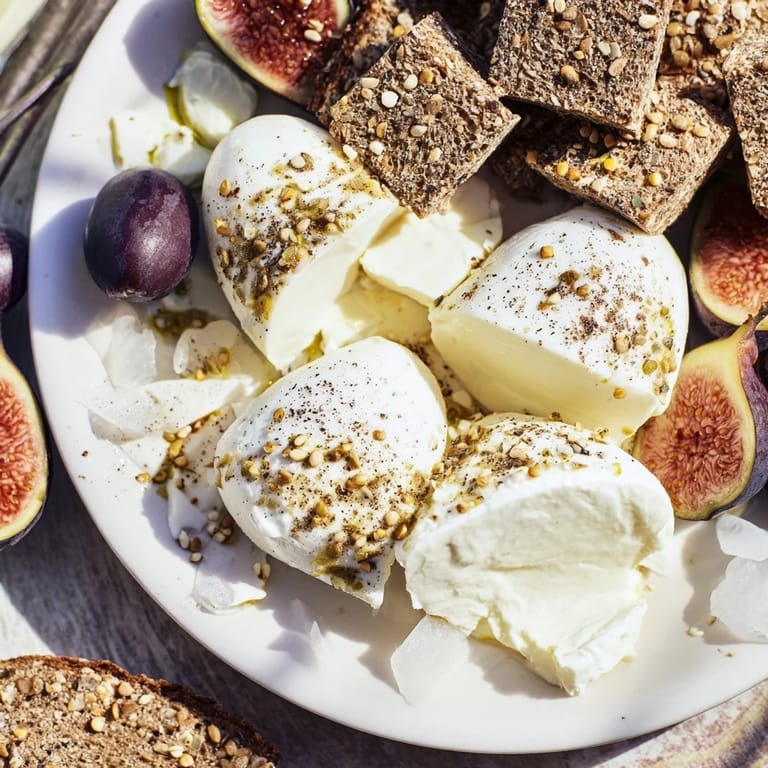
 I remember my neighbor tasting this at a small gathering and saying it was the first time she'd ever thought about food as something beautiful to look at before it was delicious to eat. That comment stayed with me. Food doesn't have to be complicated to be memorable. Sometimes the most elegant moments come from understanding the power of contrast, intention, and letting quality ingredients speak for themselves.
The Art of Platter Arrangement
The secret to making this platter feel effortlessly elegant is understanding that it's not random—it's a conversation between elements. Think about how your eye travels across the surface. You want to create visual pathways that guide someone to discover new details as they look closer. Start with your darkest elements (the rye bread, the olives, the figs if using), then layer in the brightest whites (the mozzarella, the almonds). The negative space—the areas of empty platter showing through—is just as important as the food itself. It gives your arrangement room to breathe and makes each element feel more precious because it's not crowded. I often stand back after placing each element and ask myself: would this catch my eye if I walked into the room? If the answer is yes, I know I'm on the right track.
Flavor Pairings and Wine Pairing
This platter sings with certain beverages. A dry sparkling wine—think Prosecco or Champagne—echoes the crispness of the mozzarella and bread. A crisp Sauvignon Blanc brings acidity that cuts through the richness of the cheese and olive oil. If you're serving this at an afternoon gathering, consider a very cold, minerally white wine that feels almost refreshing. The beauty of this platter is that every ingredient is bright and clean, so your wine pairing should match that energy—nothing heavy, nothing oak-forward. The vanilla bean, if included, adds an unexpected aromatic note that sophisticated drinkers will recognize and appreciate. I've found that people gravitate toward sparkling wines first, then move to still whites as they settle into the evening.
Variations and Customizations
This is a template that begs for your personal touch. The moment you understand the basic principle—striking contrast through color and texture—you can adapt it endlessly. For a gluten-free version, substitute the dark rye with a quality gluten-free dark bread that has substance and character; thin, wimpy gluten-free bread will undermine the visual impact. If you want to add more flavor depth, introduce thin slices of black garlic (which adds umami and visual drama) or paper-thin slices of daikon radish (which brings a crisp, clean white element and subtle peppery crunch). Some seasons I add thinly shaved beets for a burgundy-black note, or candied walnuts for a deeper brown-black element. The rule is simple: anything you add should either be genuinely black or genuinely white, or it should enhance the flavor story without muddying the visual clarity.
- For a savory depth, add caramelized onions or black garlic between the olives and cheese
- Consider layering in crisp black rice crackers for added texture variation
- White truffle oil drizzled instead of regular olive oil elevates this to absolute luxury
 Save to Pinterest
 Creating this platter is about understanding that elegance isn't complexity—it's clarity and intention. Every time you make it, you'll discover something new about how color, texture, and flavor work together. That's the beauty of cooking with intention.
Recipe Questions & Answers
- → What gives the platter its black and white theme?
The platter uses black olives, black sesame seeds, and dark rye bread for the black elements, balanced by fresh mozzarella, white sesame seeds, and blanched almonds for the white components.
- → How can I add a touch of sweetness to this platter?
Optional black mission figs halved and placed thoughtfully add a subtle sweetness and contrast to the savory elements.
- → Are there any suggestions for garnishing the platter?
Sprinkling vanilla bean seeds over mozzarella slices adds an elegant aromatic touch, while a drizzle of extra virgin olive oil and flaky sea salt enhance flavor and presentation.
- → Can this appetizer be made gluten-free?
Yes, the rye bread can be substituted with a gluten-free dark bread alternative to accommodate gluten-free needs.
- → What tools are needed to prepare this platter?
A sharp knife for cutting geometric shapes, a large serving platter, and small tongs or toothpicks for assembly and serving are recommended.
- → How should the platter be served for best freshness?
Serve immediately to preserve the crispness of the bread and freshness of the cheese, or cover and refrigerate for up to an hour before serving.