 Save to Pinterest
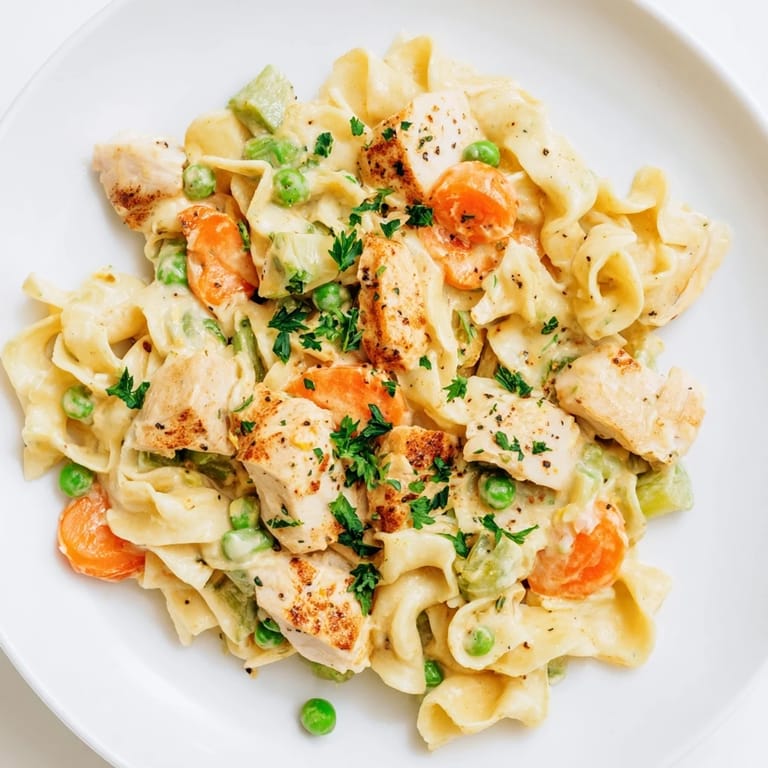
 There's something about the smell of butter and garlic hitting a hot pan that makes you feel like you've got this, even on nights when nothing else went right. I stumbled into this creamy chicken and noodle dish years ago when I had friends dropping by and barely anything in the pantry except chicken breasts, egg noodles, and cream. What started as improvisation became the recipe I make whenever I need comfort on a plate and maybe a little kitchen confidence back.
I'll never forget the first time I served this to my brother, who showed up unannounced after a brutal work week. He took one bite and didn't say anything for a solid minute, just kept eating. That's when I knew this wasn't just a dish—it was permission to feed people something that actually nourished them, not just filled them up.
Ingredients
- Boneless, skinless chicken breasts or thighs (500 g): Thighs stay more forgiving and juicy if you accidentally overcook them, but breasts work beautifully if you keep the heat steady.
- Unsalted butter (2 tbsp) and olive oil (1 tbsp): The combination gives you richness without burning, and lets the chicken brown properly without sticking.
- Yellow onion, finely chopped (1 medium): Chop it smaller than you think you need to—it dissolves into the cream sauce and becomes almost sweet.
- Garlic cloves, minced (2): Fresh garlic is non-negotiable here; it's what makes the whole pot smell like home cooking.
- Carrots and celery (2 medium and 2 stalks): These create a flavor foundation that's deeper than you'd expect, and they stay just tender enough in the final dish.
- All-purpose flour (2 tbsp): This thickens your sauce without any lumps if you cook it with the butter first and whisk slowly.
- Low-sodium chicken broth, whole milk, and heavy cream (480 ml, 240 ml, 120 ml): The ratio matters—too much broth and it's soupy, too much cream and it's heavy. This balance is exactly right.
- Dijon mustard (1 tsp): A small amount adds tang and complexity that makes people wonder what that subtle something is.
- Dried thyme and parsley, paprika (1 tsp, 1/2 tsp, 1/2 tsp): These herbs infuse the cream without overpowering it—trust the measurements even though they seem light.
- Wide egg noodles (250 g): The width matters because they hold the sauce without tearing apart, and they feel more luxurious than thin pasta.
- Frozen peas (60 g): They thaw from the heat and add a little brightness and texture to balance all that cream.
Tired of Takeout? 🥡
Get 10 meals you can make faster than delivery arrives. Seriously.
One email. No spam. Unsubscribe anytime.
Instructions
- Season and sear your chicken:
- Pat the chicken pieces dry with a paper towel before seasoning—this helps them brown instead of steam. Heat your butter and oil until they shimmer and smell toasty, then add the chicken in a single layer and don't move it around for the first couple minutes.
- Build your vegetable base:
- Once the chicken is set aside, add the onion, carrots, and celery to the same pot with all those browned bits stuck to the bottom. Listen for the gentle sizzle that tells you they're softening, and stop before they start to color.
- Make the roux:
- Sprinkle the flour over the vegetables and stir constantly for a minute or two until it looks like wet sand and smells toasted. This step prevents lumps later and gives the sauce a deeper flavor.
- Create the cream sauce:
- Start whisking in your broth slowly, a little at a time, before adding milk and cream. The slow pour and steady whisking is what keeps everything silky smooth instead of grainy.
- Season and simmer:
- Add the Dijon mustard, thyme, parsley, paprika, and a pinch of salt and pepper. Let it bubble gently while stirring every minute or so until you can see it coat the back of a spoon.
- Cook noodles and combine:
- While the sauce simmers, cook your egg noodles in salted water until they're tender but still have a tiny bit of bite. Drain them well before adding them to the sauce with the peas and chicken.
- Finish with fresh herbs:
- Tear fresh parsley over the top just before serving—it adds brightness and a reminder that this dish can feel fancy without any fuss.
 Save to Pinterest
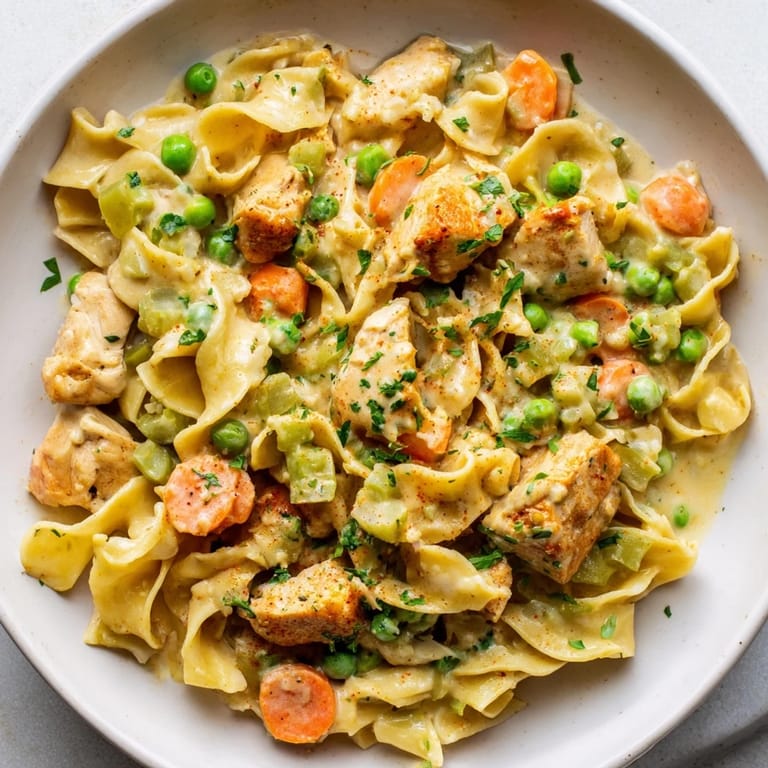
 Years later, this dish still shows up on my table during transitions and tired moments. It reminds me that some of the most memorable meals aren't the complicated ones—they're the ones where everything works exactly as it should, and you get to feed people something they'll think about later.
Small Tricks That Matter
The difference between a good creamy noodle dish and a transcendent one lives in these tiny details. Using chicken thighs instead of breasts means you can cook with less vigilance and still end up with tender meat—I learned this after drying out breasts one too many times. The paprika does almost nothing on its own but works with the mustard to round out the flavors in a way you can't quite name. Fresh parsley at the end isn't just decoration; it cuts through the richness and makes each bite feel fresher than the bite before it.
What to Serve Alongside
This dish doesn't need much—it's complete as it is. But a simple green salad with sharp vinaigrette keeps things from feeling too heavy, and steamed broccoli adds color and nutrition without competing for attention. If you want something warm, buttered egg bread or garlic toast soaks up the sauce in all the right ways and makes the meal feel more intentional.
How to Make It Your Own
Once you understand how this dish works, you can bend it toward whatever you have on hand. A splash of white wine in place of some broth adds sophistication and brightness. Mushrooms, sautéed with the carrots and celery, bring earthiness that deepens the whole experience. Rotisserie chicken cuts your active cooking time down to nothing if you're after speed over ceremony.
- Use rotisserie chicken to save 15 minutes of active cooking time without losing any flavor.
- Stir in a splash of white wine when you sauté the vegetables for hidden complexity.
- Add mushrooms or sun-dried tomatoes if you want more texture and a little earthiness in every spoonful.
 Save to Pinterest
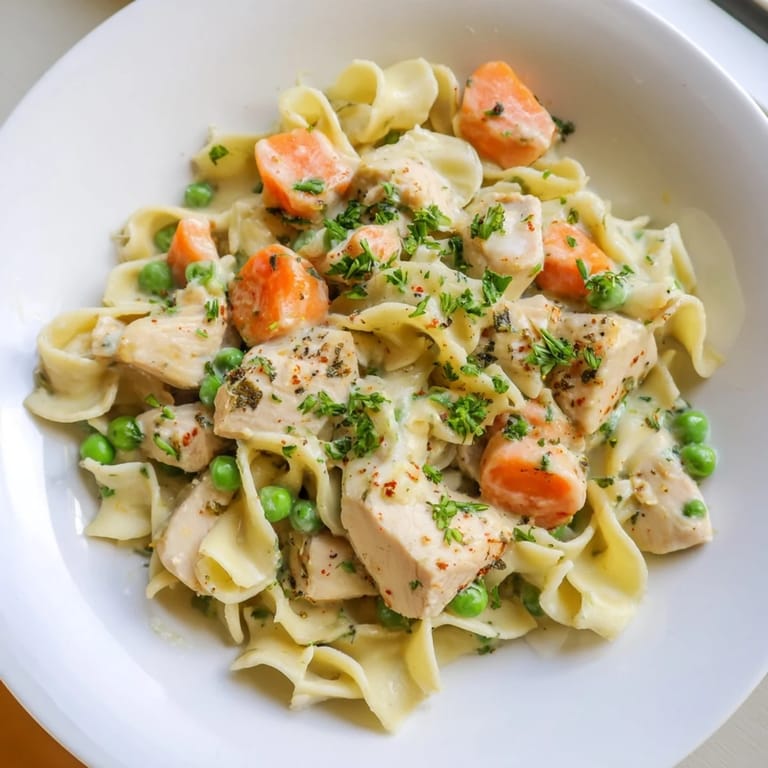
 This is the kind of recipe that grows with you, the one you come back to when you need to feed people you care about without pretense. It asks very little and gives back comfort in every bite.
Recipe Questions & Answers
- → What type of chicken is best for this dish?
Boneless, skinless chicken breasts or thighs work well, cut into bite-sized pieces for even cooking and tenderness.
- → Can I use different noodles?
Wide egg noodles are ideal for coating with the creamy sauce, but other pasta shapes like pappardelle or fettuccine can also be used.
- → How do I achieve a creamy sauce consistency?
Start by making a roux with butter and flour, then slowly whisk in broth, milk, and cream to thicken the sauce evenly without lumps.
- → What vegetables complement this dish?
Carrots, celery, onions, and peas add sweetness and texture, while herbs like thyme and parsley enhance the flavor.
- → Can I prepare this dish ahead of time?
Yes, you can cook the components in advance and gently reheat them together, stirring to maintain the sauce’s creaminess.