 Save to Pinterest
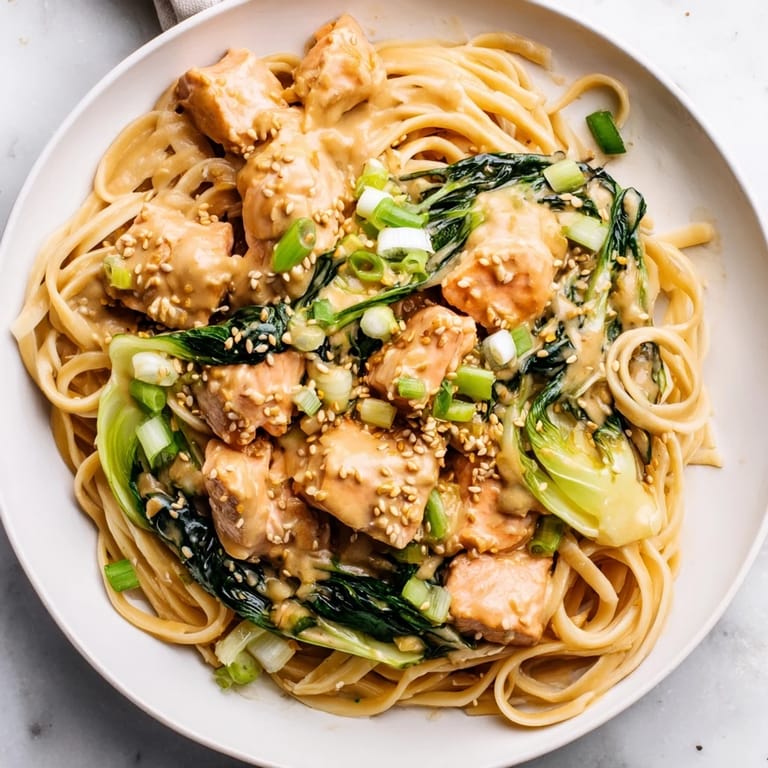
 There's a moment in every cook's life when two cuisines collide in the best way possible, and for me, it happened on a quiet Tuesday night when I had leftover miso paste, fresh salmon, and a craving for pasta. I wasn't trying to reinvent anything, just looking to use what I had on hand, but the moment that buttery miso sauce hit the hot pan, something clicked. The umami deepened, the cream softened everything into silk, and suddenly I wasn't following a recipe anymore—I was discovering one.
I remember cooking this for friends who said they weren't "pasta people," and watching them go silent after the first bite told me everything. The bok choy added a whisper of bitterness against the creamy richness, the salmon was impossibly tender, and somehow those three simple flavors—miso, butter, cream—turned into something that tasted like it had been simmering for hours. It became the dish I'd make whenever I wanted to feel like I'd actually tried.
Ingredients
- Salmon fillets (400g, cut into bite-sized pieces): Look for wild-caught if you can; the flavor is deeper and the texture firmer, which matters when you're cooking it quickly in a hot pan.
- Linguine or spaghetti (300g): Thinner pasta strands hold the sauce better than thicker shapes, letting every bite have that creamy coating.
- Baby bok choy (2 heads, chopped): Don't skip this—it's not just a vegetable, it's the bright note that keeps the dish from feeling too heavy.
- Garlic (2 cloves, minced): Mince it finely so it melts into the butter rather than staying chunky.
- Scallions (2, sliced): Save these for garnish; they add a sharp green note right at the end.
- Unsalted butter (60g / 4 tbsp): Good butter matters here because it's not just a cooking medium, it's half the sauce.
- White miso paste (2 tbsp): This is your umami secret—it's what makes people ask what's in the sauce without being able to pinpoint it.
- Soy sauce (2 tbsp): Use regular soy sauce; tamari works if you're avoiding gluten.
- Mirin (2 tbsp): The sweetness is subtle but essential, balancing the salt and funk of the miso.
- Heavy cream (100ml / ⅓ cup): This turns the sauce from a glaze into something luxurious without overwhelming the other flavors.
- Sesame oil (1 tsp): Just a drizzle—it's potent and adds a toasted depth that ties everything together.
- Black pepper (½ tsp): Freshly ground makes a difference; pre-ground sits in your cabinet losing its personality.
- Toasted sesame seeds (1 tbsp, optional): These add crunch and a nod to the Japanese influence.
- Lemon wedges: A squeeze brightens everything at the last second.
Tired of Takeout? 🥡
Get 10 meals you can make faster than delivery arrives. Seriously.
One email. No spam. Unsubscribe anytime.
Instructions
- Get the pasta going:
- Bring a large pot of salted water to a rolling boil—it should taste like the sea. Add your pasta and cook according to the package directions, stirring occasionally to prevent sticking, until you can bite it and feel a slight firmness at the center. Before you drain it, scoop out about ½ cup of that starchy pasta water; you'll need it later to loosen the sauce.
- Start the aromatic base:
- While the pasta cooks, heat 1 tbsp of butter with the sesame oil in a large skillet over medium heat. Once it stops foaming, add your minced garlic and listen for the sizzle—you want just about 1 minute before the raw edge disappears, but don't let it brown or it'll taste bitter.
- Cook the salmon gently:
- Add your bite-sized salmon pieces to the pan in a single layer if you can manage it; they'll cook more evenly that way. Let them sit for 2–3 minutes without moving them, then flip and cook another 2–3 minutes until they're opaque and just barely cooked through. A piece should flake easily but still feel slightly yielding inside. Transfer the salmon to a clean plate.
- Build the miso butter sauce:
- Pour the remaining 3 tbsp of butter into the same skillet and let it melt completely. In a small bowl, whisk the miso paste with a splash of the soy sauce to loosen it, then pour it into the pan along with the rest of the soy sauce and the mirin. Whisk constantly until everything is smooth and no miso lumps remain—this matters, so take your time.
- Finish the sauce:
- Pour in the heavy cream and a few grinds of fresh black pepper, stirring as you go. Once it's combined and simmering gently, add the chopped bok choy and cook for 2–3 minutes, just until it's wilted and tender but still has a slight chew to it.
- Bring it all together:
- Return the cooked salmon to the skillet and toss everything gently so each piece is coated in that golden sauce. Add your drained pasta directly to the skillet and toss again, using tongs to combine everything evenly. If the sauce seems too thick, pour in some of that reserved pasta water a little at a time until you have a silky consistency that coats each strand.
- Plate and finish:
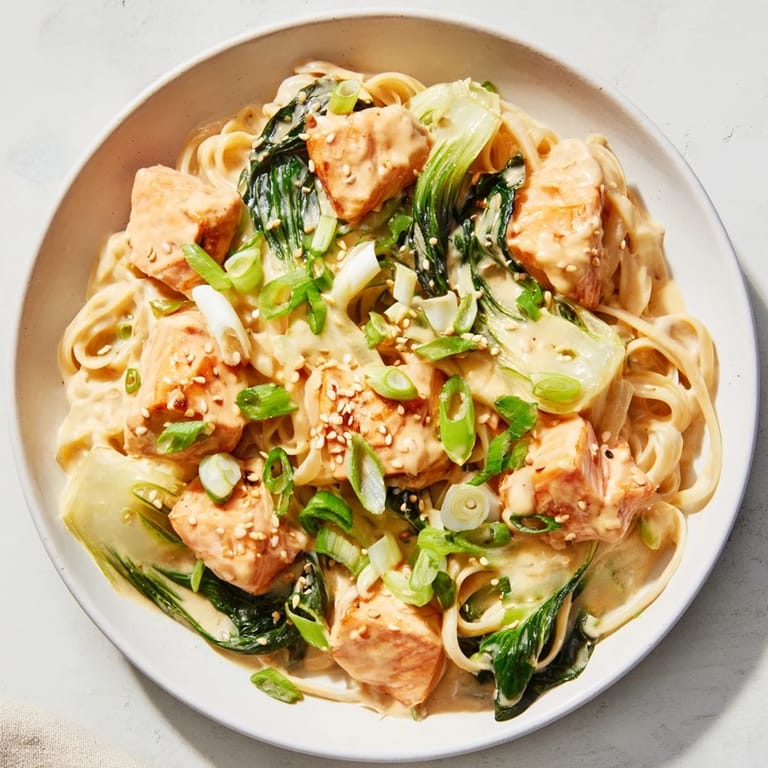
- Divide the pasta among four bowls or plates, making sure each person gets salmon, vegetables, and plenty of sauce. Top with a handful of fresh sliced scallions, a sprinkle of toasted sesame seeds if you're using them, and serve with lemon wedges on the side so everyone can squeeze just as much brightness as they want.
 Save to Pinterest
 What got me about this dish wasn't just how it tasted, but how it made people linger at the table longer than they usually do. There's something about umami that makes everyone slow down, fork pausing between bites, wondering what just happened to their palate.
The Miso Magic
Miso paste is one of those ingredients that seems intimidating until you understand what it's doing. In this sauce, it's not trying to taste like miso in a forward way—it's working in the background, deepening everything and adding a savory complexity that makes people ask what's in the recipe. White miso is milder than red, which is why it works here without overpowering the delicate salmon and cream. Once you start thinking of miso as a flavor amplifier rather than a standalone taste, you'll find yourself reaching for it in unexpected places.
Salmon: The Right Cut Makes All the Difference
I've made this with different cuts of salmon, and I've learned that removing the skin first and cutting the fillets into bite-sized pieces matters more than I initially thought. Smaller pieces cook through evenly in just a few minutes, staying tender and buttery rather than drying out at the edges while the center remains raw. If your salmon is very thick, you can gently press it with the side of your knife to flatten it before cutting, which helps everything cook at the same pace. The quality of the salmon you buy will shine through, so if it doesn't smell fresh and look vibrant, it's worth waiting for better fish.
Timing and Temperature: The Unsung Secrets
Medium heat is your friend here—it's hot enough for everything to cook properly but slow enough that you won't scorch the garlic or the delicate miso sauce. Rushing this by turning up the heat is how you end up with burnt spots and an acrid taste, so resist that temptation. The whole dish, from pasta to plate, takes about 35 minutes, but most of that is pasta cooking time; the actual pan work is maybe 10 minutes, so you can build in moments to breathe.
- Keep the heat consistent and medium—no wild swings in temperature.
- If your cream looks like it's beginning to bubble hard, lower the heat slightly; gentle simmering is all you need.
- Taste the sauce before serving and adjust salt with soy sauce or pepper as needed, since every brand of miso varies slightly.
 Save to Pinterest
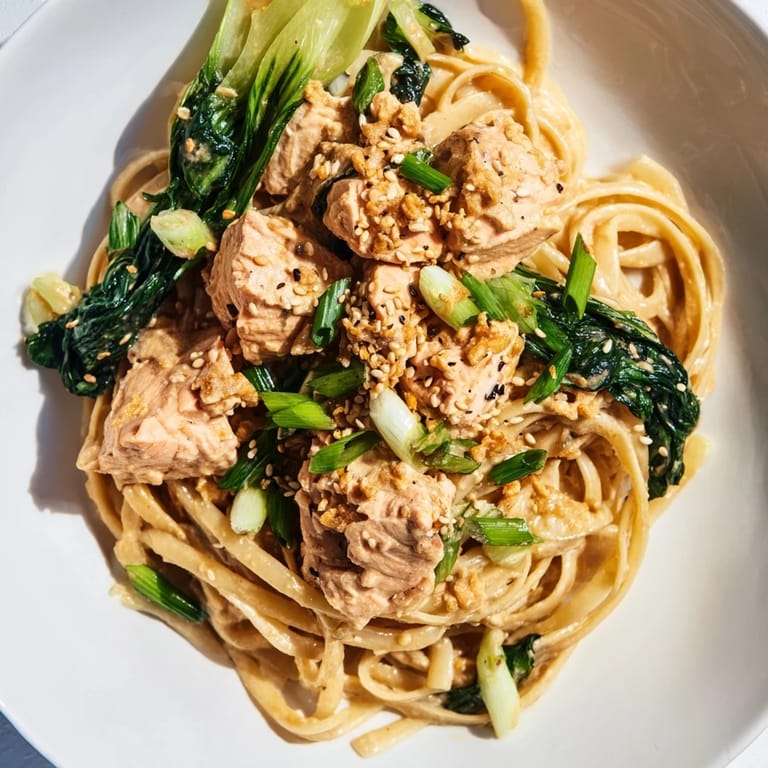
 This is the kind of dish that reminds you why you like cooking in the first place—a few good ingredients, a little care, and something that tastes like you spent all day on it. Serve it with a crisp white wine and watch what happens.
Recipe Questions & Answers
- → What type of salmon works best?
Skinless fillets cut into bite-sized pieces ensure even cooking and easy incorporation into the sauce.
- → Can I substitute the bok choy?
Yes, spinach or other tender leafy greens can be used for a similar texture and mild flavor.
- → How do I make the sauce silky?
Adding reserved pasta water while tossing the pasta with the sauce helps create a smooth, cohesive texture.
- → What pasta types are suitable?
Linguine or spaghetti pairs well, holding the creamy sauce effectively.
- → Can I add heat to this dish?
A pinch of chili flakes introduced during the garlic sauté adds a gentle spicy kick.