 Save to Pinterest
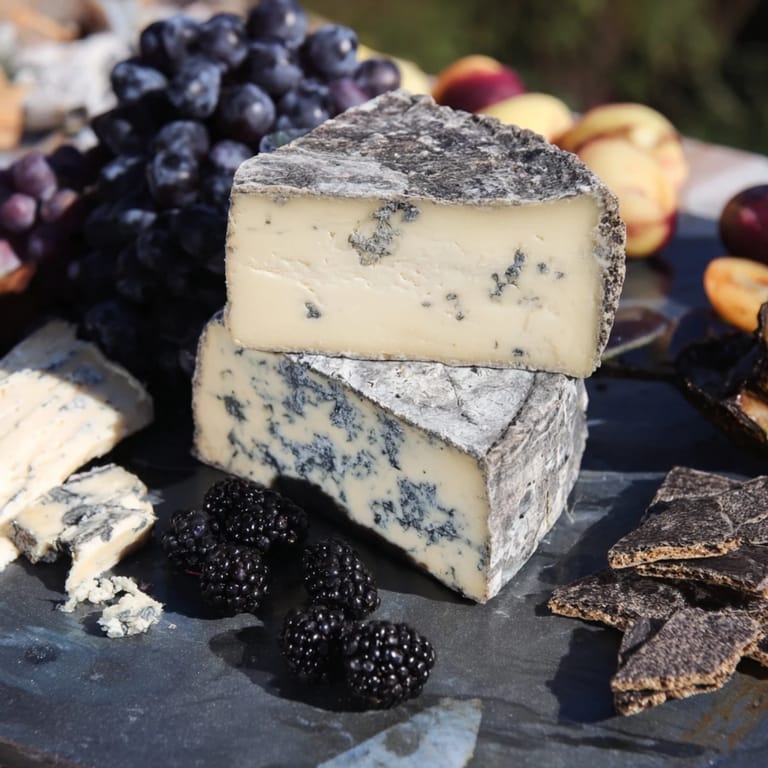
 I'll never forget the first time I saw a monochrome cheese board at a dinner party—it was like walking into a gallery where every element spoke the same sophisticated language. The host had arranged ash-rinded cheeses, dark crackers, and blackberries on a slate board, and I was mesmerized by how the colors whispered rather than shouted. That night, I learned that a cheese board didn't need rainbow brightness to be absolutely stunning. It needed intention, restraint, and an appreciation for the elegance hidden in grayscale.
I made this board for an intimate dinner with friends who appreciated beautiful things, and watching them pause before reaching for anything—taking in the whole composition first—told me everything. That moment when people see food as art before seeing it as sustenance is what this board is really about.
Ingredients
- Morbier cheese (150 g): This French semi-soft cheese has a distinctive ash line running through its middle, making it the hero of a monochrome board. Its creamy texture and nutty flavor bridge the gap between approachable and sophisticated. I always let it sit at room temperature for fifteen minutes before serving so the flavors bloom.
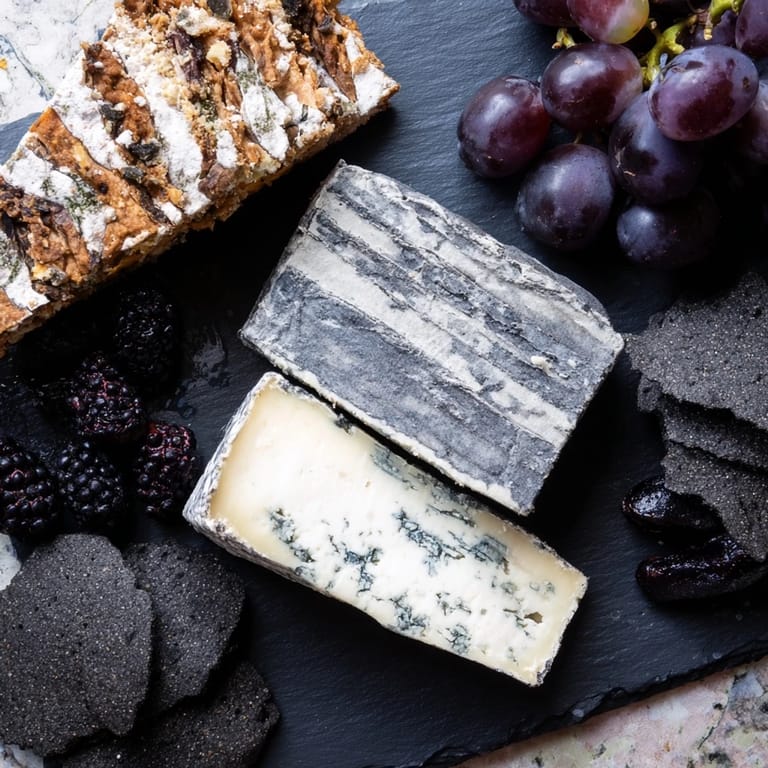
- Humboldt Fog or ash-ripened goat cheese (120 g): The ash rind on this cheese is nature's gift to anyone building a gray-toned board. It's tangy, bright, and adds a gorgeous textural contrast. Buy it whole if you can and slice it yourself—the presentation is worth it.
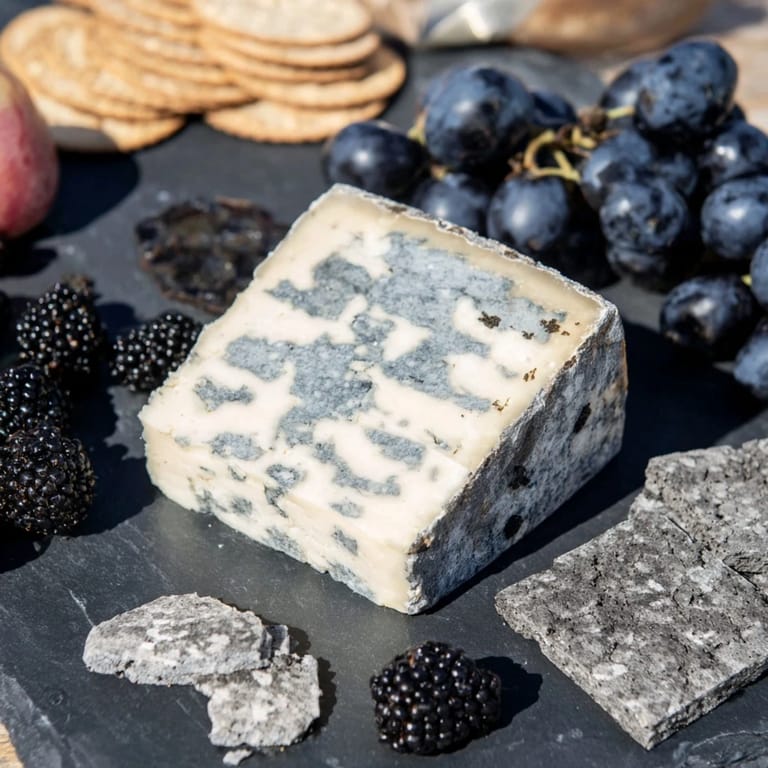
- Valdeon or blue cheese with gray veining (100 g): The blue-gray marbling in this cheese is what ties the whole color story together. I learned the hard way that a pungent blue cheese is the secret weapon that makes people remember your board long after the evening ends.
- Slate-colored charcoal crackers (8-10 pieces): These aren't just functional—they're part of the visual narrative. Hunt for them at specialty shops; they're worth the effort because they complete the monochrome story you're telling.
- Dark rye or pumpernickel bread (6-8 slices): The deep, almost black tone of these breads anchors the board. Toast them lightly if you want them to hold up better, but I prefer them soft and chewy to offer contrast to the crackers.
- Black grapes or dark plums: These provide juicy sweetness and fill the gaps with color that belongs in the gray family. I slice plums to show off their deep interior and arrange grapes in small clusters as visual touchstones.
- Blackberries or blueberries: A small handful scattered throughout adds jewel-like depth and prevents the board from feeling too uniform. They're also the most forgiving element if your color palette shifts slightly.
- Black olive tapenade (2 tbsp): This briny, umami-rich condiment adds complexity and serves as a flavor bridge between the cheeses. Spoon it into a small dark bowl to keep the monochrome moment intact.
- Edible charcoal salt: This is the finishing touch that elevates the entire experience. A tiny pinch over the cheeses adds both visual drama and a subtle flavor enhancement that guests will notice but not be able to name.
- Fresh rosemary or thyme (optional): I use these sparingly—just a few sprigs tucked into the arrangement—because green can feel like a cheat in a monochrome context. But sometimes that small punctuation of color is exactly what the board needs to feel alive.
Tired of Takeout? 🥡
Get 10 meals you can make faster than delivery arrives. Seriously.
One email. No spam. Unsubscribe anytime.
Instructions
- Set the stage:
- Place your large dark stone or slate board on a clean work surface in good light. This is your canvas, and you want to see it clearly as you work. I run my hand over it first just to confirm there are no sticky spots—a clean board is essential.
- Arrange the cheeses with intention:
- Slice each cheese thoughtfully—I aim for a mix of wedges and rounds to create visual interest. Leave space between them as if each cheese deserves its own moment on stage. This is not about filling every inch; it's about respecting the elegance of negative space.
- Create bread architecture:
- Fan out your charcoal crackers in small stacks and arrange your dark bread slices in casual groupings. Think of these as the supporting players that make the cheeses shine. I always place a few next to each cheese section as a subtle suggestion of how to enjoy it.
- Fill the gaps with dark fruit:
- Now scatter your black grapes, sliced plums, blackberries, and blueberries into the negative space. Be intentional here—cluster the grapes in twos and threes, let the dark berries dot the board like tiny jewels. This is where you add rhythm and movement to the composition.
- Welcome the tapenade:
- Spoon your black olive tapenade into a small dark bowl, or if you're feeling confident, dollop it directly onto a section of the board. I prefer the bowl method because it keeps everything contained and looks intentional rather than accidental.
- Season with drama:
- This is where I pause and look at the entire board before making the final move. Sprinkle just a whisper of edible charcoal salt over the cheeses—not to overwhelm, but to add a layer of sophistication and a hint of intriguing flavor that guests will wonder about.
- Add the quiet finishing touch:
- If using fresh herbs, tuck just a few sprigs of rosemary or thyme into the arrangement. I place them where they frame rather than fill, where they feel like they were always meant to be there.
- Present with confidence:
- Set out your cheese knives, small plates, and napkins within arm's reach. The board is ready to serve immediately, but I've found that letting it sit for five minutes at room temperature is when it truly sings—the cheeses soften slightly, the flavors open up, and the visual impact deepens.
 Save to Pinterest
 I remember one guest picking up a small piece of Humboldt Fog, pausing to admire the ash rind against the dark board, and then saying quietly, "This is beautiful." That's when I understood that a cheese board can be more than nourishment—it can be a conversation starter, a moment of collective appreciation, a signal that someone took time to create something that honors both the food and the people gathered around it.
The Art of Monochrome Sophistication
Building a monochrome cheese board taught me that luxury doesn't always mean more—it means choosing your elements with intention and letting each one speak. The beauty of staying within a narrow color palette is that it forces you to think about texture, shape, and arrangement in ways that a rainbow board never demands. When you remove the distraction of competing colors, suddenly the subtle differences between a creamy ash-rind and a pungent blue become the main event. This is an exercise in culinary restraint, and it's surprisingly freeing.
Pairing and Presentation Philosophy
I've learned that the wines and drinks you serve alongside this board matter just as much as what's on it. The ash-rinded cheeses and blue-gray veining pair beautifully with wines that have their own smoky, earthy notes—a Malbec feels like it belongs here, as does a good Pinot Noir. The tapenade adds a briny element that makes you reach for something with grip and tannin. Think of the board not as a standalone moment but as the opening movement in a longer conversation about flavor and texture.
Making It Your Own
The magic of this board is that it invites substitution without losing its soul. You can swap the Humboldt Fog for any ash-ripened goat cheese, the Valdeon for another blue-gray cheese from your local cheesemonger, and the charcoal crackers for black sesame crackers without breaking the spell. In fact, I encourage you to visit your favorite cheese shop and ask what they have that fits this gray-and-slate vision. Every region has different treasures, and your local cheesemonger will understand exactly what you're trying to do.
- Ask your cheesemonger what ash-rinded or gray-veined cheeses they recommend—they often have gems you won't find in regular grocery stores and will be thrilled by your vision.
- Toast your dark breads lightly if you prefer them crisp, or keep them soft to provide contrast to the crackers—there's no wrong choice, only preference.
- Remember that this board is meant to be eaten and enjoyed immediately; cheese tastes best when it's had a moment to breathe at room temperature, so plan accordingly.
 Save to Pinterest
 This cheese board is an invitation to slow down and appreciate restraint, to find luxury in simplicity, and to create a moment that your guests will remember long after they've left your table. Every element here has earned its place through thoughtful selection and intentional arrangement.