 Save to Pinterest
 My grandmother would start counting down weeks before Christmas, always mentioning that the lutefisk needed ordering early. I used to watch her soak those peculiar dried fish pieces, transforming them day by day into something almost unrecognizable. The first time I actually made it myself, I was shocked at how the simple ritual of daily water changes felt meditative, like I was bringing something ancient back to life in her kitchen.
I remember bringing this to a potluck where most people had no idea what lutefisk was, and watching their cautious first bites turn into requests for the recipe felt like sharing a secret that had been waiting years to be told. There's something about serving food that bridges cultures and generations that makes the whole process feel worthwhile.
Ingredients
- Dried cod (lutefisk): Start with quality dried cod from a Nordic specialty shop—the fresher it is, the better the final texture. Don't buy more than you need unless you enjoy the challenge of finding freezer space.
- Cold water: Use filtered or distilled water if your tap water is very hard, as minerals can affect the rehydration process subtly but noticeably.
- Coarse salt: This salting step firms up the fish after soaking, preventing it from becoming mushy—it's a detail that genuinely matters.
- Unsalted butter: Unsalted lets you control the sauce's salt level precisely, avoiding oversalting which is easy to do.
- All-purpose flour: The roux base needs to be cooked gently to avoid browning, which would darken your pristine white sauce.
- Whole milk: Full-fat milk creates a richer sauce that clings beautifully to the delicate fish.
- Dijon and whole-grain mustard: The combination gives you smooth heat plus texture and complexity—using just one would feel incomplete.
- Sugar: A small amount rounds out the mustard's sharp edges and makes the sauce feel balanced rather than acidic.
Tired of Takeout? 🥡
Get 10 meals you can make faster than delivery arrives. Seriously.
One email. No spam. Unsubscribe anytime.
Instructions
- Start the transformation:
- Rinse the dried cod thoroughly under cold running water, letting it feel the cold gradually. Place it in a large container and submerge it completely in fresh cold water, then settle in for the long wait—this is where patience becomes the real ingredient. Change the water daily without fail; you'll notice the fish gradually plumping up and losing that sharp, funky smell, becoming something more promising.
- Firm it up:
- After six days, drain the fish and sprinkle coarse salt all over, then let it rest for thirty minutes while the salt draws out excess moisture. This step feels counterintuitive but it prevents the fish from becoming too soft during baking, giving you that tender-but-intact texture everyone loves.
- Bake gently:
- Preheat your oven to 200°C and arrange the rinsed fish in a baking dish, covering it loosely with foil to trap steam without creating a sweat lodge. Bake for 25 to 30 minutes, checking around the 20-minute mark—when a fork flakes through it easily and the flesh turns opaque white, you're done.
- Build the sauce:
- Melt butter in a saucepan over medium heat, then whisk in flour and cook for exactly one minute, stirring constantly to prevent browning—this is the moment you'll feel in control of the whole dish. Slowly pour in the milk while whisking, going gradually enough to avoid lumps, then simmer for three to four minutes until it thickens just enough to coat the back of a spoon lightly.
- Season with confidence:
- Stir in both mustards, the sugar, and a pinch each of salt and white pepper, tasting as you go. White pepper keeps the sauce's appearance pristine, but honestly, black pepper tastes just as good if that's what you have on hand.
- Bring it together:
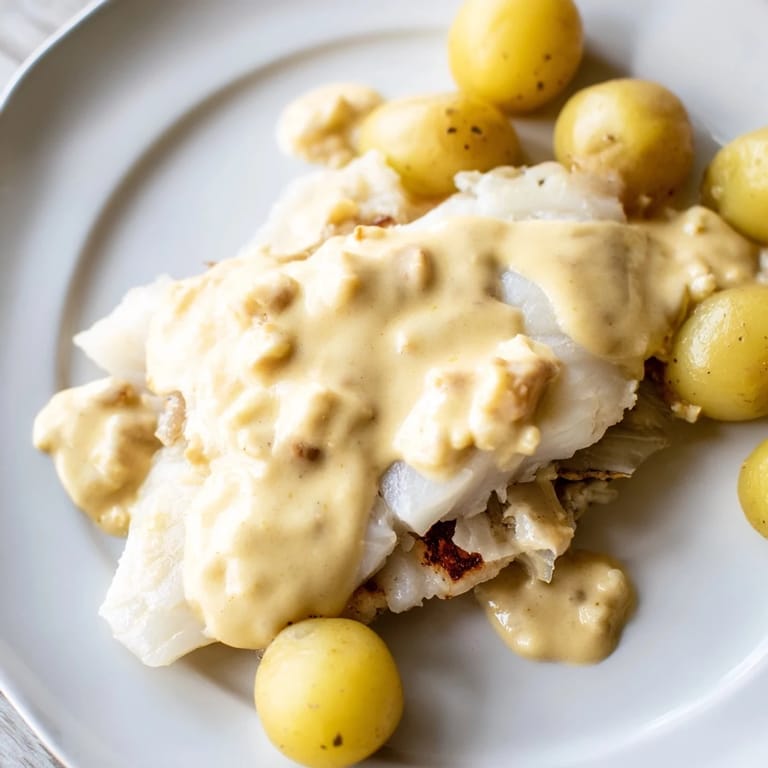
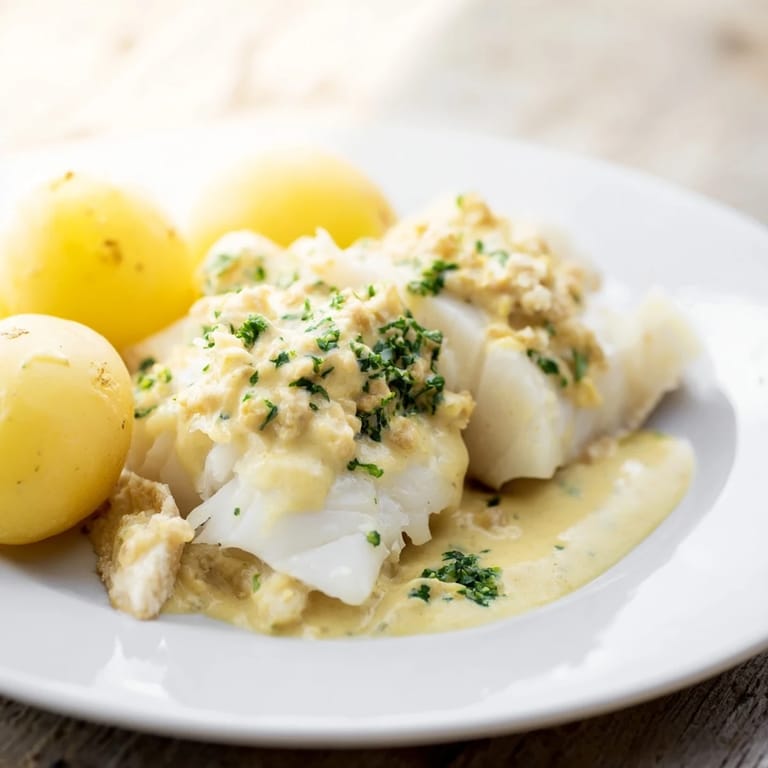
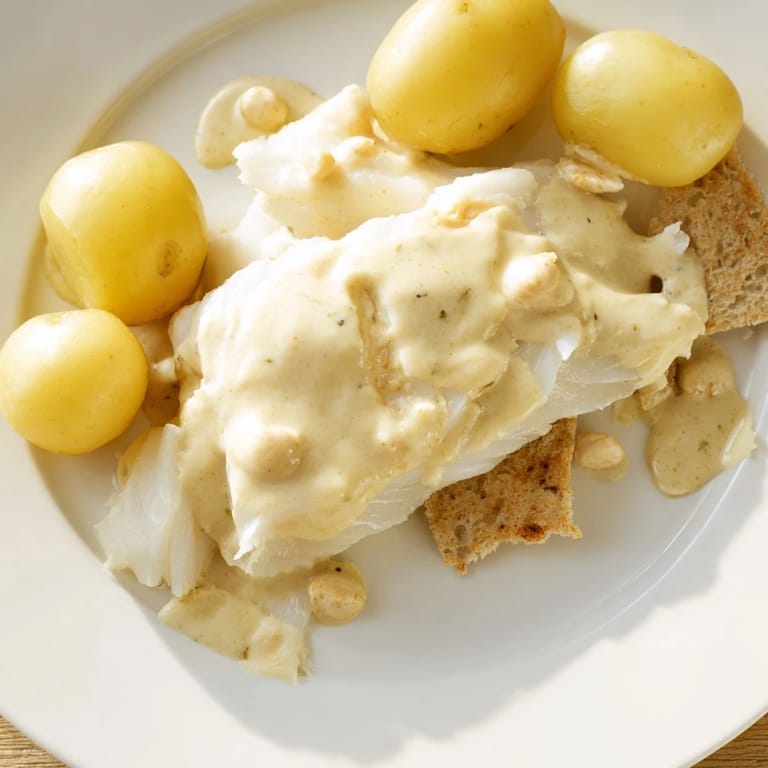
- Transfer the hot lutefisk to a warm platter surrounded by boiled potatoes and crispbread, then pour the warm sauce generously over everything. A scatter of fresh parsley catches the light and makes the whole thing look intentional rather than just assembled.
 Save to Pinterest
 There was a moment during my second Christmas making this when my teenage nephew took a second helping without being prompted, and suddenly the whole tradition clicked into place. He looked up from his plate and asked if I could make it again next year, and I realized this dish had just become part of our family's story, not mine alone anymore.
The Soaking Stage Explained
The soaking process isn't just about softening the fish—it's about chemistry working slowly in your refrigerator. Each day the water pulls out minerals and salt accumulated during preservation, while the fish fibers gradually rehydrate and become pliable. By the third day you'll notice the smell changes from sharply pungent to almost neutral, which is when you know it's working. The transformation is genuinely remarkable, turning something that looks almost unusable into the foundation of a delicate, flaky dish.
Why This Sauce Works
The mustard sauce exists to celebrate the lutefisk rather than mask it, and the balance of flavors is crucial to understanding why this pairing has survived centuries. Dijon mustard brings sharpness and warmth, whole-grain mustard adds texture and earthiness, while the sugar and cream round everything into something silky and craveable. The sauce clings to the delicate fish without overwhelming it, and each component contributes something the others can't.
Serving and Pairing Suggestions
Lutefisk demands simplicity around it—boiled potatoes, crispbread, maybe some butter on the side, and you have everything you need. The beauty of this dish lies in its restraint, not in complicated accompaniments or competing flavors. Some traditions call for green peas or crispy bacon bits, and either addition works beautifully if you want to add a textural contrast.
- Serve everything hot, plating the fish first while steam still rises from it, then the potatoes, then the sauce.
- A chilled glass of aquavit or a crisp lager cuts through the richness of the sauce and complements the fish's delicate flavor perfectly.
- Leftover lutefisk and sauce can be refrigerated for up to two days, though the texture changes slightly upon reheating.
 Save to Pinterest
 This dish carries more weight than its simple ingredient list suggests, connecting you to centuries of Nordic tradition with every bite. Make it once and you'll understand why it's been worth the week-long wait, year after year.
Recipe Questions & Answers
- → How long should lutefisk be soaked before cooking?
Typically, the dried cod requires 5 to 6 days of soaking in cold water, with daily water changes to rehydrate and soften the fish.
- → What is the key to achieving flaky lutefisk texture?
Baking the soaked cod at moderate heat until it becomes opaque and easily flakes with a fork ensures a tender and delicate texture.
- → How is the mustard sauce prepared for the dish?
The sauce is made by melting butter, whisking in flour, gradually adding milk to thicken, then seasoning with Dijon and whole-grain mustard, sugar, salt, and white pepper.
- → Can gluten-free flour be used in the mustard sauce?
Yes, substituting all-purpose flour with a gluten-free alternative works well for those avoiding gluten.
- → What are traditional accompaniments for lutefisk?
Boiled potatoes, crispbread or flatbread, and sometimes green peas or bacon bits enhance the dish's flavors and textures.
- → Are there common allergens in this dish?
Yes, the dish contains fish, milk, mustard, and potentially gluten if regular flour is used in the sauce.