 Save to Pinterest
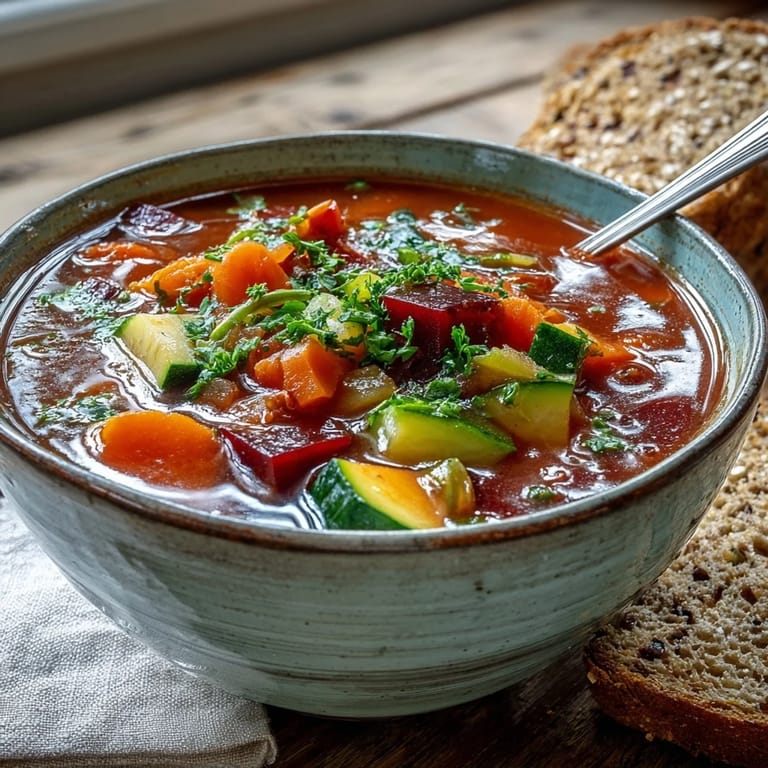
 There's something about chopping vegetables on a quiet morning that shifts everything into place, and this rainbow soup became my answer to those days when my body felt sluggish and my mind needed clearing. My neighbour mentioned she'd been making colourful broths and swore by how alive they made her feel, so I raided my vegetable drawer one Saturday and discovered that beetroot's earthy sweetness paired beautifully with the brightness of lemon and fresh herbs. The soup turned out so vibrant it looked almost unreal in the pot, like liquid jewels simmering away, and I realised I'd stumbled onto something that felt both nourishing and genuinely exciting to eat.
I made this for my mum when she was recovering from being under the weather, and watching her face light up as she tasted it—noticing how each vegetable sang its own note—reminded me that good food is sometimes the most honest thing you can offer someone. She had seconds before I'd even finished the first bowl, which for her meant everything, and I've made it at least twice a month since then because it became our quiet ritual.
Ingredients
- Beetroot: Don't skip the peeling step or your hands will be stained purple for days, but that earthiness is what makes this soup sing and gives it that gorgeous deep red colour.
- Carrots: Sliced rather than diced because they cook at a different pace and you want them to stay slightly firm when everything else is tender.
- Courgette: Goes in later than the root vegetables so it doesn't dissolve; it adds a fresh, delicate note that brightens the whole pot.
- Tomatoes: Fresh ones matter here since they're not cooked into oblivion—their acidity keeps everything balanced and lively.
- Green bell pepper: The forgotten hero that adds sweetness without overwhelming, so don't be tempted to swap it out.
- Red onion: Milder and sweeter than yellow onion, which means no sharp bite that might overpower the delicate vegetables.
- Garlic: Just two cloves because this soup is about the vegetables, not the garlic taking over like it does in so many recipes.
- Baby spinach: Optional but adds a peppery note and iron boost in the final minutes; I always add it.
- Vegetable broth: The foundation, so use something you'd actually drink on its own—cheap broth makes cheap soup.
- Olive oil: Just a tablespoon keeps it light and lets the vegetables be the star.
- Lemon juice: The magic awakener that brings all the flavours into focus right at the end.
- Cumin, turmeric, smoked paprika: These warm spices add depth without making the soup taste like curry or anything too heavy.
- Fresh parsley or coriander: Scattered on top for a grassy freshness that feels like a small celebration.
Tired of Takeout? 🥡
Get 10 meals you can make faster than delivery arrives. Seriously.
One email. No spam. Unsubscribe anytime.
Instructions
- Wake up your aromatics:
- Heat the olive oil in a large pot over medium heat and sauté the red onion and garlic for two to three minutes until they're soft and fragrant. You'll know it's right when the smell makes you pause and take a proper breath.
- Build your base:
- Add the beetroot, carrots, and green pepper, stirring occasionally as they cook for four to five minutes and begin to soften at the edges. The beetroot will start to stain everything around it, which is exactly what you want.
- Layer in the rest:
- Stir in the courgette and tomatoes, then sprinkle over the cumin, turmeric, smoked paprika, salt, and pepper, cooking for another two minutes until the spices become fragrant. This moment is when the soup transforms from random chopped vegetables into something intentional.
- Let it simmer:
- Pour in the vegetable broth and bring everything to a boil, then lower the heat and let it bubble gently uncovered for twenty to twenty-five minutes until the vegetables are completely tender but haven't lost their colour. The kitchen will fill with the most comforting steam, and you'll be tempted to eat it right then.
- Finish with green:
- If you're using spinach, stir it in now and let it wilt for two minutes, which takes no time at all but adds something alive to the soup.
- Brighten and taste:
- Remove from heat and squeeze in the lemon juice, then taste and adjust the salt and pepper because what works in someone else's kitchen might need tweaking in yours. This final step is where the soup goes from good to memorable.
 Save to Pinterest
 What surprised me most was realising that a soup this simple could feel like self-care, like I was doing something genuinely kind for my own body while also enjoying every single spoonful. It's become the soup I make when I want to feel restored but not restricted, and that's become quite rare to find.
Why the Colours Actually Matter
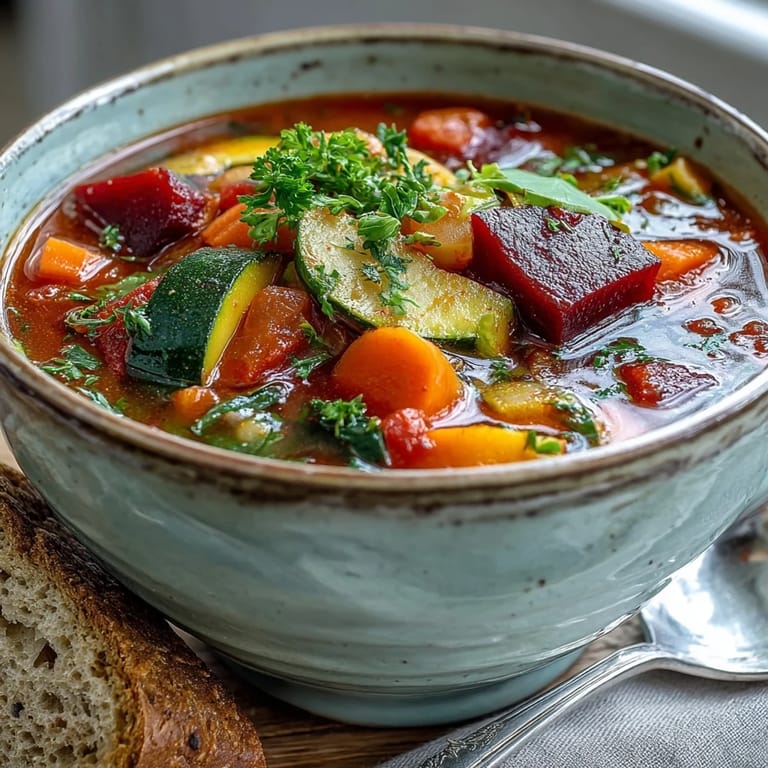
Every colour in this soup represents different nutrients and compounds that your body actually uses, which sounds very wellness-culture until you taste how each one contributes something distinct. The beetroot is earthy and slightly sweet, the carrot adds brightness, the green pepper brings a crisp almost grassy note, and the tomato ties it all together with gentle acidity. When you eat a bowl of this, you're not just eating vegetables—you're tasting the intentionality of building something balanced, which somehow makes you feel better as you're eating it.
Storage and Reheating
This soup keeps beautifully in the fridge for up to four days in an airtight container, and the flavours actually deepen as it sits, so leftovers are sometimes better than the first bowl. Reheat gently on the stovetop over medium heat, stirring occasionally, and add a splash of broth if it's thickened up, which it will. I wouldn't freeze it because the texture of the vegetables changes and somehow loses that fresh, alive quality that makes this soup special in the first place.
Ways to Make it Your Own
The beauty of this soup is that it's flexible enough to follow the seasons and whatever you have on hand, though there's a difference between adapting and completely changing the recipe. You can add chickpeas for protein and a creamier texture, swap sweet potato for carrot if that's what you have, or throw in kale at the end instead of spinach. The frame of the recipe stays the same—the warm spices, the brightness of lemon, the care in building flavour layers—and that's what makes it work every time.
- Add a drained can of chickpeas with the broth if you want to make it heartier and add plant-based protein.
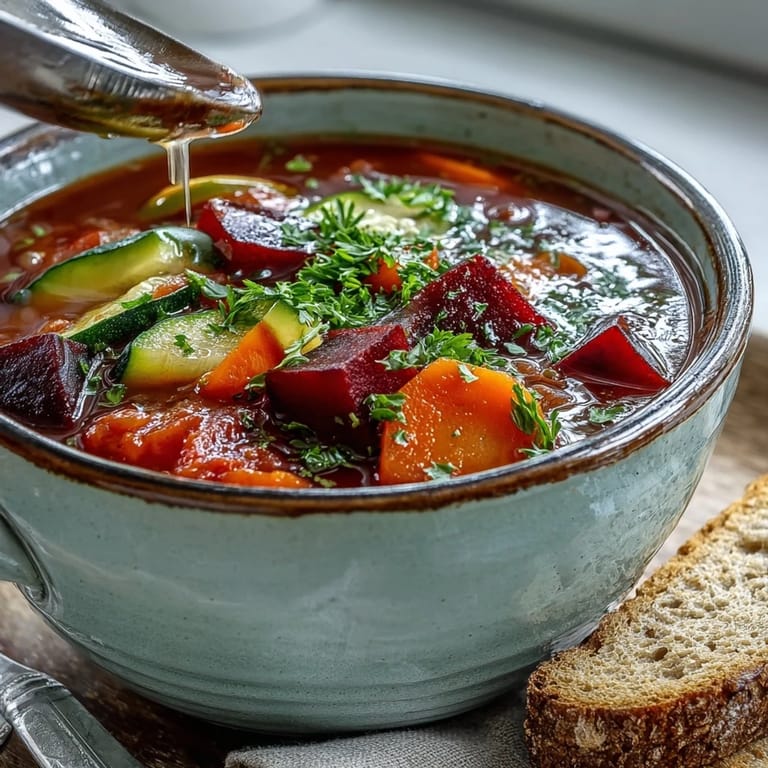
- Serve with a slice of whole-grain bread to turn it from a light meal into something more substantial and grounding.
- A crisp white wine or herbal tea pairs beautifully alongside, which somehow makes eating alone feel like an occasion.
 Save to Pinterest
 This soup has become the kind of recipe I return to without thinking, the one that shows up on days when I need nourishment and days when I'm cooking for someone else who needs it. That feels like the highest compliment a recipe can receive.
Recipe Questions & Answers
- → Can I freeze this soup?
Yes, this soup freezes well for up to 3 months. Let it cool completely before transferring to airtight containers. Thaw overnight in the refrigerator and reheat gently on the stovetop, adding a splash of water if needed.
- → What vegetables work best in this?
Root vegetables like beetroot, carrots, and sweet potatoes hold their shape well during simmering. Courgette, tomatoes, and bell peppers add brightness. You can also add celery, parsnips, or seasonal greens depending on what's available.
- → How do I make it more filling?
Add a can of drained chickpeas or white beans when pouring in the broth for extra protein and substance. You can also serve with whole-grain bread, quinoa, or brown rice on the side for a more substantial meal.
- → Can I make this in a slow cooker?
Absolutely. Sauté the onion and garlic first, then add all vegetables, spices, and broth to your slow cooker. Cook on low for 6-7 hours or high for 3-4 hours until vegetables are tender. Stir in lemon juice and fresh herbs just before serving.
- → Is this suitable for meal prep?
Yes, the flavors actually improve after a day or two in the refrigerator. Store in individual containers for up to 5 days. The soup may thicken when chilled—thin with a little water or broth when reheating.
- → What can I substitute for beetroot?
If you don't enjoy beetroot, try butternut squash, sweet potato, or red cabbage for similar color and nutrition. The cooking time remains the same, and these alternatives pair well with the existing spices and vegetables.