 Save to Pinterest
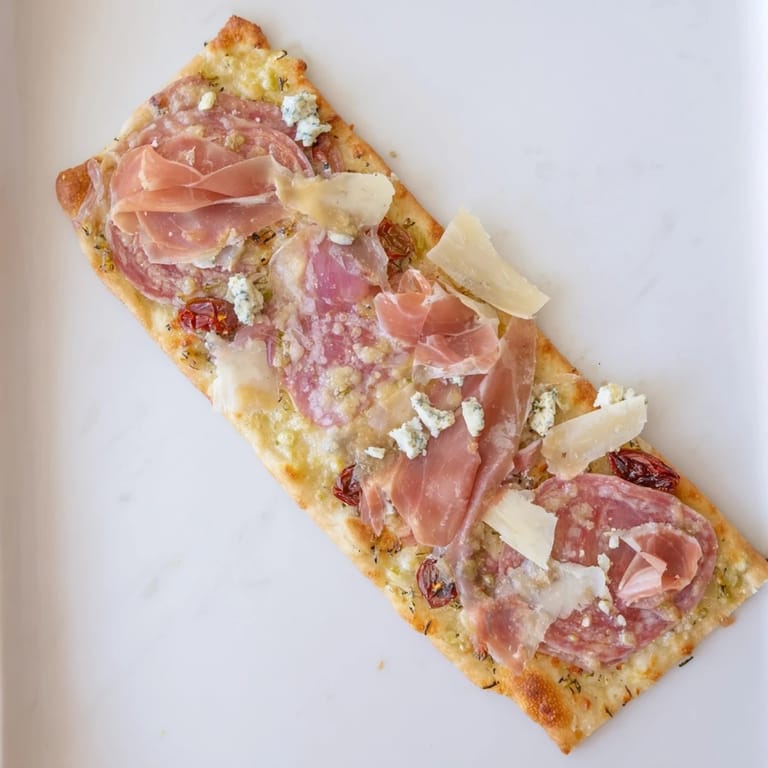
 The first time I assembled a board like this, I wasn't thinking appetizer at all—I was trying to impress someone with barely an hour to prepare. I grabbed a flatbread from the freezer, warmed it up, and started draping it with whatever cured meats and cheeses I had scattered around the kitchen. Something about the contrast between the warm, garlicky bread and the cool, salty layers clicked instantly. It wasn't fancy or fussy, just honest food arranged on a board. Now I make these for every gathering, and somehow they always steal the show.
I remember a dinner party where someone's elderly mother kept coming back for the same flatbread raft, breaking off pieces the way you'd eat focaccia by the fire. She told me it reminded her of bread her grandmother made in Tuscany, except we'd dressed it up like nothing she'd ever seen. Watching her enjoy it that way—not as a showpiece but as something familiar yet completely new—that's when I knew this dish had real magic in it.
Ingredients
- Flatbreads (lavash, naan, or ciabatta): Choose something sturdy enough to hold weight without tearing, but thin enough to tear easily with your hands when eaten; I prefer lavash for its slight char potential and flexibility.
- Olive oil: Use a decent one you'd actually taste on its own, because a thin brush on warm bread really lets it shine.
- Garlic clove: One small clove minced is enough—garlic-forward flatbread can overshadow the delicate meats and cheeses.
- Prosciutto: Buy it sliced fresh from the deli counter if possible; pre-packaged can be too salty and thin.
- Salami: A good Italian salami with visible fat marbling adds depth that cheap versions can't deliver.
- Smoked turkey breast: This keeps the board from becoming too heavy; it's the bridge between the richness of aged meats and something fresher.
- Soppressata or chorizo: One of these gives you a punch of spice and smokiness that ties everything together.
- Brie: Soft enough to yield slightly when warm, which looks luxurious and invites you to take a bite.
- Aged cheddar: Its crystalline texture and sharpness cut through the saltiness of the meats beautifully.
- Manchego: A Spanish cheese adds a nutty note that feels more sophisticated than cheddar alone.
- Blue cheese: Use it sparingly and crumble it loosely; it's an accent, not the main event, unless your guests love it bold.
- Grapes and cherry tomatoes: These burst with juice and offer sweetness against the salty meats—halving them prevents them from rolling everywhere.
- Marinated olives: Whatever herbed mix you can find works; they add a briny pop that wakes up your palate.
- Roasted red peppers: Use jarred if fresh ones aren't calling to you; their sweetness and soft texture balance everything else.
- Fresh basil: Tear it at the last moment so it doesn't bruise and turn black.
- Honey or fig jam: Either one adds a glossy, unexpected sweetness that guests will drizzle over everything once they try it.
Tired of Takeout? 🥡
Get 10 meals you can make faster than delivery arrives. Seriously.
One email. No spam. Unsubscribe anytime.
Instructions
- Heat your oven and prep the canvas:
- Preheat to 200°C (400°F) and brush your flatbreads with olive oil on both sides, scatter the minced garlic across them. Warm them in the oven for five to seven minutes—you want them slightly crisp at the edges but still pliable enough to bend without cracking.
- Arrange your rafts:
- Pull the warm flatbreads from the oven and lay them out on your largest wooden board or serving platter, spacing them so they don't touch and create a crowded mess. The warmth should still rise off them as you work.
- Layer with intention:
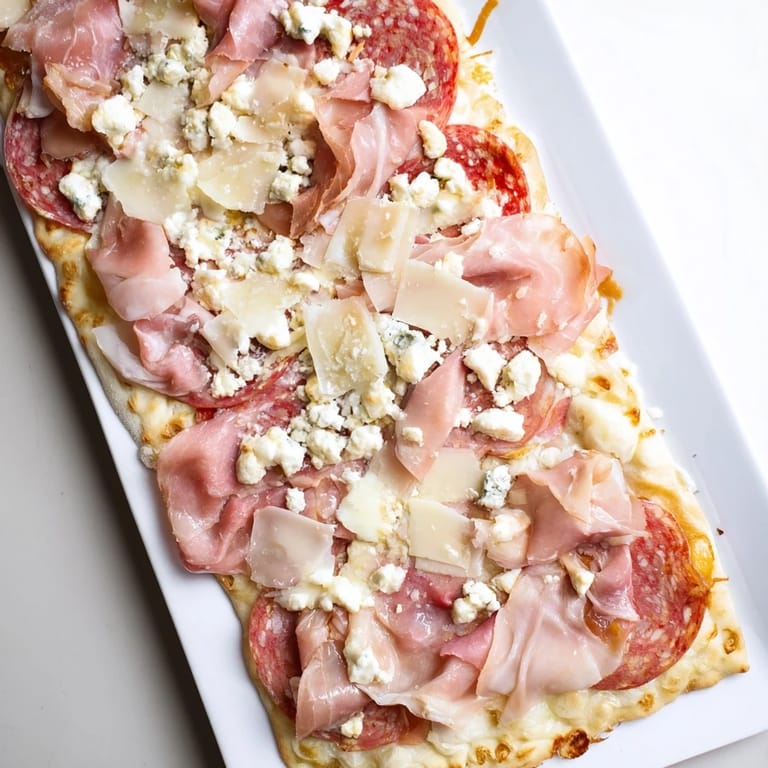
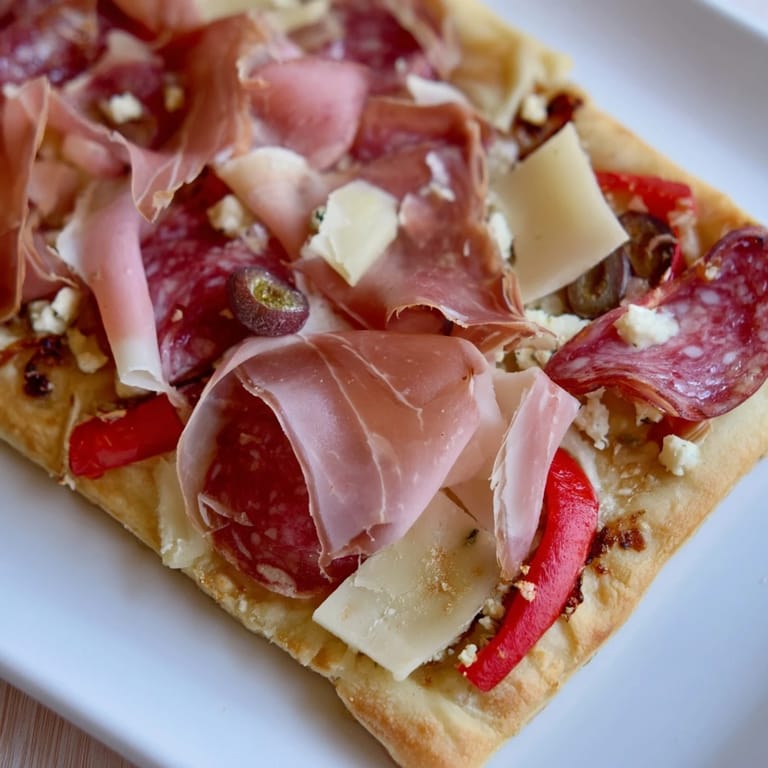
- Start with the cheeses, alternating types across each raft so the colors and textures feel intentional. Then drape the meats over them, overlapping slightly so they catch light and look abundant—this is where the dish goes from functional to beautiful.
- Fill the spaces:
- Scatter grapes, tomatoes, olives, and roasted peppers in the gaps between the rafts and across the board, filling empty pockets and creating little pockets of color. You're building a landscape, not just filling gaps.
- Finish and serve:
- Tear basil leaves gently and scatter them across everything just before serving. Set small dishes of honey or fig jam at the corners of the board so people can drizzle as they go.
 Save to Pinterest
 There's something about watching people's faces light up when they realize they can customize each bite—a little prosciutto with brie, then a piece with blue cheese and a grape, then just the warm bread with honey. It stops being a recipe and becomes a moment of connection, everyone gathered around a board, building their own version of the same dish.
Making It Your Own
The beauty of this recipe is how flexible it is without losing its essence. Swap the manchego for gouda, replace the soppressata with pancetta, use grilled peaches instead of tomatoes in summer—the structure stays the same but the story changes. I once made this with smoked salmon, capers, and crème fraîche as a seafood variation, and it worked beautifully. The only non-negotiable is that you keep at least one warm element and one cold element to maintain that textural contrast that makes the whole thing feel special.
Wine Pairings and Timing
Serve this with a crisp white wine—something like an Albariño or Vermentino that won't compete with all the flavors happening on the board. If you're committed to red, keep it light and fruity, something that feels more like a cool drink than a heavy statement. Timing-wise, this is perfect as a first course that doesn't require plates or forks, which means your guests can mingle while eating, and you get to stay out of the kitchen instead of plating pasta.
The Gathering Moments
What makes this dish feel generous is that it's built for sharing without requiring anyone to pass or negotiate—everyone reaches, everyone builds their own moment, and somehow it feels more intimate than a plated appetizer. I've watched strangers bond over debating whether the blue cheese or the brie was better. I've seen quiet guests suddenly comfortable enough to joke about how much prosciutto they're taking. This board does that thing good food should do: it brings people a little closer together without trying too hard.
- Set out small side plates so people can build and customize without making a mess on their hands.
- Make sure your board is sturdy enough that it won't tip when someone reaches across to grab the last piece of brie.
- Keep a small bowl of extra honey nearby; someone always wants more once they taste it with the warm bread.
 Save to Pinterest
 This recipe taught me that the simplest gatherings are often the most memorable, and that sometimes the most impressive thing you can do is get out of the way and let good ingredients speak for themselves. Make these, watch people enjoy them, and you'll understand why.
Recipe Questions & Answers
- → What types of flatbreads work best?
Rectangular flatbreads like lavash, naan, or ciabatta-style flatbreads provide sturdy textures and great base for toppings.
- → Can I prepare the flatbreads ahead of time?
Yes, brush them with olive oil and garlic, then warm shortly before serving to maintain crispness.
- → Which cheeses complement the meats well?
Creamy brie, aged cheddar, manchego, and tangy blue cheese balance the savory meats wonderfully.
- → What accompaniments enhance the overall flavor?
Fresh grapes, cherry tomatoes, marinated olives, roasted red peppers, and basil leaves add freshness and texture.
- → How should I serve the honey or fig jam?
Serve on the side for drizzling or dipping, adding a sweet contrast to the savory toppings.
- → Are there suggested pairings for beverages?
Crisp white wines or light-bodied reds complement the rich meats and cheeses beautifully.