 Save to Pinterest
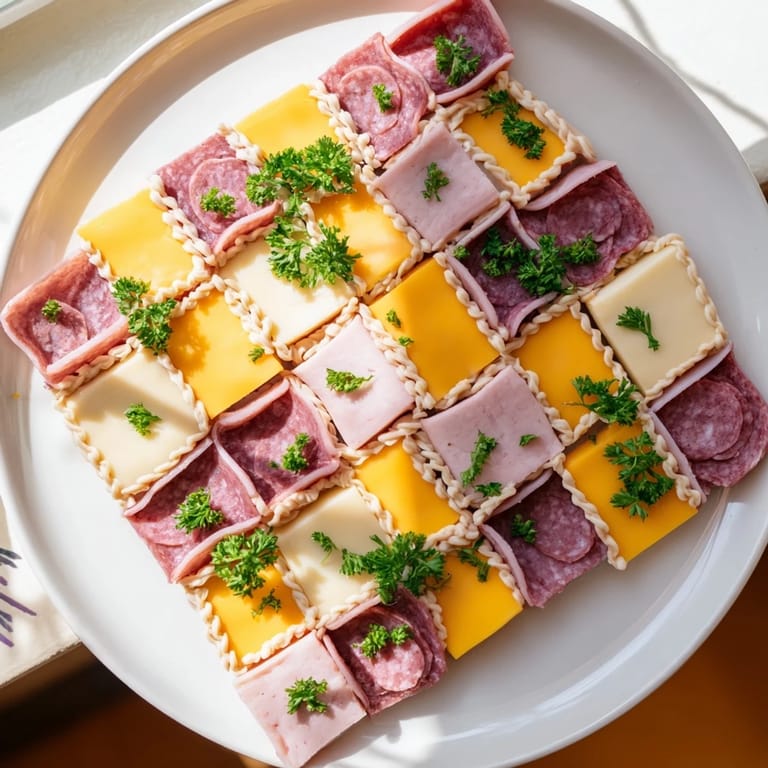
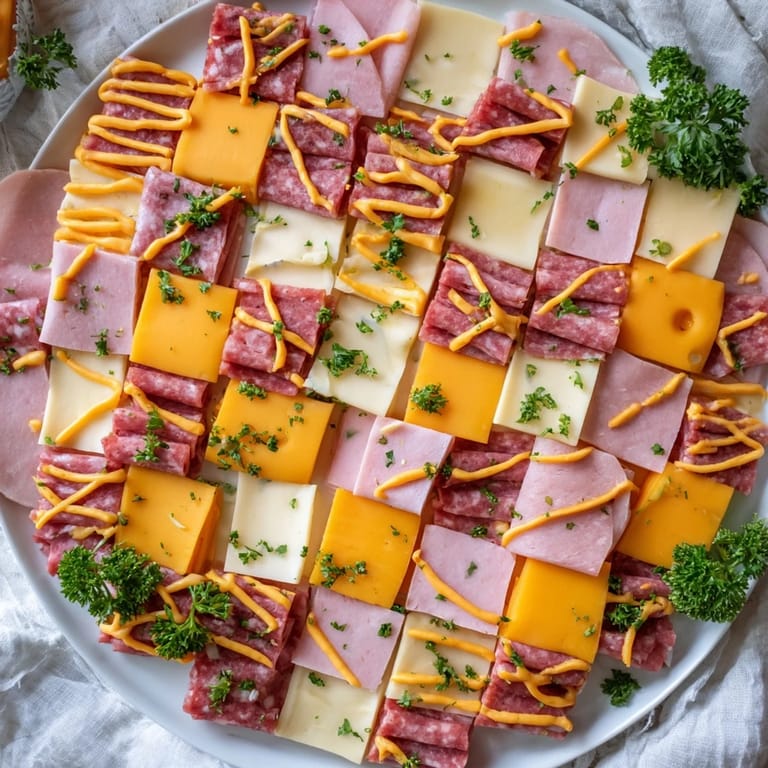
 The first time I assembled this platter, I wasn't trying to be fancy—I just wanted something that looked like it took more effort than it actually did. I'd been staring at a half-empty charcuterie board at a friend's dinner party, noticing how the meats and cheeses just sat there in sad little piles. Then it hit me: what if I cut everything into perfect squares and arranged them like a game board? The mustard lines came next, purely as a joke, but when I piped them on, it looked like someone had stitched this whole thing together by hand. That's when the name hit me, and suddenly I had something worth sharing.
I made this for a potluck last summer where someone had forgotten to bring an appetizer, and I threw it together in my kitchen while everyone was outside. Walking out onto the patio with this colorful patchwork board, I watched people's faces light up—not because it was complicated, but because it felt unexpected and alive. Someone asked if it was a family recipe, and I had to laugh because it was literally born from boredom and grocery store leftovers.
Ingredients
- Smoked turkey breast, 100 g sliced: This is your lean protein anchor—mild enough not to overpower but smoky enough to give the board backbone.
- Salami, 100 g sliced: The bold character of the group, bringing salt and richness that makes you want another piece.
- Ham, 100 g sliced: Your reliable friend that plays well with everyone and adds a touch of sweetness.
- Swiss cheese, 100 g sliced: Those little holes make it visually interesting and its nutty flavor won't fight with the mustards.
- Sharp cheddar, 100 g sliced: This one has opinions—its tanginess cuts through the richness and keeps things from feeling heavy.
- Provolone, 100 g sliced: Mild and creamy, it's the bridge between the bolder flavors, holding everything in balance.
- Whole grain mustard, 2 tbsp: Grainy and honest, this is your thread color number one—visible and a little textured.
- Dijon mustard, 2 tbsp: Smooth and sharp, use this as your contrasting stitch line to really make the pattern pop.
- Fresh parsley or chives, finely chopped: Optional, but that little green sprinkle transforms the whole thing from appetizer to centerpiece.
Tired of Takeout? 🥡
Get 10 meals you can make faster than delivery arrives. Seriously.
One email. No spam. Unsubscribe anytime.
Instructions
- Cut everything into uniform squares:
- Grab your sharpest knife and cut each meat and cheese into 2-inch squares—uniformity is what makes this look intentional, not random. Use a ruler if you need to; I did the first time and have been eyeballing it ever since.
- Build your patchwork pattern:
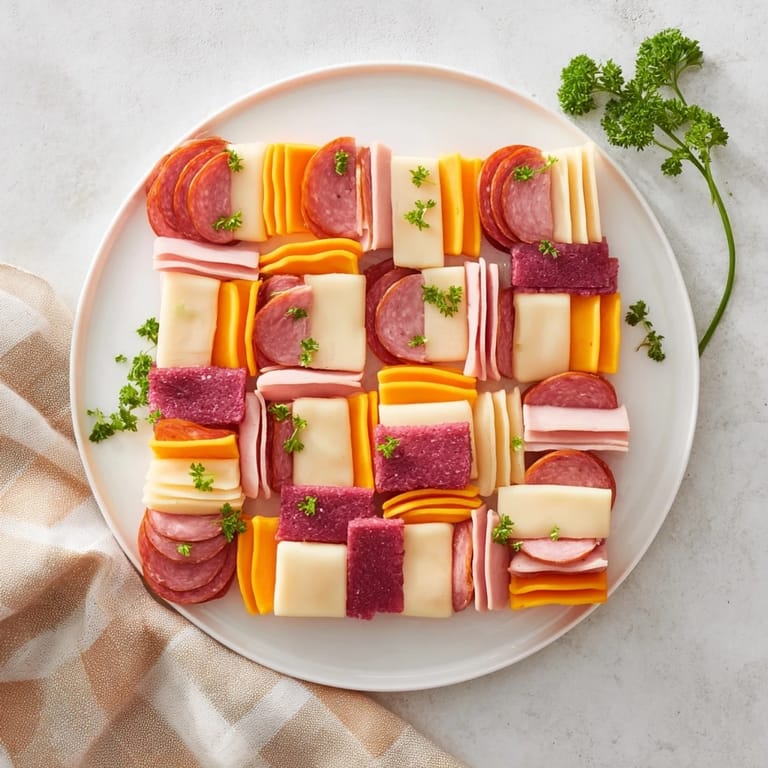
- Spread everything out on your board or platter, alternating meats and cheeses like you're creating a visual rhythm. Step back and look at it—if it makes you smile, you're on the right track.
- Stitch your mustard lines:
- Load up that squeeze bottle or piping bag and draw lines between the squares, switching between whole grain and Dijon to create actual pattern contrast. This is where the magic happens; go slow and let yourself have fun with it.
- Add your green touch:
- Sprinkle that parsley or chives across the top if you've got it—it adds color and a fresh note that nobody expects.
- Serve and watch the reaction:
- Set it out with toothpicks standing by and let people dig in, enjoying the moment when they realize how thoughtful this looks.
 Save to Pinterest
 My neighbor walked by while I was arranging this, peeked over my shoulder, and said, 'That's too pretty to eat.' Then she showed up the next week asking if I'd make it for her book club. That's when I realized this wasn't just about taste—it was about the feeling of sitting down to something that looks like someone actually cared, in a world where so much appetizer stuff feels thrown together.
The Art of the Board
There's something deeply satisfying about arranging food into patterns. It's not just about making it look good; it's about creating a visual language that says 'this matters.' When you take the time to cut things uniformly and think about color contrast—the deep reds of salami against pale provolone, the golden-brown ham next to bright cheddar—you're telling a story with your hands. The mustard lines are the punctuation mark, the thing that pulls the whole composition together and says 'I made this with intention.'
Playing with Your Patchwork
Once you've got the basic concept down, this becomes your canvas. I've added thin-sliced roasted red peppers for color, scattered some marcona almonds for texture, even tried thin apple slices one autumn evening. The rules are loose enough that you can riff while keeping the DNA of the dish exactly the same—that playful, quilt-like arrangement that makes people smile before they even taste anything.
Pairing and Serving
This board wants a crisp white wine—something with enough acidity to echo the mustard—or a light beer that won't overwhelm the delicate flavors. If your guests aren't keeping low carb, set out some good crackers or thin slices of baguette nearby, but honestly, the board stands perfectly on its own as-is. I've found that this works best when you're not rushing people; it's meant to be picked at slowly, with people stopping by over the course of an hour, discovering new flavor combinations as they go.
- Make this up to two hours ahead and cover it loosely with plastic wrap until guests arrive.
- If you're transporting it, keep the board flat and drive carefully—your art shouldn't arrive scrambled.
- Toothpicks or small cocktail forks make this easy to navigate, so always have them standing by.
 Save to Pinterest
 This is the kind of recipe that reminds you that entertaining doesn't have to be complicated to be memorable. It's just about paying attention, having fun with your hands, and trusting that people will eat with their eyes first.
Recipe Questions & Answers
- → What types of meats work best for this dish?
Sliced smoked turkey, salami, and ham provide a balanced range of flavors and textures that complement the cheeses.
- → Can I substitute the cheeses used in the patchwork?
Yes, try using various firm sliced cheeses like Swiss, sharp cheddar, or provolone for distinct tastes and colors.
- → How do I create the mustard 'stitching' effect?
Use a squeeze bottle or piping bag to carefully pipe lines of whole grain and Dijon mustard between the squares to resemble stitching.
- → Is this dish suitable for a low-carb diet?
Absolutely, as it focuses on meats and cheeses without added carbohydrates, making it suitable for low-carb preferences.
- → What garnish enhances the overall flavor and presentation?
Fresh parsley or finely chopped chives add a subtle herbal note and brighten the look of the platter.